
THEBUSINESSBYTES
BUREAU
NEW
DELHI, MAY 14, 2026
As India accelerates
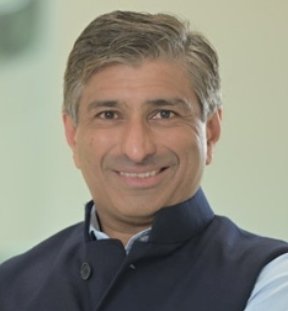
towards a digitally connected and energy-intensive future, Ratul Puri, Chairman
of Hindustan Power, asserted that affordable and uninterrupted electricity
availability will become one of the country’s strongest competitive advantages
in the coming years.
Speaking at an event
on the future of India’s power sector in New Delhi, Ratul Puri said electricity
is rapidly emerging as the foundation of economic growth across industries.
“Electricity will increasingly become the backbone of economic growth across sectors
ranging from transportation and manufacturing to digital infrastructure and
data centres,” he said. “As economies become more energy-intensive and
digitally connected, the demand for uninterrupted and affordable power is set
to rise significantly across industries and households alike.”
Highlighting the
accelerating shift towards electric mobility, he noted that advancements in
battery technologies and improving operating economics are making even heavy
transportation commercially viable. “We are on an inevitable path towards
electrification. The only uncertainty is the pace at which this transition
takes place,” Ratul Puri added. “As the lifecycle economics of electric
mobility continue improving, electrification in transportation will move very
quickly.”
He further underlined
the growing demand for electricity that will be driven by AI-led digital
infrastructure, data centres and distributed computing systems. “The next phase
of growth will increasingly require compute and inference closer to consumers
and businesses,” he said. “This will create a need for significant data centre
capacity and dependable electricity infrastructure across the country.”
Calling for proactive
infrastructure planning, Ratul Puri stressed the importance of building future-ready
power capacity ahead of rising demand. “If electricity is going to become a key
differentiator for economic growth, India should ensure there is adequate spare
round-the-clock power capacity available,” he further added. “Affordable 24x7
power availability can become one of India’s biggest competitive advantages in
the years ahead.”
He also emphasised
that India’s energy transition must focus equally on strengthening transmission
systems, storage technologies and grid modernisation alongside generation
capacity expansion. “Renewable energy expansion cannot rely only on daytime
generation,” Mr. Puri said. “Battery and storage solutions will play an
important role in enabling renewable power availability during non-solar
hours.”
Speaking on the
future evolution of the electricity ecosystem, Ratul Puri highlighted the
growing role of distributed generation and decentralised electricity networks.
“The traditional grid structure will evolve significantly over the next two
decades. Generation, storage and electricity distribution will increasingly
move closer to the point of consumption.”
On infrastructure
development, he stressed the need for equitable PPP contracts, faster dispute
resolution mechanisms and speedy resolution of land-related issues to encourage
long-term investments. “Strong and equitable PPP contracts are critical for
infrastructure sectors with long project lifecycles,” he said. “Alongside this,
faster dispute resolution and digitisation of land records will remain
important enablers for future infrastructure development.”
Commenting on the
sector’s transformation, Ratul Puri observed that India’s electricity ecosystem
has witnessed remarkable progress in recent years and sustained policy support
will continue to play a crucial role. “With continued policy support and
effective execution, India stands to benefit immensely in the years ahead,” he
added.