
THEBUSINESSBYTES
BUREAU
NEW
DELHI, MARCH 3, 2026
As
hostilities intensify in the Middle East and global energy markets turn
volatile, India has asserted strong preparedness to handle any potential
disruptions in crude oil and petroleum supplies. Briefing the media on Tuesday,
Union Minister of Petroleum and Natural Gas, Hardeep Singh Puri, emphasized
that the country’s energy security framework remains resilient and
well-positioned to respond to emerging challenges.
Highlighting
India’s growing stature in the global energy landscape, the Minister noted that
the country is currently the world’s third largest importer, fourth largest
refiner, and fifth largest exporter of petroleum products. He assured that
India is adequately stocked with crude oil and maintains robust inventories of
essential petroleum products including petrol, diesel, and aviation turbine
fuel (ATF), enabling it to effectively manage any short-term supply disruptions
arising from geopolitical tensions in the Middle East.
 Puri
underlined that over the past few years, India has strategically diversified
its crude and petroleum sourcing to ensure both availability and affordability
for consumers. Indian energy companies now access supplies from multiple
geographies, including shipments that are not dependent on transit through the
Strait of Hormuz. These alternative supply routes are expected to cushion the
impact of any temporary logistical constraints affecting cargo movement through
the critical maritime corridor.
Puri
underlined that over the past few years, India has strategically diversified
its crude and petroleum sourcing to ensure both availability and affordability
for consumers. Indian energy companies now access supplies from multiple
geographies, including shipments that are not dependent on transit through the
Strait of Hormuz. These alternative supply routes are expected to cushion the
impact of any temporary logistical constraints affecting cargo movement through
the critical maritime corridor.
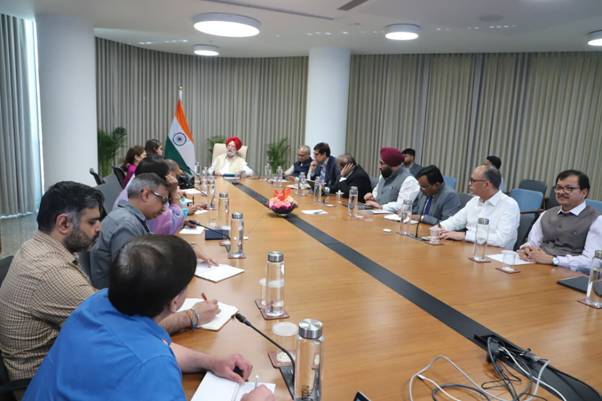
Reinforcing the government’s proactive approach, the Minister informed that the Ministry of Petroleum and Natural Gas has established a 24×7 Control Room to continuously monitor stock levels and supply positions across the country. The Centre, he said, remains reasonably comfortable with the current inventory status and is maintaining close oversight of global developments.
Affirming that safeguarding the interests of Indian consumers remains paramount, the Minister expressed cautious optimism. He stated that based on continuous assessment and real-time monitoring, the government stands ready to implement phased measures, if necessary, to further mitigate the impact of evolving global energy dynamics while ensuring stability in domestic markets.