THEBUSINESSBYTES
BUREAU
NEW DELHI, JUNE 15, 2026
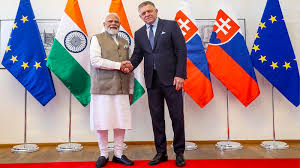
India and Slovakia on
Monday elevated their bilateral relationship to a Comprehensive Partnership,
with Prime Minister Narendra Modi and Slovak Prime Minister Robert Fico
agreeing to significantly expand cooperation in cybersecurity, defence,
advanced technologies and counter-terrorism, while charting a roadmap for
stronger economic engagement.
The two leaders
placed particular emphasis on digital security, agreeing to strengthen
collaboration in protecting critical information infrastructure and preventing
and combating cybercrime. They also reaffirmed their commitment to promoting an
open, secure, accessible, stable, interoperable, resilient and peaceful digital
space. Recognising emerging technological challenges, India and Slovakia
pledged to support each other in safeguarding information technology systems
against quantum-era threats to cryptography and to work together on
preparedness for post-quantum security transitions.
According to the
Joint Statement issued after their meeting, the enhanced cooperation will be
facilitated through a Memorandum of Cooperation signed in the field of critical
infrastructure protection and post-quantum cryptography. The leaders also
identified technology as a key pillar of the bilateral partnership, with a new
MoU on digital technology expected to unlock fresh avenues of collaboration in
artificial intelligence, space and other emerging sectors.
The discussions also
focused on boosting economic ties, with both sides exploring opportunities in
automobiles, railways, advanced manufacturing and green technology. Prime
Minister Modi expressed confidence that the proposed India-European Union Free
Trade Agreement would provide fresh momentum to bilateral trade and investment
relations.
“Held an excellent meeting with Prime Minister
Fico. This is indeed a very special moment for the India-Slovakia friendship.
Considering the strong potential of our ties, we have elevated our relations to
a Comprehensive Partnership. Our talks covered cooperation in sectors like
automobiles, railways, advanced manufacturing and green technology. The
India-EU Free Trade Agreement will also add momentum to our partnership,” Modi
said in a post on X.
Security and
counter-terrorism emerged as another major focus area, with both leaders
unequivocally condemning terrorism in all its forms and manifestations,
including cross-border terrorism. The two countries agreed to establish a Joint
Working Group on Counter-Terrorism and called for coordinated international
efforts to combat the menace in a comprehensive and sustained manner. They
reiterated their commitment to stronger cooperation within the United Nations
framework and stressed the need for decisive action against terrorists,
terrorist entities and their networks, including those designated under the UN
Security Council’s sanctions regime.
The leaders also
underscored the importance of bringing perpetrators, organisers and sponsors of
terrorist acts to justice and agreed to work closely towards the early
finalisation and adoption of the United Nations-backed Comprehensive Convention
on International Terrorism.
Defence cooperation
received a significant boost as both sides agreed to intensify consultations
between their defence establishments and explore collaboration in defence
technologies, research and development, capacity building and industrial
partnerships. They welcomed the signing of a Letter of Intent on Defence
Cooperation, which is expected to strengthen mutually beneficial engagement
between the two countries’ defence sectors.
In addition, India
and Slovakia agreed to enhance cooperation in disaster risk reduction and resilience-building,
focusing on resilient infrastructure, institutional partnerships, capacity
development and knowledge sharing, reflecting a broadening strategic
partnership that extends beyond traditional diplomatic and economic engagement.