THEBUSINESSBYTES BUREAU
NEW DELHI, NOVEMBER 3, 2026
India has set an ambitious target of USD 1 trillion in exports for the
current financial year, banking on its growing global economic stature and
expanding trade partnerships, with shipments already registering 14 per cent
growth to USD 480 billion in the first six months, Commerce and Industry
Minister Piyush Goyal said on Tuesday.
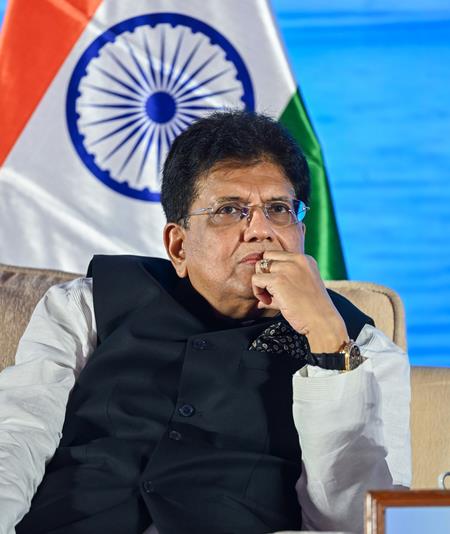
Addressing the Young Leaders Discourse Forum at Kirori Mal College here,
Goyal expressed confidence that the country would achieve the export milestone,
requiring another USD 520 billion in exports during the remaining six months of
the financial year.
India had recorded its highest-ever exports of USD 863 billion in the
previous financial year, he said, adding that the government had deliberately
opted for a target of USD 1 trillion, envisaging 16 per cent growth, despite
relatively modest projections for global trade expansion.
"We could have set a target of USD 900 billion, which would itself
have represented more than twice the projected global trade growth. But we
chose to be ambitious," Goyal said, expressing optimism about achieving
the target and noting that October had also been a good month for exports.
He pointed out that the International Monetary Fund (IMF), which had
projected global trade growth of 1.9 per cent in April-May, had subsequently
revised its estimate to around 3.5 per cent. India's strong export performance
could have been among the factors contributing to the upward revision, he
observed.
Highlighting India's growing influence in international trade, Goyal said
the country had emerged as a trusted global partner, with nations across almost
every region showing keen interest in entering into preferential trade
agreements and free trade agreements with India.
He attributed the country's rising international standing to its economic
resilience, skilled workforce, youthful population and commitment to
contributing to global growth.
India had travelled a remarkable distance from being counted among the
'Fragile Five' economies to becoming one of the world's leading economies and
the fastest-growing large economy, the minister said.
Referring to a recent World Bank report, he noted that nearly 50 crore
people had moved out of extreme poverty and were working towards improving
their living standards through sustained efforts.
Goyal said India's demographic advantage, with an average age of below 30
years, its democratic framework, talent pool, decisive leadership and the
aspirations of 140 crore people had collectively strengthened the country's
growth trajectory.
Recalling India's contribution during global crises, he said the country
had supplied vaccines to several nations during the COVID-19 pandemic while
ensuring free vaccination for its own citizens. India had also extended
assistance through medicines, relief and rehabilitation support to countries
irrespective of their level of development, he added.
Turning his attention to the younger generation, Goyal said achieving the
vision of a developed India by 2047 was non-negotiable and today's youth would
play a decisive role in shaping the country's future.
Observing that students would be in their forties when India celebrates
100 years of independence, he urged them to think beyond conventional
limitations, embrace change and pursue ambitious goals.
He emphasised that transformation required a fundamental change in the
way people think, work and live, and called upon young people to continuously
reinvent themselves and remain committed to lifelong learning.
Educational institutions, he said, played a crucial role not merely in
imparting academic knowledge but also in building character, resilience,
confidence and discipline. The guidance of teachers and the environment in
schools and colleges often shaped individuals in ways they fully recognised
only after entering professional life.
Referring to the National Education Policy, Goyal said greater
flexibility in choosing courses, earning academic credits and switching between
streams had opened up new avenues for students to pursue their aspirations.
With nearly the entire country becoming digitalised and around 1.1
billion internet users, young Indians had unprecedented access to global
knowledge, opportunities and experiences, which they should utilise to develop
their capabilities and contribute to national progress, he said.
Calling for a balance between modernisation and cultural values, the minister stressed that discipline and respect for traditions remained fundamental to the strength of institutions.
He urged students to keep a larger national goal in mind, maintain self-confidence and courage, and never shy away from challenges, asserting that determination and the willingness to embrace change were essential for success.