THEBUSINESSBYTES
BUREAU
NEW
DELHI, JULY 6, 2026
Union Commerce and
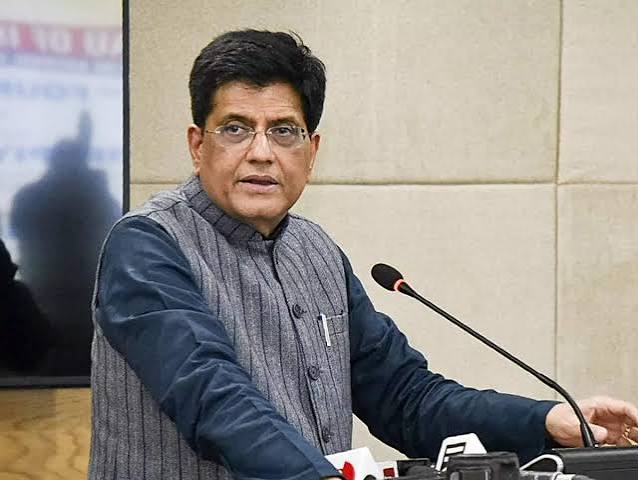
Industry Minister Piyush Goyal on Monday asserted that India's leather and
footwear industry has the potential to expand employment from the current over
40 lakh people to one crore, while urging the sector to target USD 15 billion
in exports over the next five to six years by capitalising on India's expanding
network of Free Trade Agreements (FTAs), improving quality, design, branding,
sustainability and scale.
Addressing the
Council for Leather Exports National Export Excellence Awards 2024-25 in New
Delhi, Goyal said the sector, which currently exports leather products worth
around USD 4-4.5 billion, was poised for transformational growth and should set
far more ambitious goals.
“If I was in your shoes, or in your leather
shoes, if I may say so, I would not aspire for anything less than a 3x outcome
in the next five to seven years,” he said, urging the industry to target
exports of at least USD 15 billion.
The Minister said the
enabling ecosystem was now firmly in place, with India producing high-quality
leather goods backed by skilled artisans, experienced workers and industry
leaders capable of competing globally. He stressed that the country's recently
concluded and upcoming FTAs would open unprecedented opportunities for Indian
exporters.
Goyal announced that
the India-UK Free Trade Agreement would come into force on July 15, while
discussions with the European Union were progressing rapidly. He said both
sides were working to complete the legal review within the next 15-20 days,
adding that he would meet his EU counterpart in Brussels on July 14 and 15
during a business delegation visit covering Belgium, Spain and Finland to
promote Indian products and services.
Highlighting India's
growing global trade footprint, Goyal said FTAs had already opened markets in
38 developed countries, while existing agreements with ASEAN, Japan and South
Korea had expanded preferential access to 50 countries. He added that
negotiations were progressing with Canada, the Gulf Cooperation Council (GCC),
Mexico, Brazil, South African Customs Union (SACU), Israel, Eurasia, Central
Asia, Russia, Chile and Ecuador, creating vast new opportunities for exporters.
Calling for wider
market diversification, the Minister pointed out that 77 per cent of India's
leather exports currently go to just 15 countries. He urged exporters to
explore smaller developed economies alongside established destinations such as
the United States, the United Kingdom, Germany and Italy, particularly for
premium and designer leather products.
He said the leather
industry's opportunities extended far beyond footwear to include handbags,
wallets, jackets, apparel, belts, saddles, upholstery, luxury furniture and
numerous industrial and lifestyle applications.
“The sky is the limit when it comes to the
potential of your industry,” he said.
Goyal assured the
industry of full support under the Export Promotion Mission, including
assistance for overseas exhibitions, trade delegations, warehousing facilities
and global marketing initiatives. He encouraged the sector to organise
exhibitions every month in different developed countries and suggested
establishing overseas warehousing facilities similar to Bharat Mart in Dubai to
facilitate faster deliveries.
The Minister
underlined that the future competitiveness of the sector would depend on
superior quality, design, packaging, branding and economies of scale. He urged
companies to invest in world-class testing facilities and laboratories, saying
Indian manufacturers should never settle for second-best equipment or
certification standards.
Emphasising the
sector's employment potential, Goyal said the leather industry currently
employed over 40 lakh people and challenged stakeholders to raise that figure
to one crore.
“The sector already employs more than 40 lakh,
or over four million, people and asked whether this could rise to one crore. He
said it was possible and added that as the sector grew in economic size, it
would also benefit from economies of scale.”
He also called for a
comprehensive overhaul of India's leather development centres, suggesting that
the industry either take over their management or consolidate the existing 12
centres into a smaller number of efficient, well-equipped institutions. He said
the Government was willing to hand over their management entirely to industry
for skill development and worker training.
Describing the Centre
as a "listening government", Goyal urged industry stakeholders to
actively participate in decision-making and help transform these institutions
into world-class skill development hubs.
The Minister further
encouraged collaboration with premier institutions such as the National
Institute of Design (NID) for product design, the Indian Institute of Packaging
for packaging innovation, the Quality Council of India (QCI) for quality
enhancement and the Bureau of Indian Standards (BIS) for strengthening product
standards.
He stressed that
products sold domestically and internationally should meet the same high
standards while workers should receive proper certification, factories should
adopt modern equipment and workplaces should prioritise safety.
Goyal also urged the
sector to embrace sustainability through efficient recycling of waste, water
and effluents, saying environmentally responsible manufacturing would command
greater value in global markets. Products manufactured using renewable energy
and backed by sustainability certification, he noted, could secure premium
prices overseas.
Highlighting the
growing role of technology, the Minister said Artificial Intelligence (AI) and
robotics offered enormous opportunities for the leather industry. AI could help
analyse fashion cycles, forecast demand and improve design capabilities, while
robotics could enhance manufacturing precision without reducing employment.
“Robotics, when used in critical functions
requiring high precision, did not take away jobs but added jobs. If precision
improved and markets grew, more jobs would be created,” he said.
Quoting Prime
Minister Narendra Modi, Goyal said, “We can become a global champion in leather
and footwear exports by leveraging research and development and our traditional
craftsmanship with modern technology.” He said following this vision would
enable the sector to achieve far greater global success.
The Minister noted
that leather craftsmanship in India dates back nearly 7,000 years, with roots
in the Indus Valley Civilisation, and urged the industry to take pride in
India's rich heritage while positioning itself as a global leader in premium
leather products.
Congratulating the winners of the National Export Excellence Awards, Goyal called upon exporters to view themselves as ambassadors of Brand India, emphasising that their success generated employment, strengthened self-reliance and enhanced India's reputation in global markets.
He also pointed out that nearly 40 per cent of the workforce in the leather sector comprises women, urging companies to continue investing in worker welfare and inclusive growth, saying such efforts could fundamentally transform the industry's future.