THEBUSINESSBYTES
BUREAU
NEW DELHI,
MARCH 19, 2026
Highlighting the rapid transformation
of India’s maritime sector, Union Minister of Ports, Shipping and Waterways
Sarbananda Sonowal on Thursday said the ambitious Maritime India Vision 2030 is
delivering tangible results in capacity expansion, operational efficiency and
coastal cargo growth across major ports.
In a written reply to the Rajya Sabha,
the Minister underscored that port capacity has increased steadily from 1,598
MTPA in FY 2021–22 to 1,681 MTPA in FY 2024–25, driven by sustained
infrastructure development. Efficiency gains have also been evident, with
average vessel turnaround time improving from 52.9 hours to 48 hours in FY
2023–24 before moderating slightly to 49.4 hours in FY 2024–25. Coastal cargo
movement has seen consistent growth as well, rising from 171 million tonnes to
196 million tonnes over the same period.
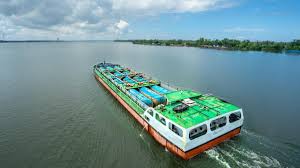 Sonowal further highlighted strategic
initiatives aimed at strengthening multimodal connectivity, particularly along
the East Coast. The operationalisation of National Waterway-5, announced in the
Union Budget 2026–27, is poised to enhance inland waterway transport by linking
key ports with mineral-rich hinterlands. The waterway will connect Paradip Port
and Dhamra Port to industrial centres such as Talcher and Angul, enabling more
efficient bulk cargo movement and lowering logistics costs.
Sonowal further highlighted strategic
initiatives aimed at strengthening multimodal connectivity, particularly along
the East Coast. The operationalisation of National Waterway-5, announced in the
Union Budget 2026–27, is poised to enhance inland waterway transport by linking
key ports with mineral-rich hinterlands. The waterway will connect Paradip Port
and Dhamra Port to industrial centres such as Talcher and Angul, enabling more
efficient bulk cargo movement and lowering logistics costs.
Additionally, initiatives like the Rail–Sea–Rail model at Paradip Port are boosting coastal shipping by enabling seamless cargo transfers across transport modes. These efforts are expected to further strengthen supply chains and accelerate industrial growth, particularly in eastern India, as the country moves towards becoming a global maritime powerhouse.