THEBUSINESSBYTES BUREAU
BHUBANESWAR, FEBRUARY 20, 2026
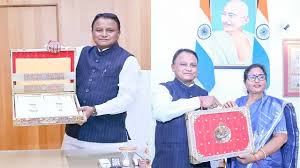
Odisha has unveiled an ambitious ₹3.10 lakh crore Annual Budget
for 2026–27, positioning capital expenditure, infrastructure expansion and
social inclusion as the twin engines of its next growth phase, with Chief
Minister Mohan Charan Majhi, who
also holds the Finance portfolio, presenting what he described as a development
roadmap rather than a mere fiscal statement.
Framing the Budget as a strategic instrument for long-term economic
transformation, the Chief Minister said it seeks to accelerate the state’s
journey towards a “Viksit and Samruddha Odisha” while ensuring that growth is
broad-based and equitable. Ahead of the presentation, Majhi underscored that
the fiscal plan is anchored in inclusive development, aimed at delivering tangible
benefits to farmers, women, youth and vulnerable communities alongside
strengthening physical infrastructure and industrial capacity.
Taking to ‘X’, Majhi said, “With the divine blessings of Mahaprabhu Shri
Jagannath and the abiding faith of the people of Odisha, we are advancing
steadily towards the vision of a Viksit and Samruddha Odisha. The Odisha Budget
2026–27 lays out a clear roadmap for inclusive growth, reflecting the
collective aspirations of annadatas, Narishakti, youth, and every stakeholder
in the state’s progress.”
 The ₹3.10 lakh crore outlay marks a significant rise
from ₹2.90 lakh crore in the previous financial year, signalling the
government’s intent to sustain high public investment despite a challenging
macroeconomic environment. The
increase also reinforces Odisha’s emerging reputation as one of India’s most
aggressive states in terms of capital formation, particularly in transport,
irrigation, logistics and urban infrastructure.
The ₹3.10 lakh crore outlay marks a significant rise
from ₹2.90 lakh crore in the previous financial year, signalling the
government’s intent to sustain high public investment despite a challenging
macroeconomic environment. The
increase also reinforces Odisha’s emerging reputation as one of India’s most
aggressive states in terms of capital formation, particularly in transport,
irrigation, logistics and urban infrastructure.
A key highlight of the fiscal strategy is the continued prioritisation of
capital expenditure, which, according to the Odisha Economic Survey 2025–26, is
projected to reach 6.6 per cent of the state’s gross state domestic product.
This places Odisha at the forefront nationally in terms of capex intensity, a
metric closely watched by investors as an indicator of future growth potential
and private sector crowd-in effects.
Senior officials indicated that sustained investments in roads, bridges,
industrial corridors and irrigation networks are expected to reduce logistics
costs, improve agricultural productivity and enhance connectivity to ports and
mineral belts. These structural upgrades are likely to strengthen Odisha’s
competitiveness in sectors such as steel, mining, renewable energy, food
processing and logistics, while also supporting the expansion of MSMEs and
rural enterprises.
Beyond infrastructure, the Budget seeks to deepen the state’s social
development agenda through targeted spending aligned with the Antyodaya
principle, which focuses on reaching the last mile. Majhi emphasised that
development must translate into dignity and opportunity for all citizens, saying,
“This Budget reaffirms our commitment to inclusive development and emphasizes
welfare for farmers, empowerment of women, and meaningful opportunities for the
youth, while strengthening infrastructure and overall economic growth.”
For the business community, the continued emphasis on high public
investment and fiscal discipline sends a positive signal. By maintaining a
balance between welfare spending and asset creation, the state aims to preserve
macroeconomic stability while catalysing private investment. Economists note
that Odisha’s strategy of using public capex to stimulate demand, create jobs
and unlock supply-side efficiencies could support sustained GSDP growth in the
medium term.
The Budget’s focus on agriculture, women-led entrepreneurship and skill
development is also expected to widen the consumption base, an important factor
for sectors such as retail, housing, financial services and rural markets.
Enhanced irrigation and rural connectivity, in particular, are likely to boost
farm incomes and integrate hinterland economies with urban growth centres.
The fiscal roadmap aligns with the state’s broader vision of improving quality of life through better infrastructure, expanded livelihood opportunities and stronger social protection systems. By leveraging its strong balance sheet and prioritising productive expenditure, Odisha aims to consolidate its position as one of the fastest-growing state economies while ensuring that growth outcomes are widely shared.
As the state steps up investments and policy support across sectors, the 2026–27 Budget is being viewed not only as a spending plan but as a long-term growth architecture designed to attract investment, enhance productivity and deliver inclusive prosperity across regions and social groups.