
THEBUSINESSBYTES BUREAU
BHUBANESWAR, JUNE 23, 2026
Declaring that Odisha is fully prepared to protect farmers
and sustain agricultural growth despite looming climatic uncertainties, Deputy
Chief Minister Kanak Vardhan Singh Deo on Tuesday said the state has put in
place a comprehensive strategy to mitigate the potential impact of El Niño and
ensure a successful Kharif 2026 season.
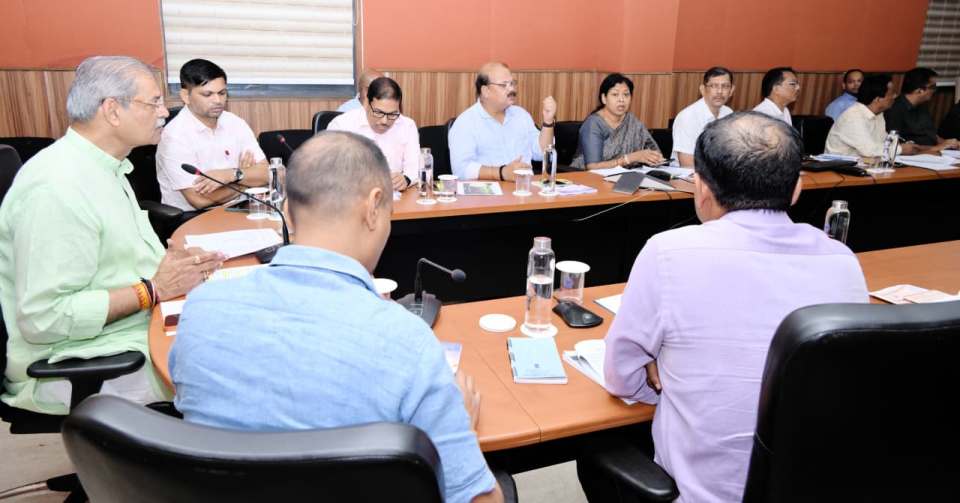
The assurance came during a high-level video conference
review chaired by Union Agriculture Minister Shivraj Singh Chouhan, who
assessed Kharif preparedness and the state’s measures to address possible El
Niño-related challenges. Singh Deo participated in the review along with senior
officials, including Commissioner-cum-Secretary Sachin Ramchandra Jadhav,
Agriculture Director Shubham Saxena, Soil Conservation Director Subrat Kumar
Panda and Horticulture Director Kalunge Gorakh Waman.
 With the India Meteorological Department forecasting a
below-normal southwest monsoon at 92 per cent of the Long Period Average, the
state government has placed eight districts — Deogarh, Sundargarh, Keonjhar,
Mayurbhanj, Koraput, Rayagada, Malkangiri and Nabarangpur — under special
monitoring. The administration is closely tracking potential risks such as
delayed sowing, moisture stress, reduced reservoir storage and pest outbreaks.
With the India Meteorological Department forecasting a
below-normal southwest monsoon at 92 per cent of the Long Period Average, the
state government has placed eight districts — Deogarh, Sundargarh, Keonjhar,
Mayurbhanj, Koraput, Rayagada, Malkangiri and Nabarangpur — under special
monitoring. The administration is closely tracking potential risks such as
delayed sowing, moisture stress, reduced reservoir storage and pest outbreaks.
To ensure agricultural productivity and food security, Odisha
has finalized a cropping programme covering 57.88 lakh hectares. The state has
already initiated large-scale distribution of certified seeds at subsidized
rates and created a strategic seed reserve of 14,350 quintals, including 7,500
quintals of paddy seeds and 6,850 quintals of non-paddy seeds, to tackle any
mid-season contingencies.
Fertilizer availability has also been prioritized, with 6.40
lakh metric tonnes already positioned against the total seasonal requirement of
11.42 lakh metric tonnes, ensuring uninterrupted support to farmers throughout
the cultivation cycle.
Emphasizing resilience and farmer empowerment, the state is
leveraging technology-driven interventions and community outreach programmes to
address climatic challenges. Crop weather advisories are being disseminated
through the Krushi Samrudhi Helpline’s Interactive Voice Response System
(IVRS), while the ‘Khet Bachao Abhiyan’ campaign and natural farming workshops
are being conducted across districts and blocks to encourage sustainable
agricultural practices and reduce dependence on chemical inputs.
Singh Deo said Odisha’s preparedness strategy extends beyond prevention to rapid response and farmer protection. Expert teams from the Odisha University of Agriculture and Technology and Krishi Vigyan Kendras have been placed on alert for pest surveillance and management, while efforts are being intensified to maximize farmer enrollment under the Pradhan Mantri Fasal Bima Yojana.
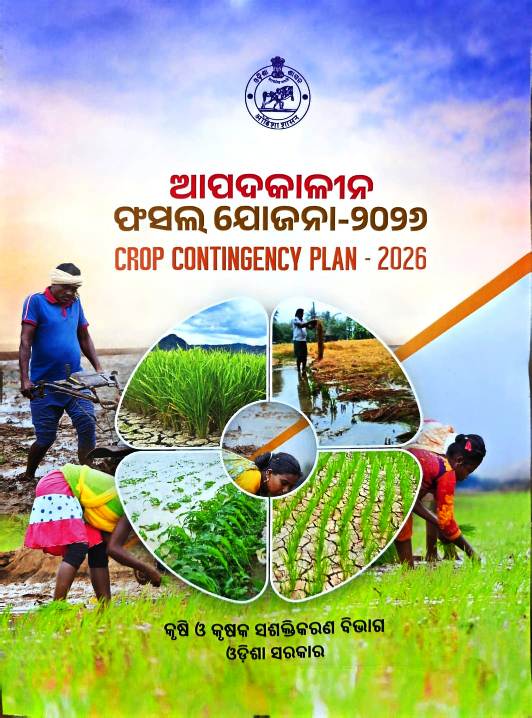
He further informed that comprehensive Crop Contingency Plans have already been prepared at both the state and district levels, with districts directed to formulate block-level contingency plans to ensure swift and localized responses to any adverse weather developments.