THEBUSINESSBYTES
BUREAU
BHUBANESWAR,
MARCH 22, 2026
Think Change Forum (TCF) has released
a comprehensive report titled “Odisha 2.0: Building a New Growth Model by
Learning from India’s Best-Performing States,” highlighting the urgent need for
stronger policy enforcement and faster execution to unlock the state’s next
phase of economic growth. Based on extensive research and consultations with
economists, policy experts and senior practitioners with long-standing
experience in Odisha, the report positions the state at a critical inflection
point in its development journey.
According to the report, Odisha is
increasingly being viewed as a key growth engine for eastern India under the
Purvodaya Vision, while also contributing significantly to the national
ambition of Viksit Bharat @2047. However, the study emphasises that policy
intent must now translate into measurable outcomes through consistent
implementation and removal of long-standing execution bottlenecks.
Summarising the report’s core message,
Ranganath T., Secretary General, Think Change Forum, said Odisha has the
opportunity to emerge as a globally competitive and regionally balanced growth
model driven by effective implementation. He stressed that learning from past
experiences and replicating best practices from high-performing states would be
essential to ensure that large anchor investments generate value chains,
employment opportunities and local prosperity across districts.
A key insight from the report is that
high-performing states distinguish themselves not merely through policy
announcements but through their ability to fast-track project execution. It
emphasises the importance of ensuring that major approved projects move quickly
from intent to implementation so that anchor investments can catalyse
industrial ecosystems and generate widespread economic benefits.
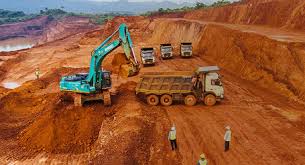
Highlighting challenges in the mining
sector, R. K. Sinha, former Controller General of the Indian Bureau of Mines
and a noted mining policy specialist, observed that while India has a robust
mineral policy framework, economic and social gains depend largely on effective
execution. He pointed out that despite Odisha possessing nearly 51 percent of
India’s bauxite reserves — with the south-western belt accounting for nearly 85
percent of these resources — less than one-fourth of the deposits are currently
under active production. This, the report notes, reflects significant
underutilisation of the state’s mineral potential.
 The study cites the alumina refinery
at Lanjigarh in western Odisha as a case study of a major anchor investment
whose full multiplier effect remains constrained due to limited availability of
locally sourced bauxite. The report identifies operationalisation of nearby
mines as a “low-hanging opportunity” capable of delivering rapid economic
gains. It notes that India imported around 3.6 million tonnes of bauxite in
FY2023 and an estimated 4.5 million tonnes in FY2024–25, involving foreign exchange
expenditure of approximately ₹4,000–5,000
crore. Additionally, imports of finished aluminium crossed ₹70,000 crore in
FY2025–26, underscoring the potential to strengthen domestic value addition in
mineral-rich regions such as Kalahandi and Rayagada.
The study cites the alumina refinery
at Lanjigarh in western Odisha as a case study of a major anchor investment
whose full multiplier effect remains constrained due to limited availability of
locally sourced bauxite. The report identifies operationalisation of nearby
mines as a “low-hanging opportunity” capable of delivering rapid economic
gains. It notes that India imported around 3.6 million tonnes of bauxite in
FY2023 and an estimated 4.5 million tonnes in FY2024–25, involving foreign exchange
expenditure of approximately ₹4,000–5,000
crore. Additionally, imports of finished aluminium crossed ₹70,000 crore in
FY2025–26, underscoring the potential to strengthen domestic value addition in
mineral-rich regions such as Kalahandi and Rayagada.
Economist Prof. Nilanjan Banik,
Program Director at Mahindra University, noted that while large
capital-intensive investments boost output, employment generation depends on
the depth of local industrial ecosystems. Supply-side constraints, particularly
in raw material availability, can limit income generation and reduce the
overall multiplier impact of industrial investments.
The report also stresses the need to
strengthen community inclusion in mineral-bearing districts. It recommends more
effective utilisation of the District Mineral Foundation (DMF) to ensure
visible development outcomes and greater participation of local communities. In
the Lanjigarh case study, the report notes that 5 percent of annual profits
from refining locally sourced bauxite is earmarked for community welfare.
However, the absence of operational mining has restricted the flow of these
funds, limiting potential socio-economic benefits for the region.
Deepak Mohanty, former Director of
Mines, Odisha, suggested that allowing village communities greater control over
portions of DMF resources could strengthen local ownership and ensure that
development assets are better maintained and aligned with local needs.
The study further underscores the
importance of balanced regional development between coastal and western Odisha.
While coastal districts have gained a natural advantage due to ports and
logistics infrastructure, mineral-rich interior regions require focused policy
attention to develop manufacturing ecosystems and improve connectivity.
Strengthening logistics, evacuation infrastructure and sustainability
safeguards will be essential to ensure that industrial growth becomes
broad-based and globally competitive.
Prof. Suresh Chandra Misra, former
Professor at IIT Kharagpur, observed that although industrial clusters are
emerging along the coast due to logistics advantages, minerals sourced from
interior districts often move out without generating sufficient local value
addition or manufacturing linkages.
The report estimates that operationalising just three bauxite mining clusters in western Odisha could add nearly ₹18,000 crore annually to the state’s Gross State Domestic Product (GSDP), create around 15,000 direct jobs and more than 50,000 indirect employment opportunities, while catalysing approximately USD 2.5 billion in downstream investments across mineral-bearing districts.
Concluding its analysis, the Think Change Forum report calls for a more implementation-led growth strategy anchored in stronger MSME development, balanced regional expansion, improved utilisation of mineral resources and deeper community participation through instruments such as the DMF. It emphasises that addressing long-pending execution challenges will be critical for Odisha to fully leverage its strategic advantages in minerals, geography and investment potential, and to emerge as a competitive growth hub in the coming decades.