THEBUSINESSBYTES
BUREAU
BHUBANESWAR,
OCTOBER 5, 2026
Odisha needs to
balance environmental protection with industrial growth to facilitate
investments while ensuring sustainable development, Chief Secretary and Odisha
State Pollution Control Board (OSPCB) Chairman Anu Garg said on Monday.
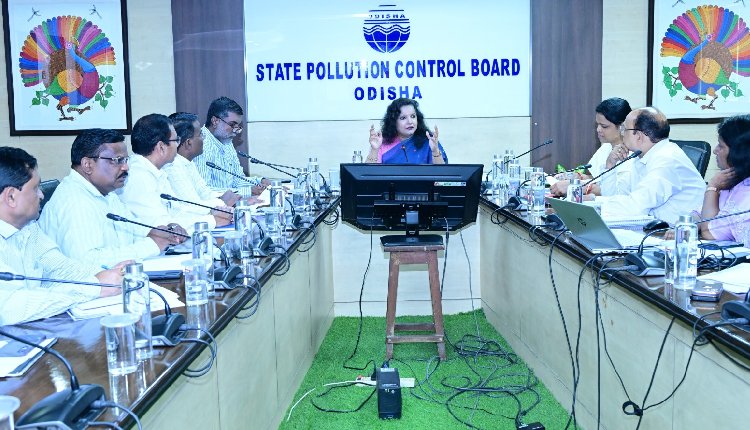
Reviewing the
functioning of the OSPCB here, Garg said the Board should move beyond its
traditional role of granting permissions and checking compliance and evolve
into a data-driven, technology-enabled and transparent environmental management
institution.
The Chief Secretary
reviewed the Board’s regulatory framework, environmental monitoring, waste
management, human resources and institutional challenges, and outlined
priorities for its future course of action.
With rapid expansion
in sectors such as steel, aluminium, power, mining and petrochemicals, Garg
stressed the need for responsible industrialisation that goes hand in hand with
environmental protection.
She said
environmental approval and compliance procedures should be made simpler,
transparent, predictable and time-bound, with greater use of technology, as
part of the Ease of Doing Business framework.
Such measures would
help industries maintain prescribed environmental standards while creating a
more conducive ecosystem for new investments and industrial establishments in
the state, she said.
Garg directed the
OSPCB to focus on policy reforms, institutional capacity building, modern
technology, laboratory and research infrastructure, waste recycling and reuse,
public awareness and human resource development.
She said the Board’s
initiatives should be aligned with the broader objectives of ‘Viksit Odisha
2036’ and ‘Viksit Bharat 2047’, integrating environmental protection with
economic growth, industrial development, investment, innovation and employment
generation.
Highlighting the
importance of the circular economy, Garg said waste should not merely be
considered something to be disposed of, but treated as a potential economic
resource.
She called for
greater emphasis on segregation, collection, processing, recycling and resource
recovery of municipal, industrial, plastic, e-waste, construction and
demolition, hazardous and other categories of waste.
The ‘Waste to Wealth’
or ‘Waste to Economy’ approach should be promoted by encouraging technologies,
enterprises and business models that enable waste generated in one sector to
become a useful resource or raw material for another, she said.
Such an approach
would reduce the burden on waste-disposal systems while creating opportunities
for new businesses, employment and income generation, Garg said.
She also said
Odisha’s future economic growth should not depend solely on its mineral
resources and underlined the importance of tourism as another major driver of
the state’s economy.
The OSPCB has an
important role in supporting the state’s overall development, including tourism
and infrastructure expansion, while safeguarding the environment, she said.
Member Secretary of
the OSPCB Dr Manoj V Nair made a detailed presentation on the Board’s existing
regulatory framework, challenges and future plans.
The meeting stressed
the need to strengthen online monitoring, automated data collection, digital
tracking of industrial compliance and data-driven decision-making to make
pollution control more efficient and transparent.
Modernisation of the
Board’s Central Laboratory, Coastal Environment Monitoring Centre and regional
laboratories was also discussed, along with measures to strengthen research and
technical collaboration with national research organisations, technical
institutions and specialised agencies.
The meeting also
examined ways to increase the reuse of industrial by-products such as fly ash,
slag, red mud and phosphogypsum, including their use in construction, highways
and other infrastructure projects.
Garg called for wider
environmental awareness programmes targeting students and the public and
suggested greater use of social media to disseminate information on
environmental protection and real-time air and water quality.
The meeting also
reviewed steps to integrate approval systems with the single-window online
platform, online certificate verification and paperless procedures to make
regulatory processes more efficient.
Human resource
requirements, including filling vacancies, promotions and future manpower
planning, were also reviewed, with emphasis on strengthening the Board’s
regional offices, laboratories, legal wing and information technology division.
Garg called for further strengthening the OSPCB’s role in promoting responsible industrialisation and sustainable development to help Odisha emerge as a clean, green and investment-friendly state.
Other members of the OSPCB were present at the meeting.