THEBUSINESSBYTES
BUREAU
NEW
DELHI, MARCH 13, 2026
Union Minister of
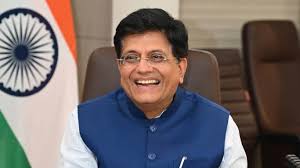
Commerce and Industry Piyush Goyal on Friday called upon Indian industry to
actively leverage the opportunities emerging from the India–EFTA Trade and
Economic Partnership Agreement (TEPA), highlighting the agreement’s
unprecedented $100 billion legally binding foreign direct investment commitment
and its potential to generate one million jobs across the country.
Addressing a
commemorative session marking two years of the signing of the India–EFTA TEPA,
organised by ASSOCHAM via video conference in New Delhi, the minister described
the pact as a historic milestone in India’s economic engagement with Europe and
a significant step in strengthening global trade partnerships.
 Goyal said the TEPA
agreement marked the beginning of India’s deeper economic integration with
European markets. Following the EFTA deal, India went on to conclude trade
agreements with the United Kingdom and later with the 27-nation European Union.
The EU pact was described by European Commission President Ursula von der Leyen
as the “mother of all deals,” underscoring the scale and strategic importance
of the partnership.
Goyal said the TEPA
agreement marked the beginning of India’s deeper economic integration with
European markets. Following the EFTA deal, India went on to conclude trade
agreements with the United Kingdom and later with the 27-nation European Union.
The EU pact was described by European Commission President Ursula von der Leyen
as the “mother of all deals,” underscoring the scale and strategic importance
of the partnership.
Highlighting progress
on the India–UK trade agreement, Goyal noted that the pact, signed on July 24
during the visit of Prime Minister Narendra Modi to the United Kingdom at
Chequers, is advancing swiftly through the ratification process. He expressed
optimism that it could become one of the fastest trade agreements ever approved
by the UK Parliament under the stewardship of India’s diplomatic team in
London.
The minister
emphasised that trade agreements must move beyond negotiations and translate
into real economic outcomes. Calling on industry associations to help drive
this transition “from deal to delivery,” he stressed that the success of such
agreements ultimately depends on increased trade flows, investments, technology
partnerships and business collaborations.
A key highlight of
the India–EFTA TEPA, Goyal said, is the $100 billion investment commitment
secured from the four member nations of the European Free Trade Association —
Switzerland, Norway, Liechtenstein and Iceland. He described it as an
unprecedented achievement in global trade negotiations, noting that never
before in the history of the World Trade Organization or global trade
agreements has a free trade agreement been linked to a legally binding
investment commitment of this scale.
According to the
minister, the commitment is not merely a declaration or memorandum of
understanding but a legally enforceable provision under the agreement. The
investment pledge also includes a commitment to create one million jobs within
India’s economic ecosystem, making it a transformative element of the trade
pact.
Goyal further pointed
out that the agreement contains a safeguard clause allowing India to claw back
benefits extended under the FTA if the promised investments are not realised.
Such a provision, he said, has not been seen in earlier global trade agreements
and reflects India’s strategic approach to negotiating trade deals.
The minister observed
that several countries have since attempted to replicate similar frameworks in
their trade agreements, but none have yet been able to secure legally binding
investment commitments of comparable scale.
Pointing to early signs
of progress, Goyal said Iceland has already made an initial investment of $30
million in Maharashtra’s fisheries sector. He remarked that “the flood starts
with a drizzle,” expressing confidence that such early investments would pave
the way for a much larger wave of capital inflows into India.
Describing the TEPA
as a comprehensive agreement covering trade, technology, innovation and
investment, the minister said it opens up significant opportunities across
sectors. He noted that the pact provides nearly 100 percent market access in
the four EFTA countries and substantially expands opportunities in the services
sector.
Goyal encouraged
members of ASSOCHAM and businesses from the services sector to fully utilise
the opportunities offered by the agreement. He highlighted potential areas for
collaboration in technology development, capacity building and deeper
partnerships between Indian and European companies.
At the same time, the
minister stressed that the government has carefully safeguarded India’s
sensitive sectors while negotiating free trade agreements. He reiterated that
agriculture and other vulnerable industries have been protected and concessions
have not been provided where they could adversely affect domestic stakeholders.
He added that the
government has consistently protected the interests of farmers, fishermen and
MSMEs in trade negotiations. Sensitive sectors such as dairy remain protected,
and genetically modified products have not been granted concessions or market
access.
Quoting Prime
Minister Narendra Modi, Goyal said the India–EFTA TEPA reflects a strong
commitment to shared prosperity and to building a deeper and more inclusive
partnership among participating nations.
The minister also
urged ASSOCHAM to take the message of the agreement to grassroots businesses
across India. Noting that the industry body represents thousands of
associations and lakhs of enterprises, he said it could play a crucial role in
connecting Indian producers and service providers with global markets.
He called on the
organisation to link women entrepreneurs, youth, farmers, food processing
units, seafood exporters, MSMEs and service sector professionals with the
opportunities created through the agreement.
Goyal also
highlighted prospects for professionals such as architects, chartered
accountants, nurses, engineers, IT specialists and business services providers,
as well as stakeholders in the audiovisual, education and cultural sectors.
Informing
participants about new facilitation measures, the minister said an FTA desk has
been established in western India to assist businesses exploring opportunities
under India’s trade agreements. The desk will help connect Indian companies
with businesses in partner countries and support the identification of
collaboration opportunities.
Encouraging ASSOCHAM
to act as a bridge between Indian enterprises and companies in the four EFTA
nations, Goyal said such institutional engagement will be crucial in ensuring
that the TEPA evolves into a landmark agreement driving India’s long-term
economic growth.
Referring to ongoing
geopolitical challenges and global uncertainties, the minister acknowledged
that the world is currently navigating a complex economic environment. However,
he expressed confidence that these challenges will eventually pass and open up
new opportunities for growth and cooperation.
Concluding his
address, Goyal voiced confidence that Indian businesses will expand globally
and achieve significant success by leveraging the opportunities created through
India’s expanding network of trade agreements.