
THEBUSINESSBYTES
BUREAU
KALAHANDI, MAY
2, 2026
In a significant breakthrough for
last-mile rural development, Raelpas, a remote Adivasi habitation in Odisha's
Kalahandi district, has secured access to safe drinking water at home through a
community-built, solar-powered piped water supply system.
Cut off from road connectivity by the
Indravati River, Raelpas' eight households had historically depended on a
single dug well located downhill, forcing women to traverse steep, rocky
terrain five to six times a day. The arduous task consumed nearly three hours
daily and had taken a severe physical toll over decades.
In December 2023, a door-to-door
survey conducted by Gram Vikas under the Water Secure Gram Panchayats (WSGP)
programme identified Raelpas as a critical gap in drinking water access. With
support from the Azim Premji Foundation, a decentralised, solar-powered
solution was subsequently designed and implemented.
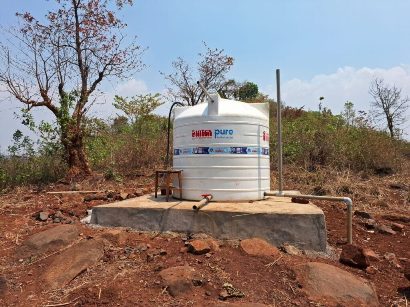
The innovative system lifts water from
a deepened well to a 5,000-litre storage tank using solar energy, and then
distributes it through piped connections to standposts installed at every
household. All materials — including solar panels, pipes, and the storage tank —
were transported across the river by boat and installed with active
participation from the community.
By March 2024, every household in
Raelpas had access to safe drinking water right at its doorstep.
"This is like a dream come true,"
said Bisu Majhi, president of the village. "For years, that one well was
our only source."
The impact has been immediate and
transformative. Women no longer spend hours each day fetching water,
significantly reducing drudgery and freeing up valuable time for livelihoods,
childcare, and other household responsibilities. Reliable access to water has
also enabled regular use of toilets, improved hygiene practices, and restored
privacy and dignity in everyday life.
Globally, more than two billion people
still lack access to safely managed drinking water, with women
disproportionately bearing the burden of water collection. Raelpas stands as a
compelling example of how decentralised, community-led solutions can overcome
geographic isolation and deliver essential services to some of the most
underserved populations.
"This intervention demonstrates
that remoteness need not be a barrier when solutions are designed for the
terrain and built with the community," said a Gram Vikas representative.
The Raelpas model offers a scalable
and inspiring blueprint for reaching similarly remote habitations across India —
places where infrastructure gaps remain, but community determination continues
to thrive.