THEBUSINESSBYTES
BUREAU
BHUBANESWAR,
APRIL 11, 2026
India’s evolving
employment landscape took centre stage at a high-impact leadership dialogue
hosted by Centurion University of Technology and Management, where top industry
leaders and academicians came together to shape a forward-looking blueprint for
the country’s future workforce. The “Future Skills & Human Capital
Leadership Dialogue” emerged as a powerful platform for redefining talent
development strategies aligned with the vision of a Viksit Bharat, emphasising
the urgent need to move beyond conventional academic metrics towards a
skill-first hiring approach.
 The dialogue
witnessed participation from senior HR leaders and industry veterans
representing leading global companies such as Accenture, Infosys, Cognizant,
and Tech Mahindra, reinforcing the growing consensus that India’s demographic
dividend can only be harnessed through robust, future-ready skill ecosystems.
The event functioned as a strategic confluence of ideas where academic leaders
and corporate experts jointly explored pathways to equip young professionals
with competencies suited for a dynamic global economy.
The dialogue
witnessed participation from senior HR leaders and industry veterans
representing leading global companies such as Accenture, Infosys, Cognizant,
and Tech Mahindra, reinforcing the growing consensus that India’s demographic
dividend can only be harnessed through robust, future-ready skill ecosystems.
The event functioned as a strategic confluence of ideas where academic leaders
and corporate experts jointly explored pathways to equip young professionals
with competencies suited for a dynamic global economy.
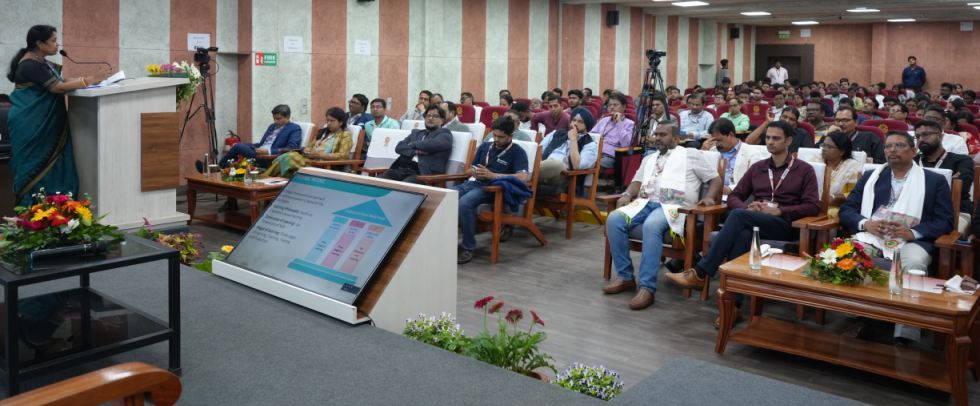 Delivering the
welcome address, Registrar Dr. Anita Patra highlighted how the university’s
academic framework is deeply aligned with national priorities. She stressed
that higher education institutions must evolve from degree-granting bodies into
skill-enabling ecosystems capable of producing industry-ready professionals
prepared for emerging technological challenges in 2026 and beyond.
Delivering the
welcome address, Registrar Dr. Anita Patra highlighted how the university’s
academic framework is deeply aligned with national priorities. She stressed
that higher education institutions must evolve from degree-granting bodies into
skill-enabling ecosystems capable of producing industry-ready professionals
prepared for emerging technological challenges in 2026 and beyond.
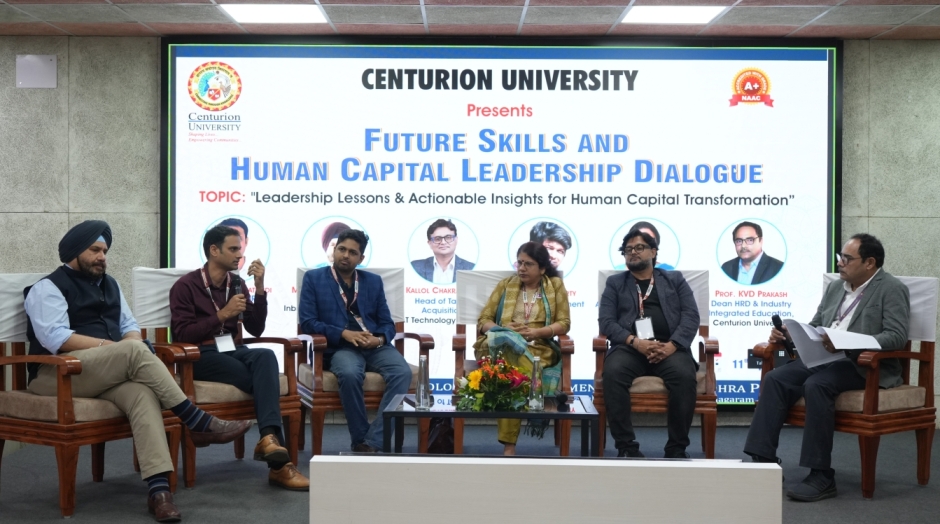
The first session, moderated
by Pro-Vice Chancellor Dr. Ajay Kumar Nayak, focused on emerging career
trajectories and the transformation of entry-level hiring patterns. Industry
experts underlined that employers increasingly prioritise cognitive agility,
digital fluency, and adaptability over traditional academic scores. The
discussion underscored the growing importance of continuous learning as the
cornerstone of professional success in an era shaped by rapid technological
advancements and artificial intelligence-driven disruptions. Students actively
engaged with industry experts on how evolving technologies are reshaping job
roles and skill requirements across sectors.
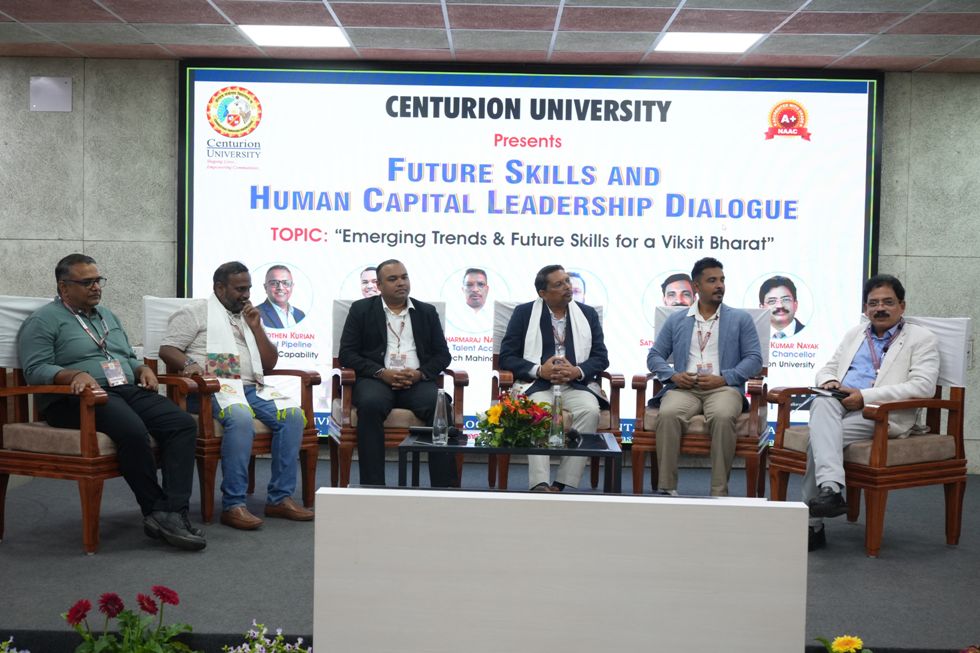 The second session,
guided by Dean HRD Prof. KVD Prakash, explored leadership strategies required
to build resilient and adaptive organisations. Experts emphasised that
institutions and corporations must work in close synergy to nurture
innovation-driven talent pipelines. The panel highlighted that universities can
serve as extended research and development ecosystems for industry, thereby
accelerating workforce readiness and enhancing employability outcomes. Speakers
also emphasised resilience as an essential attribute for professionals
navigating an increasingly volatile and competitive global environment.
The second session,
guided by Dean HRD Prof. KVD Prakash, explored leadership strategies required
to build resilient and adaptive organisations. Experts emphasised that
institutions and corporations must work in close synergy to nurture
innovation-driven talent pipelines. The panel highlighted that universities can
serve as extended research and development ecosystems for industry, thereby
accelerating workforce readiness and enhancing employability outcomes. Speakers
also emphasised resilience as an essential attribute for professionals
navigating an increasingly volatile and competitive global environment.
In the keynote address, Training and Placement Head Debasish Panda reaffirmed the institution’s commitment to integrating skill-based learning within academic curricula. He emphasised that bridging the gap between potential and productivity requires a future-ready academic ecosystem where industry and academia collaborate seamlessly to empower young talent.
The dialogue concluded with a shared vision that India’s journey towards becoming a developed nation will depend significantly on its ability to cultivate agile, skilled, and innovation-driven human capital. By fostering deeper collaboration between industry leaders and educational institutions, initiatives such as this leadership dialogue are expected to play a pivotal role in shaping a workforce capable of driving sustainable economic growth and global competitiveness.