THEBUSINESSBYTES
BUREAU
JHARSUGUDA,
APRIL 10, 2026
A public hearing on
the proposed expansion of NTPC Limited’s Darlipali thermal power project turned
into a flashpoint on Wednesday as residents and elected representatives from
four gram panchayats in Odisha’s Jharsuguda district voiced strong opposition,
raising serious concerns over environmental damage, health risks, and alleged
violations of due process.
The hearing, held at
Tileimal village under Loisingh panchayat, was convened to deliberate on the
Social Impact Assessment (SIA) report related to the acquisition of 68.48 acres
of private land earmarked for Phase-II expansion of the project (1×800 MW) and
the construction of an ash dyke. The proposed expansion is part of the
company’s plan to enhance power generation capacity, but it has triggered
mounting unease among local communities already grappling with the consequences
of industrial development.
 Chaired by Additional
District Magistrate (Revenue) Kishore Chandra Swain, the meeting was attended
by Land Acquisition Officer Vinay Patel, government officials, and representatives
of a Bhubaneswar-based consultancy firm responsible for preparing the SIA
report, which assessed the potential social and environmental implications of
the proposed land acquisition.
Chaired by Additional
District Magistrate (Revenue) Kishore Chandra Swain, the meeting was attended
by Land Acquisition Officer Vinay Patel, government officials, and representatives
of a Bhubaneswar-based consultancy firm responsible for preparing the SIA
report, which assessed the potential social and environmental implications of
the proposed land acquisition.
However, the
proceedings witnessed strong resistance from villagers belonging to Loisingh,
Chandnimal, Rajpur, and Gaudmal Gram Panchayats who collectively expressed
apprehensions about worsening environmental degradation, threats to public
health, and the possibility of displacement. Several people questioned the logic
of acquiring land in Jharsuguda district when the main Darlipali plant is
located in neighbouring Sundargarh district, urging authorities to utilise
available land in that region instead of expanding the project footprint into
new areas.
Concerns over
employment opportunities and regional development also featured prominently in
the discussions, with villagers demanding guaranteed jobs for local youth and
accelerated infrastructure development in affected villages to offset the
social cost of industrial expansion.
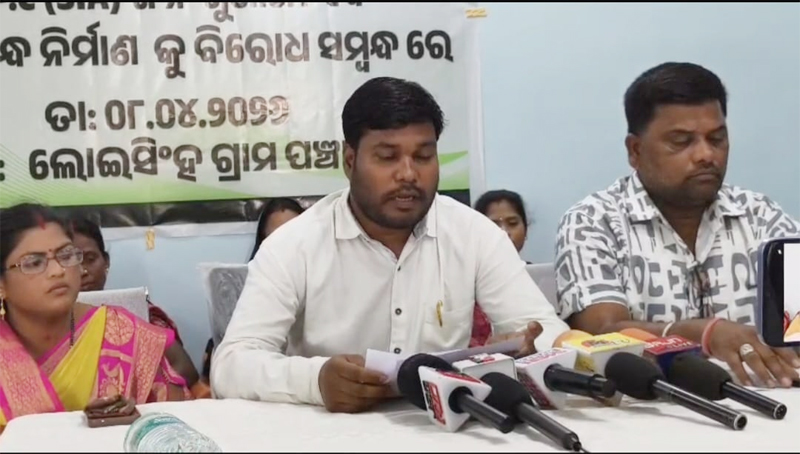
Sarpanches
representing the four panchayats alleged serious procedural lapses and termed
the hearing “illegal,” citing lack of transparency in the process. Loisingh
Sarpanch Sanatan Rohidas claimed that the notice for the public hearing was
issued only three days prior to the meeting instead of the mandated 14-day
period, raising questions over compliance with statutory norms. He further
alleged that several participants were prevented from freely expressing their
views during the hearing, intensifying resentment among local stakeholders.
Environmental
concerns dominated the deliberations, with villagers highlighting pollution
caused by existing ash ponds, which they alleged had already contaminated
nearby areas and the Basundhara River. According to villagers, this
contamination has affected drinking water quality and poses serious health
risks, particularly for tribal and marginalised communities dependent on local
water sources. They warned that the proposed ash dyke would aggravate
ecological stress and further compromise environmental safety.
Panchayat
representatives demanded that the SIA report be made publicly accessible and
shared with all affected households well in advance to ensure transparency and
informed participation. They also called for a fresh public hearing conducted
in accordance with prescribed guidelines and urged authorities to put the
expansion project on hold if public opposition continues to intensify.