
THEBUSINESSBYTES
BUREAU
NEW DELHI,
MARCH 19, 2026
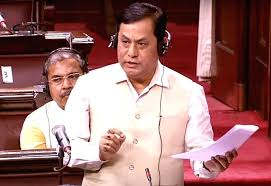
Union Minister of Ports, Shipping and
Waterways Sarbananda Sonowal has underscored the government’s aggressive push
towards reducing carbon emissions in port operations, outlining a series of
globally benchmarked initiatives aimed at transforming India’s maritime sector
into a greener, more sustainable ecosystem.
 In a written reply to the Rajya Sabha
on Thursday, the Minister detailed how the Ministry is driving the
decarbonisation agenda through the rollout of the “Harit Sagar” Green Port
Guidelines, alongside the implementation of the Green Tug Transition Programme,
which is facilitating the shift from conventional diesel-powered tugboats to
cleaner electric and hybrid alternatives. He emphasized that the transition is
part of a broader strategy to align Indian ports with international
environmental standards while enhancing operational efficiency.
In a written reply to the Rajya Sabha
on Thursday, the Minister detailed how the Ministry is driving the
decarbonisation agenda through the rollout of the “Harit Sagar” Green Port
Guidelines, alongside the implementation of the Green Tug Transition Programme,
which is facilitating the shift from conventional diesel-powered tugboats to
cleaner electric and hybrid alternatives. He emphasized that the transition is
part of a broader strategy to align Indian ports with international
environmental standards while enhancing operational efficiency.
The government’s green push is further
reflected in the accelerated adoption of renewable energy across port
infrastructure, electrification of cargo handling equipment, vehicles, and
railway lines, as well as the deployment of zero-emission trucks within port
premises. Additionally, the installation of Onshore Power Supply systems is
enabling ships to plug into shore-based electricity, significantly cutting
emissions during berthing.
In a notable move to incentivise
cleaner practices, Kamarajar Port Limited has introduced mechanisms encouraging
vessels to utilise shore power facilities, marking a shift towards more
sustainable port operations.
The transition is also being
reinforced by the development of green hydrogen ecosystems, with the Ministry
of New and Renewable Energy identifying key ports such as Deendayal Port
Authority, Paradip Port Authority, and V.O. Chidambaranar Port Authority as
Green Hydrogen Hubs. These hubs are expected to play a pivotal role in
advancing the country’s clean energy ambitions and supporting the maritime
sector’s long-term sustainability goals.