PRIYABRAT
BISWAl
BHUBANESWAR,
MAY 13, 2026
For decades, mining has
lived under a cloud of outdated perceptions — often viewed through the prism of
unregulated practices, environmental neglect, and community disruption. Yet,
that narrative is rapidly losing relevance. Today, India’s mining sector is
undergoing a structural transformation — one defined not merely by what is
extracted from the earth, but by what is restored to it.
The modern mining
ecosystem is no longer a loosely governed frontier activity. It is a tightly
regulated, technology-enabled, and environmentally accountable industry
operating under the oversight of institutions such as the Ministry of Mines,
the Indian Bureau of Mines, and the Directorate General of Mines Safety (DGMS).
Mandatory environmental clearances, forest approvals, continuous monitoring systems,
and scientifically designed mine closure plans now form the backbone of every
credible mining operation in the country.
Despite this
transformation, public discourse often remains anchored in the past. Much of
the criticism directed at the sector continues to draw from earlier eras marked
by unscientific extraction methods. These concerns, while historically valid,
are increasingly misapplied to today’s mining landscape — where transparency,
compliance, and sustainability are embedded into operational design rather than
treated as afterthoughts.
Technology has become
the defining force reshaping this sector. Drone-based aerial surveys,
AI-assisted geological modelling, real-time air and water quality monitoring
systems, and digital mine planning tools have introduced a level of precision
and accountability previously unimaginable. Together, these innovations ensure
that environmental impact is continuously measured, managed, and minimised
across the mine lifecycle.
At the heart of this
shift lies a new philosophy: sustainability is not a postscript to mining
operations — it is built into their foundation. Progressive mine closure
planning now requires restoration strategies to be defined before extraction
begins. This includes stabilising overburden dumps, rehabilitating topsoil,
restoring hydrological systems, and preparing land for post-mining use even as
extraction continues in parallel.
The importance of
mining to India’s growth trajectory cannot be overstated. The sector
contributes around 2.5 per cent to national GDP directly, while generating a
significantly larger multiplier effect across allied industries such as
manufacturing, infrastructure, logistics, and energy. India is among the
world’s largest producers of key minerals like coal, iron ore, and bauxite,
which collectively form the backbone of its industrial expansion.
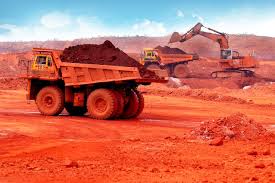
Among these, bauxite
holds strategic importance. As the primary source of aluminium, it powers the
materials of the future — solar panels, wind turbines, electric vehicles,
modern transmission systems, and lightweight construction solutions. With
aluminium demand in India projected to grow at 6–8 per cent annually, driven by
infrastructure development and the energy transition, bauxite mining is
becoming increasingly central to the country’s green growth ambitions.
In resource-rich
regions like Odisha — which accounts for over half of India’s bauxite reserves —
mining also serves as a critical socio-economic engine. It generates
employment, stimulates local enterprise ecosystems, and drives infrastructure
development in remote and tribal regions, creating long-term livelihood
pathways rather than short-term economic gains.
A defining example of
this evolving mining paradigm is Vedanta Aluminium.
Across its operations, the company has
integrated sustainability into the core of its mining philosophy. At its
Jamkhani mine in Odisha, concurrent reclamation ensures that land restoration
progresses in tandem with extraction. Scientific overburden management, water
conservation systems, and biodiversity-focused initiatives are embedded into
daily operations rather than treated as separate interventions.
The site’s adoption
of the Miyawaki afforestation technique — resulting in the plantation of 3.65
lakh saplings across 18 hectares — reflects a broader commitment to
accelerating ecological recovery and building dense green buffers in mined
areas. These efforts have contributed to the Jamkhani operations receiving a
4-star rating from India’s Ministry of Mines, underscoring the growing
alignment between industrial output and environmental stewardship.
Independent assessments further highlight the sector’s developmental impact. A 2025 AIDENT whitepaper estimates that bauxite mining in Odisha alone could generate up to 2.4 million direct and indirect jobs, spanning logistics, ancillary industries, and local entrepreneurship networks — transforming mining corridors into sustained economic ecosystems.
The future of mining, therefore, is not defined by extraction alone. It is defined by integration — of technology, regulation, ecology, and community development. As India accelerates its industrial and energy transitions, sustainable mining is no longer an aspiration. It is the operating standard of a sector that is quietly, but decisively, rewriting its own story.