THEBUSINESSBYTES
BUREAU
BHUBANESWAR,
MARCH 10, 2026
Tata Steel
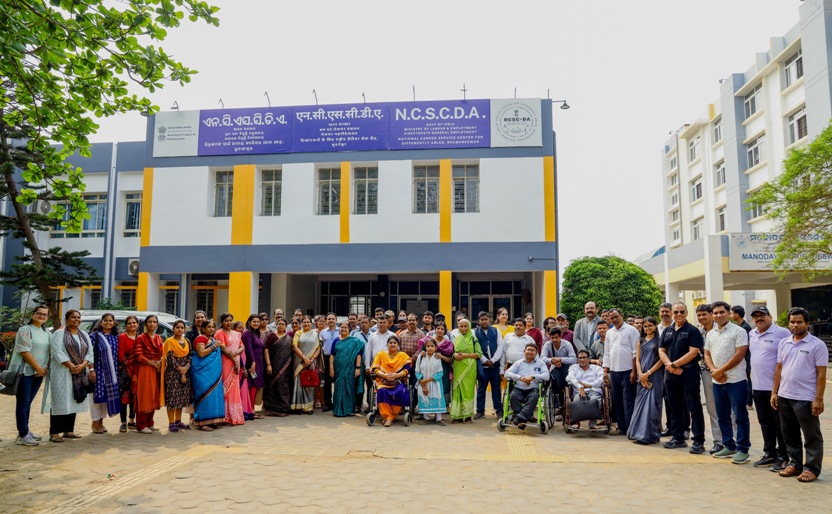
Foundation, through its SABAL programme, organised the Rural Disability
Convention in Bhubaneswar, bringing together policymakers, disability rights
advocates, practitioners, and civil society leaders to deliberate on the
challenges faced by differently abled persons in rural India and explore
pathways toward a more inclusive and accessible rural ecosystem.
Inspired by Mahatma
Gandhi’s belief that “India lives in its villages,” the convention focused on
the realities faced by differently abled persons in rural communities, where
access to healthcare, education, assistive technologies, and livelihood
opportunities often remains limited. The event was graced by several eminent
dignitaries and leaders working in the disability sector, including Bratati
Harichandan, State Commissioner for Persons with Disabilities, Government of
Odisha; Guruprasad Pawaskar, State Commissioner for Persons with Disabilities,
Government of Goa; Kasturi Mohapatra, Founder of Open Learning System; Jharna
Mallick, Director of Sarvesham Mangalam Foundation; Nidhi Goyal, Founder and
Executive Director of Rising Flame; Sibaji Panda, Founder and Director of Happy
Hand School; Minati Behra, Former WCD Commissioner and State Disability
Commissioner; Niranjan Behra, President of Odisha Viklang Manch; Captain
Amitabh, Head – Skill Development; and Sourav Roy, CEO, Tata Steel Foundation.
Their insights enriched the discussions and reinforced the need for coordinated
and sustained efforts across sectors.
 The convention
provided an important platform for dialogue on key issues such as access to
rehabilitation and healthcare services, inclusive education in rural schools,
livelihood opportunities beyond manual labour, accessible infrastructure, and
the social stigma often associated with disability. Participants also
highlighted the importance of effective implementation of existing legislation,
including the Rights of Persons with Disabilities Act, 2016, particularly in
rural contexts where awareness and institutional capacity often remain limited.
The convention
provided an important platform for dialogue on key issues such as access to
rehabilitation and healthcare services, inclusive education in rural schools,
livelihood opportunities beyond manual labour, accessible infrastructure, and
the social stigma often associated with disability. Participants also
highlighted the importance of effective implementation of existing legislation,
including the Rights of Persons with Disabilities Act, 2016, particularly in
rural contexts where awareness and institutional capacity often remain limited.
Speaking on the
occasion, Bratati Harichandan, State Commissioner for Persons with
Disabilities, Government of Odisha, said: “As we are aware, there remains a
significant disparity between urban and rural spaces for the differently abled
persons. It is therefore essential to extend sustained support in areas such as
health, education, and other critical aspects of human development — not only
for persons with disabilities (PwDs) but for the community as a whole.
Platforms like this convention, where diverse stakeholders come together with a
shared commitment, represent a meaningful step forward in fostering inclusivity
and strengthening support systems across rural India”.
Adding his thoughts, Sourav Roy, CEO, Tata Steel Foundation, said: “We are grateful to all the partners, practitioners, and community leaders who came together for this meaningful dialogue. The conversation today reminded us that differently abled persons in rural areas continue to face challenges in accessing healthcare, education, livelihoods, and inclusive infrastructure, often intensified by social stigma. Platforms like this help us listen and learn from diverse experiences while working together to strengthen community-based solutions and partnerships that can make rural development more inclusive.”
The panel discussions further highlighted the importance of strengthening partnerships among government institutions, non-profit organisations, healthcare providers, and community stakeholders to ensure sustainable and inclusive development. As a key partner to the International Purple Fest, Goa, a coffee table book was also unveiled during the convention in the presence of the State Commissioner for PwDs, Government of Goa (IPFG-2025), symbolising a shared commitment to advancing disability inclusion and awareness across the country.