Around 200 industry representatives from
across Odisha converge to exchange best practices, share expertise and explore
emerging technologies for safer iron and steel manufacturing
THEBUSINESSBYTES BUREAU
KALINGANAGAR, NOVEMBER 14, 2026
With workplace safety emerging as the foundation of sustainable
industrial growth, Tata Steel Kalinganagar reaffirmed its commitment to
fostering a zero-harm culture across the steel sector by hosting a one-day
state-level training programme on ‘Safety in Iron and Steel Plants’. Organised
under the aegis of the Directorate of Factories and Boilers, Odisha, and the
State Labour Institute, Odisha, the programme was held at the Plot 2 Auditorium
of Tata Steel Kalinganagar on Friday, bringing together industry
representatives, safety professionals and government officials on a common
platform to deliberate on emerging safety challenges, exchange best practices
and explore technology-driven solutions for safer industrial operations.
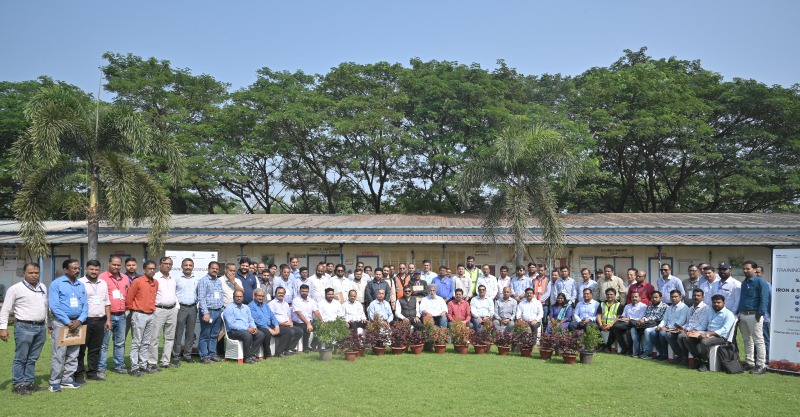
The programme witnessed the participation of around 200 delegates
representing iron and steel companies from across Odisha, providing a valuable
opportunity for knowledge-sharing, experience-based learning and collaborative
efforts to strengthen occupational health and safety standards across the
industry.
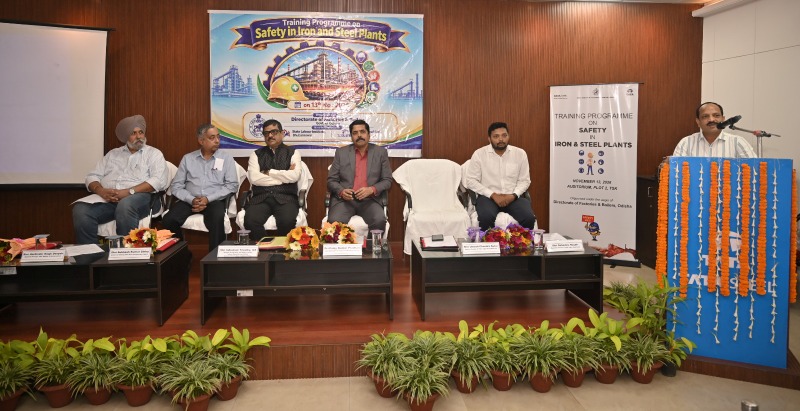
 Dr. Indramani Tripathy, Director of Factories and Boilers, Labour Commissioner
and Director of the State Labour Institute, Odisha, attended the inaugural
session as the Chief Guest. Other government officials present on the dais
included Malay Pradhan, Deputy Director of Factories and Boilers (Safety),
Bhubaneswar; Umesh Chandra Sutar, Deputy Director of Factories and Boilers,
Jajpur Division; Debashish Nayak, Assistant Director of Factories and Boilers,
Jajpur Zone; Kedarnath Hansda, Assistant Director of Factories and Boilers,
Keonjhar Zone; and Subhashree Dipali Muduli, Assistant Director of Factories
and Boilers, Balasore Zone. Senior leadership representatives from Tata Steel
Kalinganagar, including Subash Kumar Sinha, Chief of Iron Making, and Harbinder
Singh Deepak, General Manager, Projects and Construction, Odisha and
Maharashtra, also addressed the gathering, underlining the importance of
collective responsibility and sustained efforts in advancing industrial safety.
The day-long programme featured a series of technical sessions at the
Plot 2 Auditorium and the Safety Leadership Development Centre (SLDC)
Auditorium, bringing together industry experts and practitioners to deliberate
on critical safety concerns, operational challenges and evolving technological
interventions. The sessions covered a wide spectrum of subjects, including
electrical safety, furnace operations, hot metal handling, achieving zero-harm
in Direct Reduced Iron (DRI) manufacturing and steel melting operations.
Experts also highlighted the growing role of digital transformation, next-generation
blast furnace technologies and intelligent risk-management systems in
strengthening hazard identification, improving operational preparedness and
preventing workplace accidents.
A key focus of the deliberations was the need to move beyond a conventional, compliance-driven approach to safety and embrace a proactive, people-centric safety culture, supported by innovation, technology and continuous learning. The discussions emphasised that creating safer workplaces requires not only robust systems and procedures but also active employee participation, leadership commitment, risk awareness and a shared sense of responsibility at every level of industrial operations.
Through initiatives of this nature, Tata Steel Kalinganagar continues to extend its safety knowledge and operational expertise beyond its own facilities, creating opportunities for wider industry engagement and collaboration. By bringing together regulatory authorities, industry leaders and safety professionals on a common platform, the company aims to encourage the adoption of best practices, promote technological advancement and contribute to raising safety standards across Odisha's iron and steel industry. The initiative further reinforces the importance of collective action in building a resilient, responsible and sustainable steel manufacturing ecosystem where employee well-being and operational excellence go hand in hand.