•
Holistic skilling ecosystem spans vocational training, women-led
entrepreneurship, agriculture, sports and youth empowerment
•
More than 46,000 youth empowered through industry-aligned skilling initiatives
since 2016
THEBUSINESSBYTES
BUREAU
NEW
DELHI, JULY 15, 2026
Reinforcing its
commitment to building a future-ready workforce and advancing inclusive growth,
Vedanta Group has empowered nearly 20 lakh people through its skilling and
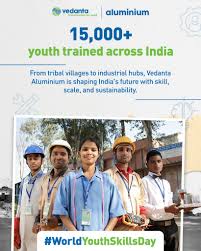
livelihood initiatives over the past six years. Marking World Youth Skills Day,
the company highlighted the impact of its holistic ecosystem that spans
vocational training, women-led entrepreneurship, agriculture, sports and youth
empowerment, creating sustainable livelihood opportunities across communities.
Focused on enhancing
employability and creating sustainable livelihoods across age groups, genders
and communities, Vedanta's skilling ecosystem spans vocational and technical
training, women-led entrepreneurship, agriculture and farmer capacity building,
sports-based skill development, and youth empowerment programmes.
Aligned with the
Government of India's Skill India Mission, Kaushal Bharat Abhiyan, and the
Ministry of Skill Development and Entrepreneurship's vision of unlocking human
capital to drive productivity, employment and entrepreneurship, Vedanta's
initiatives are creating pathways to sustainable livelihoods while contributing
to the nation's long-term economic growth.
Vedanta's skilling
philosophy, aligned with the United Nations Sustainable Development Goal 8
(Decent Work and Economic Growth), follows a holistic approach that nurtures
human potential from early childhood through employment and entrepreneurship.
By strengthening foundational learning, equipping youth with industry-relevant
skills, enabling women with livelihood opportunities, and connecting
communities to markets and employment, the company is building an integrated
ecosystem that promotes economic self-reliance and inclusive development.
A cornerstone of this
approach is Nand Ghar, Vedanta's flagship social impact programme, comprising
15,000 modernised anganwadis across 17 states. While transforming rural communities
through early childhood care, nutrition and pre-primary education, Nand Ghar
has also emerged as a powerful platform for women's skill development,
entrepreneurship, financial literacy and livelihood generation, enabling
greater financial independence and strengthening rural economies.
Complementing these
efforts are Vedanta's youth-focused skilling initiatives, which bridge the gap
between education and employment through industry-aligned vocational training,
technical education and placement support. Since 2016, these initiatives have
empowered more than 46,000 young people across the country. Training is
delivered through 25 Skill Development Centres across the states where Vedanta
operates, with women accounting for 51 per cent of trainees. The programmes
prepare participants for careers in manufacturing, digital services,
hospitality, entrepreneurship, drone technology and other emerging sectors.
Supported by a network of nearly 200 placement partners, the initiatives have
consistently achieved an 80 per cent placement rate, with graduates securing an
average annual CTC of more than ₹2 lakh.
India is home to one
of the world's youngest populations, yet only a small proportion of its
workforce has received formal vocational training — significantly lower than
many developed economies. As industries rapidly evolve through digital
technologies, automation and advanced manufacturing, expanding access to
industry-relevant skills has become critical to unlocking the country's
demographic dividend. Vedanta is working alongside government, industry and
implementation partners to help bridge this gap by creating employment-ready
talent while strengthening local livelihoods and entrepreneurship.
Vedanta's skilling
initiatives are implemented in partnership with leading government programmes,
including the Pradhan Mantri Kaushal Vikas Yojana (PMKVY), PM Vishwakarma, the
National Bank for Agriculture and Rural Development (NABARD), the Skill India
Impact Bond (SIIB), the Mukhyamantri Kaushal Vikas Yojana (MMKVY), and the Odisha
Skill Development Authority (OSDA). These collaborations, along with
partnerships with leading industry and implementation organisations, ensure
that skilling programmes remain aligned with evolving workforce requirements
and regional aspirations.
Across Vedanta's
businesses, region-specific initiatives address local opportunities and
employment needs. Vedanta Aluminium equips youth with vocational and technical
skills, Hindustan Zinc strengthens digital and service-sector employability,
Vedanta Aluminium's BALCO unit prepares rural youth for careers in advanced
manufacturing, while Vedanta Oil & Gas nurtures future-ready entrepreneurs
through enterprise development, drone technology and digital capability
building.
The impact of this ecosystem is reflected in the lives it transforms. Coming from an economically marginalised background and overcoming personal adversity, Sarita Sahu from Odisha completed hospitality training through Vedanta's Skill Development Centre and secured employment in the hospitality industry, rebuilding her confidence and achieving financial independence. In Rajasthan, Jitendra Singh, trained through Vedanta Oil & Gas's Skill Development Centre, became a certified drone pilot and entrepreneur. Today, he provides precision agriculture services that improve farm productivity while creating a sustainable livelihood for himself.
As India advances towards becoming a developed nation, skill development will remain fundamental to driving inclusive growth, productivity and global competitiveness. Through sustained investments in people, strong partnerships and community-led interventions, Vedanta continues to build an ecosystem that transforms learning into livelihoods and potential into prosperity, supporting India's vision of a skilled, self-reliant and future-ready nation.