THEBUSINESSBYTES
BUREAU
JHARSUGUDA,
MARCH 7, 2026
Across India,
millions of students in government schools continue to face structural barriers
that affect learning continuity and academic confidence, particularly in
subjects like Mathematics and Science. Large student–teacher ratios, limited
revision time and uneven access to supplementary learning resources often leave
students struggling to build strong conceptual foundations.
The challenge is
especially acute during secondary school years. According to Union Minister of
State for Women and Child Development, Savitri Thakur, over the past five years
more than 6.57 million children have dropped out of school in India, including
nearly 3 million adolescent girls, highlighting persistent barriers to
continuity in education during critical learning years. This underscores the
urgent need for targeted academic support, especially for girls. Recognising
this, Vedanta Limited has placed education and girls’ empowerment at the heart
of its community development agenda, with focused interventions across its
operational regions to strengthen foundational and secondary learning in
underserved rural communities.
 Until last year,
Kashish Kalse, a Class 10 student from a government school in Jharsuguda,
experienced many of these challenges. Classroom lessons frequently progressed faster
than she could comfortably follow, leaving little opportunity for revision or
individual guidance. As her Class 10 board examinations approached, the
pressure intensified. Kashish recalls that she often understood portions of a
chapter but struggled to connect concepts or apply them while solving problems.
This uncertainty made her hesitant during tests and affected her confidence.
Until last year,
Kashish Kalse, a Class 10 student from a government school in Jharsuguda,
experienced many of these challenges. Classroom lessons frequently progressed faster
than she could comfortably follow, leaving little opportunity for revision or
individual guidance. As her Class 10 board examinations approached, the
pressure intensified. Kashish recalls that she often understood portions of a
chapter but struggled to connect concepts or apply them while solving problems.
This uncertainty made her hesitant during tests and affected her confidence.
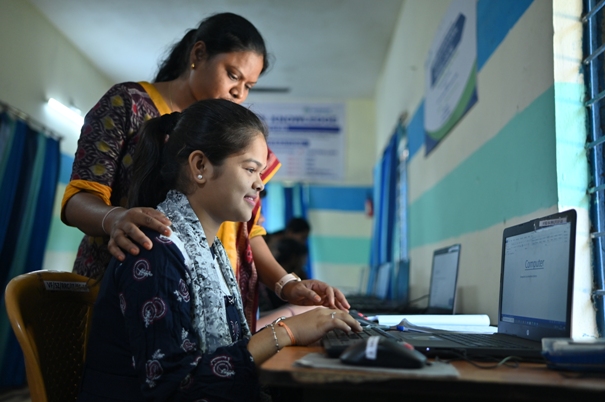
During the academic
year, her school introduced a digital learning programme supported by Vedanta
Limited to complement classroom teaching. Kashish began using the platform
after school hours, revisiting topics she had not fully understood. With the
ability to pause, replay and practise at her own pace, she gradually
strengthened her conceptual clarity and problem-solving skills. Over time, she
established a more structured study routine and became more comfortable
attempting questions independently.
When the Class 10
board examination results were announced, Kashish secured a B1 grade or 80 per
cent. For her family, the achievement was a proud milestone; for Kashish, it
marked a turning point from self-doubt to self-belief. She now plans to
continue her higher secondary education with renewed confidence and a clearer
academic direction.
Education
practitioners emphasise that supplementary digital learning aligned with school
curricula can play a critical role in bridging learning gaps, particularly in
resource-constrained government schools. For girls in particular, such support
can help counter barriers such as early household responsibilities, social
expectations and limited access to academic mentoring, thereby strengthening
retention and confidence during crucial academic years.
Through sustained
grassroots engagement in education, Vedanta Limited supported over 12 lakh
children and youth in FY25 alone with access to quality learning initiatives.
These programmes are designed not only to improve academic outcomes but also to
build confidence, reduce drop-out risks and ensure continuity in education
during critical stages of a student’s journey.
This International
Women’s Day, stories like Kashish’s reflect how targeted, technology-enabled
educational support can unlock potential, strengthen confidence and expand
opportunities for young girls across India.