
THEBUSINESSBYTES
BUREAU
BHUBANESWAR,
MARCH 22, 2026
Emphasising that water security is the
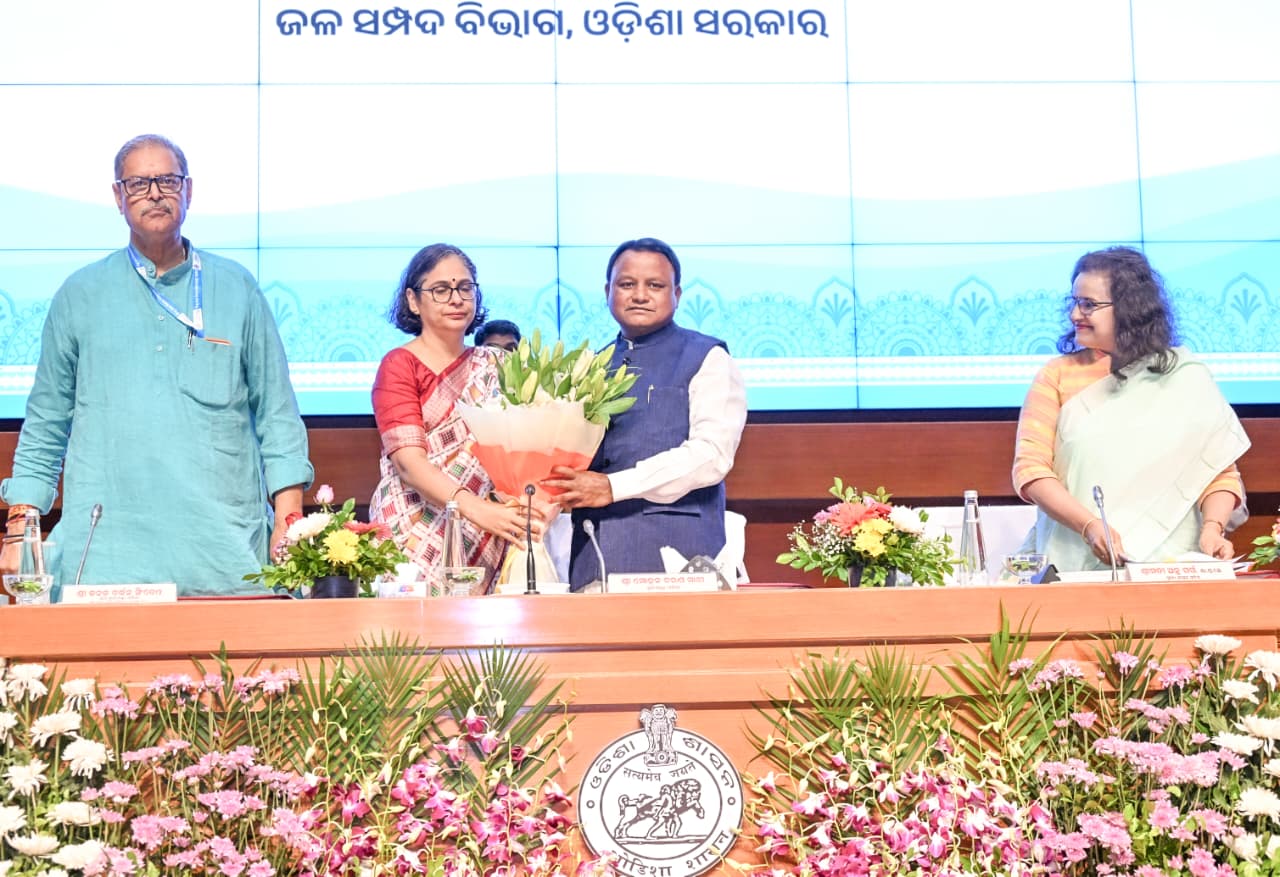
foremost condition for building a prosperous and developed Odisha, Chief
Minister Mohan Charan Majhi on Sunday called for collective commitment to
conserve every drop of water while addressing the State-level World Water Day
2026 celebrations held at Lok Seva Bhawan Convention Centre, here.
The Chief Minister inaugurated and
laid the foundation stone for major water resource projects worth approximately
₹2,612 crore, including foundation
laying for 17 projects worth about ₹2,292 crore and inauguration of 124
projects worth around ₹320 crore. These initiatives are expected to
significantly strengthen irrigation capacity, drinking water supply and water
conservation infrastructure across the state.
Highlighting the global importance of water, the Chief Minister said that even a single drop of water is invaluable for millions of people around the world. He urged citizens to take a pledge to prevent wastage of water and ensure that the message of water conservation reaches every household. Stressing the importance of early awareness, he said children must be taught water-saving practices in schools as they will become the “water soldiers” of the future.
 Describing the Prime Minister’s Jal
Jeevan Mission as a revolutionary initiative, Majhi reaffirmed the government’s
commitment to providing safe drinking water to every household through piped
supply and eliminating water scarcity. Through the Jal Shakti Abhiyan, water
conservation is being promoted as a national priority, while under the Catch
the Rain initiative, women are being trained in water quality testing and
management, ensuring inclusive participation in water governance.
Describing the Prime Minister’s Jal
Jeevan Mission as a revolutionary initiative, Majhi reaffirmed the government’s
commitment to providing safe drinking water to every household through piped
supply and eliminating water scarcity. Through the Jal Shakti Abhiyan, water
conservation is being promoted as a national priority, while under the Catch
the Rain initiative, women are being trained in water quality testing and
management, ensuring inclusive participation in water governance.
The Chief Minister highlighted that
bridging gender disparity in water management and strengthening the rural
economy remain key priorities. Women and Self Help Groups are being engaged as
“Jal Saathis” to promote community-based water management. Referring to this
year’s World Water Day theme “Water and Gender Equality,” he appealed to
citizens to actively participate in ensuring water security for the state.
He noted that lack of water affects
the poor the most, and providing safe drinking water to the last mile is part
of the government’s Antyodaya approach. Under Mission Shakti, efforts are being
made to ensure drinking water access in remote villages and backward regions.
The government is also promoting the “Per Drop More Crop” approach to enhance
agricultural productivity and encouraging plantation drives under the “Ek Ped
Maa Ke Naam” campaign, where Odisha has emerged as a leading state.
The state government has also prepared
a balanced water policy to prevent future disputes over water resources. The
Chief Minister informed that the government aims to increase crop intensity to
220 percent by 2036 and 250 percent by 2047 through improved irrigation
infrastructure. Rooftop rainwater harvesting schemes and recharge shafts under
various programmes have been implemented to strengthen groundwater recharge.
Major irrigation initiatives such as
canal lining systems, rehabilitation programmes, the Lower Suktel irrigation
project and Kusumi smart irrigation project have demonstrated encouraging
results within 21 months of implementation. Through various irrigation schemes,
additional irrigation facilities have been created for nearly 2.20 lakh
hectares of land.
Emphasising the need for efficient use
of water resources and expanded access to safe drinking water, the Chief Minister
said water security will play a vital role in meeting growing demand across
sectors under the Odisha Vision 2036 and 2047 framework.
Calling for equal participation of men
and women in water management, he urged people to treat water as a lifelong
resource and work collectively for its conservation.
On the occasion, the Chief Minister
inaugurated the child care centre “Kalika” at Rajiv Bhawan and launched the
AI-powered citizen feedback system “Bindu” chatbot. The Water Resources
Department also signed a Memorandum of Understanding with the Central Water
Commission. A coffee table book titled “Sujala” and a river atlas were also
released during the programme.
Deputy Chief Minister Kanak Vardhan Singh Deo suggested that instead of demolishing low-level bridges where higher barrages are being constructed, existing structures could be fitted with gates and used for water conservation. The Chief Minister directed departmental officials to study the proposal and submit a report.
Prior to the event, the Chief Minister and Deputy Chief Minister inaugurated a photo exhibition titled “Pratibimba” showcasing achievements of the Water Resources Department. Chief Secretary Anu Garg, Principal Secretary of Water Resources Department Shubha Sharma and Engineer-in-Chief Lingaraj Gouda were among senior officials present on the occasion.