THEBUSINESSBYTES
BUREAU
JHARSUGUDA,
MARCH 13, 2026
At the heart of the
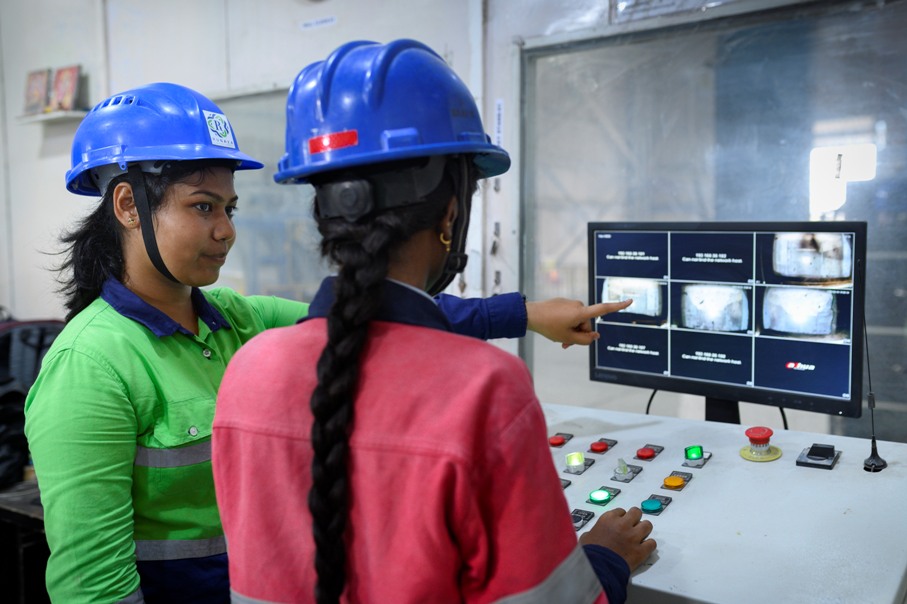
world’s largest aluminium plant, women professionals are confidently stepping
into roles that were once considered off limits to them. In doing so, they are
helping reshape India’s manufacturing landscape in new and exciting ways.
Vedanta Aluminium’s mega plant in Jharsuguda today stands as a vibrant example
of this shift, with hundreds of women professionals leading and driving complex
technical functions across operations. Supported by a range of initiatives
aimed at building a safe, equitable and supportive work environment, their
expanding presence in core industrial functions reflects the company’s strong
commitment to fostering inclusive operations.
For decades, core
operational roles in the mining and metals industries were widely perceived as
domains suited primarily to male professionals, largely due to misconceptions
that such work is physically demanding or technically complex for women.
However, women professionals at Vedanta Jharsuguda are steadily breaking these
long-held stereotypes by taking charge of a diverse array of responsibilities,
placing themselves at the forefront of an industry-wide transformation.
 One of the most
compelling examples of this change can be seen in Vedanta Jharsuguda’s
locomotive yard. Here, locomotives do far more than simply transport materials —
they play a crucial role in ensuring seamless plant operations. Essential raw
materials such as alumina must reach their designated units within the plant on
time, while finished aluminium products must be efficiently transported from
loading points for dispatch. At a facility from which aluminium products are
supplied to customers in more than 60 countries, the efficiency of this
movement is critical. An all-women locomotive team has now become an integral
part of this vital chain, navigating powerful engines with precision, adhering
strictly to safety protocols, coordinating seamlessly across teams, and
executing tasks with the alertness and discipline the role demands.
One of the most
compelling examples of this change can be seen in Vedanta Jharsuguda’s
locomotive yard. Here, locomotives do far more than simply transport materials —
they play a crucial role in ensuring seamless plant operations. Essential raw
materials such as alumina must reach their designated units within the plant on
time, while finished aluminium products must be efficiently transported from
loading points for dispatch. At a facility from which aluminium products are
supplied to customers in more than 60 countries, the efficiency of this
movement is critical. An all-women locomotive team has now become an integral
part of this vital chain, navigating powerful engines with precision, adhering
strictly to safety protocols, coordinating seamlessly across teams, and
executing tasks with the alertness and discipline the role demands.
Another area
reflecting this transformation is the potline—one of the most technically
demanding environments in the aluminium smelting process. Vedanta Jharsuguda’s
operations feature several potlines, which are long structures within the
smelter housing a series of ‘pots’, or large electrolytic cells, where
aluminium production through smelting takes place. These operations run round
the clock, requiring operators to continuously monitor every pot’s parameters
and respond swiftly to any fluctuations to maintain operational stability. The
recent transition of an entire potline into an all-women managed operation
marks a significant and meaningful milestone in the plant’s journey toward
inclusive excellence.
Reflecting on the
significance of these shifts, C Chandru, CEO - Vedanta Jharsuguda, says,
“Progress is driven not only by technology and scale but also by the people who
power our operations. At Vedanta Jharsuguda, we are actively building avenues
for women professionals to take on critical roles in core operations. Through
this effort, we reiterate our belief that access to opportunities must be defined
by capability and commitment alone.”
This transformation is not limited to a few departments alone. Across the plant, women are assuming larger responsibilities both on the shop floor and in leadership positions, representing the increasingly diverse nature of the workforce. Vedanta Jharsuguda has also broadened its inclusion initiatives by creating opportunities for members of the transgender community in areas such as security and cast house operations. Most recently, the plant deployed an all-women power operations team to manage an entire 135 MW power plant — an initiative that marks the first such team of its kind in Odisha.
As locomotives continue their steady journeys across the vast facility and potlines hum with energy day and night, the women working in these spaces are doing far more than performing technical roles. They are redefining what is possible in industrial operations and, in the process, helping shape a more progressive, inclusive and forward-looking future for India’s manufacturing sector.