
Cancer
cases in India projected to reach 2.45 million annually by 2045 with early
screening seen as lifesaver
THEBUSINESSBYTES
BUREAU
NEW
DELHI, FEBRUARY 4, 2026
With annual cancer
cases projected to surge from over 1.5 million today to an alarming 2.45
million by 2045, health experts warn that the country is standing at a critical
turning point where awareness, prevention and early detection could mean the
difference between life and loss for countless citizens. While advancements in
treatment and policy support are offering new hope, public health specialists
caution that India’s real battle against cancer must begin through widespread screening, timely diagnosis and community-level
interventions that can drastically improve survival rates and reduce the
growing human and economic toll of the disease.
Sounding this warning on the
eve of World Cancer Day, the Indian Cancer Society (ICS), Delhi, stressed that
while advances in treatment are welcome, they cannot substitute timely
diagnosis and sustained prevention efforts. The concern gains added
significance as the Union Budget 2026-27 has unveiled a series of measures to
improve access to cancer treatment, including customs duty exemptions on select
cancer drugs and a renewed push for domestic biopharma manufacturing. Public
health specialists have welcomed these initiatives as a major step toward
affordability, but cautioned that treatment-focused interventions alone will
not be enough to arrest the growing cancer burden.
These issues took centre stage
during a media interaction organised by the ICS Delhi Branch at the Press Club
of India on Tuesday where health experts, policymakers and cancer survivors came together
to deliberate on emerging cancer trends, persistent gaps in early diagnosis and the
pressing need to strengthen prevention strategies across the country.
“The 2026 Budget has opened the
door for affordable care, but our mission at ICS remains focused on ensuring
patients never reach the advanced stages where these drugs are their only
hope,” said a spokesperson for the ICS Delhi Branch, underlining the Society’s
long-standing emphasis on early detection. Since 1983, the Delhi Branch has
been at the forefront of community-based interventions, working to translate
policy intent into action on the ground.
Addressing the gathering, Jyotsna
Govil, Chairperson, ICS Delhi, highlighted the Society’s decades-long
commitment to cancer prevention, patient support and advocacy. She emphasised
the critical role of responsible and informed media in dispelling myths around
cancer, encouraging timely screening and ensuring that evidence-based
information reaches communities that are often the hardest to access.
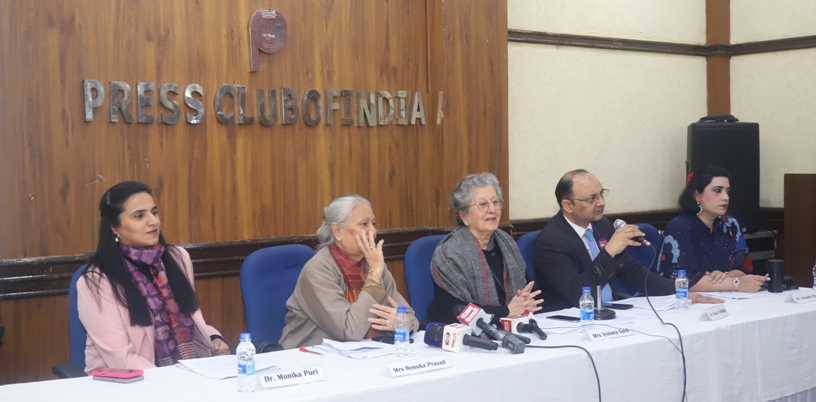 Providing a clinical and
data-driven perspective, Dr. Nitesh Rohatgi, Senior Director, Oncology, Fortis
Memorial Hospital, outlined current cancer incidence patterns and trends in
India. He stressed the importance of age-appropriate prevention and regular
screening, noting that advances in diagnostics and treatment are increasingly
capable of improving outcomes and reducing costs — provided cancers are
detected early.
Providing a clinical and
data-driven perspective, Dr. Nitesh Rohatgi, Senior Director, Oncology, Fortis
Memorial Hospital, outlined current cancer incidence patterns and trends in
India. He stressed the importance of age-appropriate prevention and regular
screening, noting that advances in diagnostics and treatment are increasingly
capable of improving outcomes and reducing costs — provided cancers are
detected early.
Speaking on the occasion,
Dr. Urvashi Prasad, cancer survivor and former Director, NITI Aayog, drew
attention to gaps in cancer data, regional disparities in care and the
financial barriers that continue to delay diagnosis and treatment for many
patients. She underscored the need for stronger Centre–State coordination and
sustained public investment to ensure that cancer care becomes both timely and
equitable.
Bringing a deeply human
perspective to the discussion, Renuka Prasad, cancer survivor and Secretary,
ICS Delhi, spoke about the average patient journey and the emotional, physical
and financial toll cancer exacts on families. She outlined the Society’s
community-focused initiatives, including Prashanti, its healing and
rehabilitation centre, large-scale screening programmes, the Rise Against
Cancer mobile app and patient support initiatives backed by partners such as
HDFC.
Linking cancer prevention to
the broader goal of universal health coverage, Dr. Monika Puri, Public Health
Consultant and former WHO official, stressed the importance of integrating
prevention, screening and continuity of care into primary health systems. Such
integration, she noted, is essential to ensure equitable access, particularly
for underserved and high-risk populations.
The interaction concluded with a strong call for expanded public–private partnerships, leveraging the newly announced Biopharma Shakti framework to ensure that screening, diagnostics and early intervention tools reach the communities that need them most.