THEBUSINESSBYTES
BUREAU
NEW
DELHI, NOVEMBER 1, 2026
Air Chief Marshal
Ashutosh Dixit on Sunday assumed charge as the 29th Chief of the Air Staff of
the Indian Air Force (IAF), unveiling an ambitious strategic vision titled
‘VAYU’, anchored on operational readiness, self-reliance, innovation and
jointness to strengthen India's air power and prepare the force for emerging
security challenges.
Soon after taking
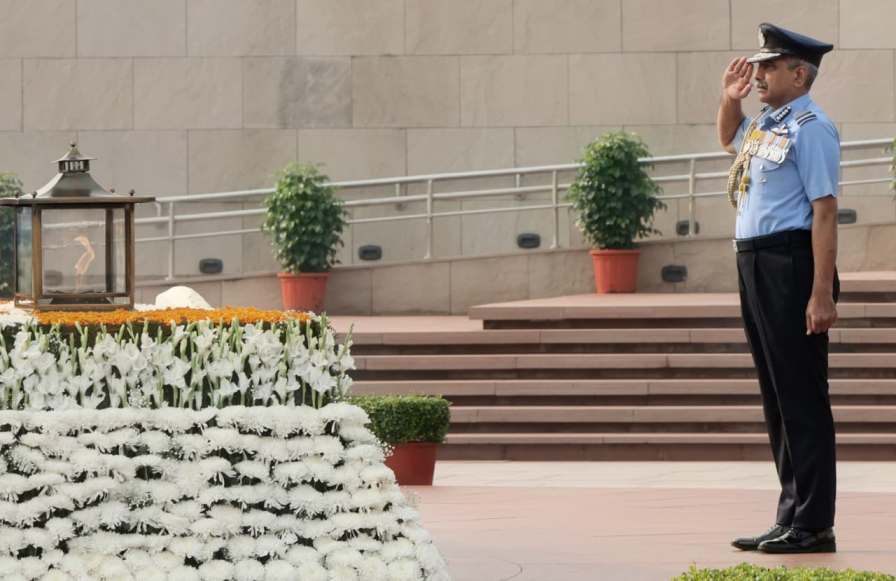
over the reins of the IAF, Air Chief Marshal Dixit paid homage to the nation's
bravehearts at the National War Memorial, honouring the personnel who laid down
their lives in the service of the country. He was subsequently accorded a ceremonial
Guard of Honour at Air Force Station New Delhi.
An Experimental Test
Pilot and Qualified Flying Instructor, the new Air Chief brings with him an
extensive professional experience spanning over 3,500 hours of flying. During
his distinguished career, he has held several significant operational and
strategic assignments, including Chief of Integrated Defence Staff to the
Chairman Chiefs of Staff Committee (CISC) at Headquarters Integrated Defence
Staff, Air Officer Commanding-in-Chief of Central Air Command and Vice Chief of
the Air Staff.
In his maiden address
outlining the roadmap for the IAF, Air Chief Marshal Dixit introduced ‘VAYU’ as
the guiding vision for the force's future trajectory, identifying four
strategic pillars that will underpin its operational and technological
transformation.
The acronym ‘VAYU’
encapsulates Vigilance, Victory and Readiness; Aatmanirbharta; Yukti; and Unity
of Effort, reflecting a comprehensive approach towards building a combat-ready,
technologically advanced and future-oriented air force.
Under the first
pillar, Vigilance, Victory and Readiness, the Air Chief emphasised maintaining
the highest level of operational preparedness across all formations while
restoring the IAF's combat strength to sanctioned levels.
The second pillar,
Aatmanirbharta, seeks to accelerate indigenous capabilities across aircraft
platforms, sensors, weapons and advanced technologies, with a clear focus on
operational self-reliance and sustained combat effectiveness.
The third pillar,
Yukti, underscores the importance of ingenuity and innovation in military
doctrine, technology and operational procedures. It envisages greater adoption
of artificial intelligence-enabled command and control systems, enhanced
counter-drone capabilities, improved resilience and preparedness for emerging
operational domains.
The fourth pillar,
Unity of Effort, stresses deeper integration and coordination with the Indian
Army, Indian Navy and national agencies. This approach will be aligned with the
national vision of JAI — Jointness, Aatmanirbharta and Innovation — to
strengthen the country's integrated defence architecture.
Through the ‘VAYU’ vision, Air Chief Marshal Dixit has laid out a clear strategic direction for an Indian Air Force that is operationally agile, technologically superior, self-reliant and seamlessly integrated with the other defence services.
The overarching objective is to safeguard India's national interests, strengthen deterrence and ensure that the country possesses credible air power to respond effectively to the evolving security environment.