
From
monumental installations to intimate works, discover how art finds its place
across the spaces of NMACC.
THEBUSINESSBYTES BUREAU
MUMBAI, SEPTEMBER 7, 2026
Art,
when made accessible, has the power to start conversations; to make everyone
stop and ponder over colour, brushstroke and the artistic vision of its makers.
At the Nita Mukesh Ambani Cultural Centre (NMACC), art
extends beyond the gallery walls, unfolding across plazas, lobbies, passageways
and gathering spaces. Bringing together works by Indian and international
artists, the collection transforms the act of moving through the building into
an opportunity to encounter art in unexpected ways.
Where
the Journey Begins
Mumbai-based artist
Jitish Kallat sets the tone at the entrance with Here After Here After Here.
The 12-metre installation transforms familiar road signage into a measure of
distance, extending the language of the roadto cities, planets and galaxies. Positioned
within the bustle of Jio World Centre, the work offers a compelling meditation
on the city and its places within a much larger universe.
Craftsmanship
Close to Home
 The
centre's commitment to Indian artistic traditions is reflected in works that
bring craft, material and collective practice into a public setting. The
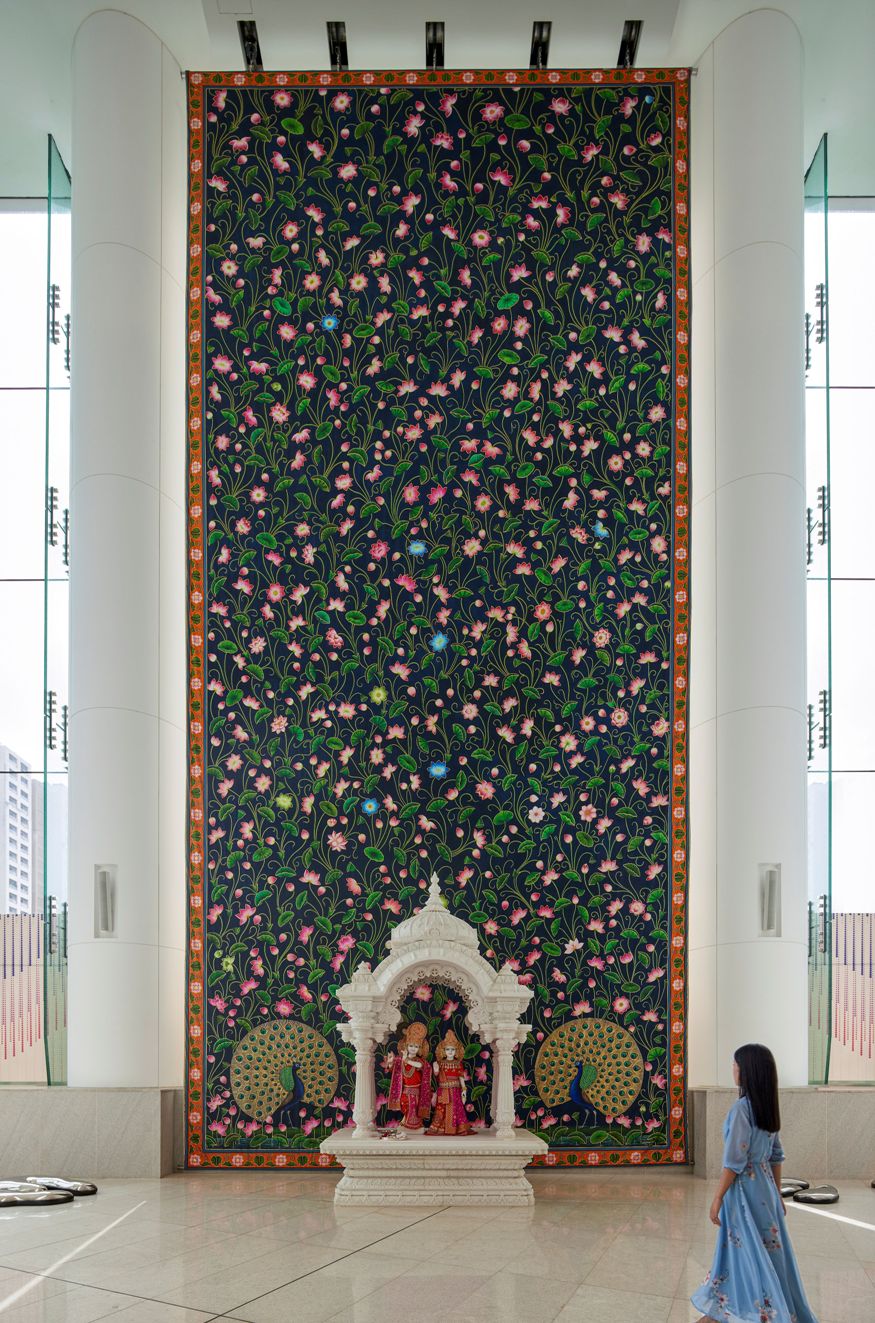
56-foot Kamal Kunj, created by veteran
Nathdwara Pichwai master Raghunandan Sharma and his team, translatesa
devotional temple tradition onto a monumental scale using natural pigments and
gold foil.
The
centre's commitment to Indian artistic traditions is reflected in works that
bring craft, material and collective practice into a public setting. The
56-foot Kamal Kunj, created by veteran
Nathdwara Pichwai master Raghunandan Sharma and his team, translatesa
devotional temple tradition onto a monumental scale using natural pigments and
gold foil.
Mumbai-based
artist Reena Kallat's Closet Quarries I and II
draws on the visual language of Mughal inlay while incorporating the humble
rubber stamp to re-inscribe names of people and places thathave faded from
collective memory.
Subodh
Gupta’s Kingdom of Earth reimagines the
ancient Greek Delos Gate as a symbol of cultural exchange. Constructed from
stainless steel and broken ceramic plates, and featuring a life-sized white
elephant, the work reflects labour, memory, migration and displacement through
the histories embedded in everyday materials.
A
very different vision of nature emerges in Thukral & Tagra’s Arboretum I. Drawing from the artists’
documentation of more than 60 floral species across India’s biological parks
and reserves, the surrealist oil on canvas brings together strange flowers,
skyscrapers and hybrid musical instruments.
Tanya
Goel’s Mechanism 12 shifts the focus from
the natural world to the structures that shape contemporary life. Combining
charcoal, concrete, glass, soil, mica, graphite and construction materials,
Goel creates a tension between order and chaos, with fading abstractions giving
way to cellular forms that reflect the complexity of the worlds held — and
obscured — by digital screens.
The
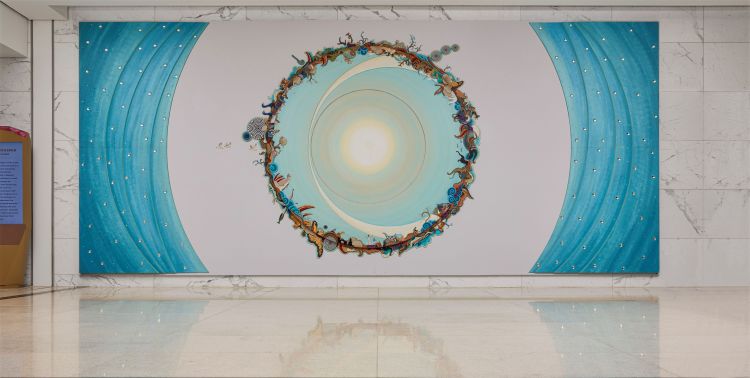
latest addition to the centre is Delwara,
a 1982 work by New York-based, Gujarat-born painter Natvar Bhavsar. Working
with pure powdered pigment, Bhavsar allows air currents, breath and movement to
determine how the colour settles onto the canvas.
Portraits of a City
 Delhi-based
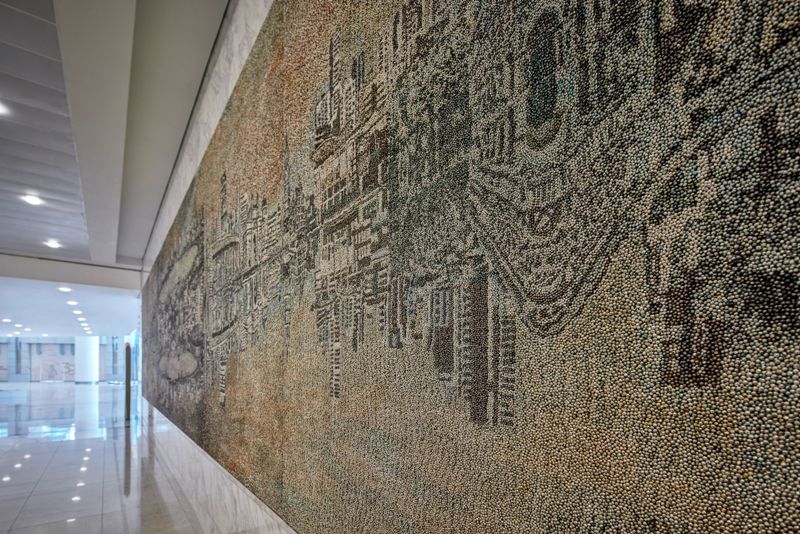
conceptual artist Vibha Galhotra's City
Obscure builds
Mumbai’s skyline out of hundreds of ghungroos,
transforming a ceremonial object worn by dancers into a shimmering urban
dreamscape.
Delhi-based
conceptual artist Vibha Galhotra's City
Obscure builds
Mumbai’s skyline out of hundreds of ghungroos,
transforming a ceremonial object worn by dancers into a shimmering urban
dreamscape.
 Mysuru artist N S
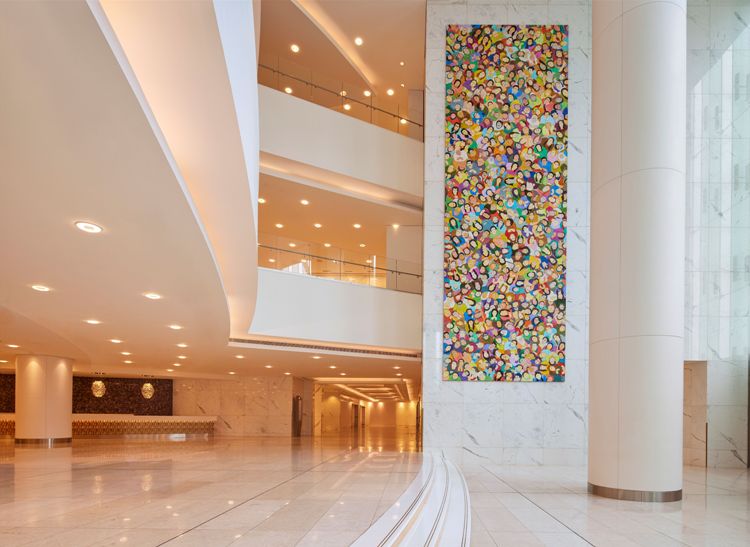
Harsha takes a more human view in Seekers Paradise,
where a crowd of faces, tilted skyward, seems to hold the collective aspiration
of a metropolis in motion.
Mysuru artist N S
Harsha takes a more human view in Seekers Paradise,
where a crowd of faces, tilted skyward, seems to hold the collective aspiration
of a metropolis in motion.
Odisha-born artist
Jagannath Panda widens the frame with Earth's Whisper, presenting the
planet as a series of interconnected worlds and inviting a reflection on our
relationship with a larger ecosystem we inhabit.
A Meeting of Worlds
Celebrated Japanese
artist Yayoi Kusama's Clouds brings
her signature infinity into the open air: 90 mirror-polished stainless-steel
forms reflect and fragment the sky, architecture and visitors, creating an
ever-changing encounter between artwork and audience.
At the Art Cafe, Japanese
pop-art icon Takashi Murakami's instantly recognizableflowers sit alongside
London-based, Bangladesh-born artist Rana Begum's light-responsive abstractions.Each
painting, developed over months, continues to shift with the changing light in
the space.
Art
along the Way
What
makes public art at NMACC distinctive is its relationship with the spaces
around it. These works do not exist apart from the Centre’s architecture or its
visitors; they become part of the journey through it. A visitor may encounter
an artwork while arriving, walking between spaces, meeting friends or pausing
for a meal — turning an everyday movement through the Cultural Centre into an
opportunity to look a little closer.
Here, the gallery has
no fixed walls. It unfolds across passages, gathering spaces and unexpected
corners, bringing together artistic traditions, contemporary practices and
perspectives from around the world.