THEBUSINESSBYTES
BUREAU
BHUBANESWAR, OCTOBER 10, 2026
Two scientists from the BRIC-Institute of Life
Sciences (BRIC-ILS), Bhubaneswar, have once again earned global recognition by
featuring in the world’s top two per cent scientists list for 2026, compiled by
Stanford University and published by Elsevier.
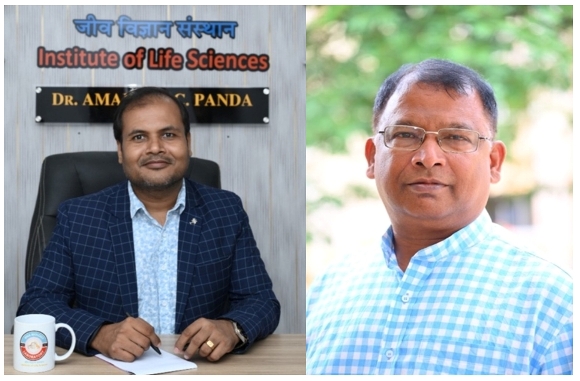
Dr Sanjeeb Kumar Sahoo and Dr Amaresh Chandra Panda
have figured in the prestigious list for eight consecutive years from 2019 to
2026, underscoring the sustained impact and international relevance of their
research. The 2026 edition features 6,954 Indian researchers, highlighting the
country’s growing contribution to global scientific research.
Dr Sahoo, who works in clinical medicine with
a specialisation in pharmacology and pharmacy, has secured a global rank of
51,868. He ranks 302 among 166,116 authors in his sub-field. His h-index stands
at 17, while his hm-index is 10.09, based on data up to the end of 2025. He has
also been included in the career-long dataset, with a global rank of 70,468.
Dr Panda, whose research falls under
biomedical research, particularly developmental biology, has secured a global
rank of 41,810. He ranks 908 among 167,121 authors in his sub-field, with an
h-index of 11 and an hm-index of 5.84 as of the end of 2025.
The rankings are based on a composite score
derived from standardised citation indicators, including total citations, the
h-index and the hm-index. The assessment excludes self-citations, focusing on
the recognition researchers receive from the wider scientific community.
Citations are an important indicator of the
influence and reach of scientific research, as they reflect how subsequent
studies draw upon earlier findings to develop new ideas, improve methodologies
and advance scientific understanding. In fields such as medicine and biomedical
research, such contributions can help pave the way for better diagnostic
approaches, targeted treatments and a deeper understanding of diseases.
The continued presence of the two scientists
in the global list for eight successive years reflects the sustained relevance
of their research and its engagement within the international scientific
community. Their recognition also highlights the importance of consistent
research efforts, collaboration and the collective scientific environment
fostered by BRIC-ILS.
The institute congratulated both scientists on the achievement and expressed confidence that their continued research efforts would lead to further milestones in scientific excellence.
The recognition marks another significant achievement for BRIC-ILS, reinforcing the institute’s contribution to India’s research landscape and its efforts to advance knowledge in life sciences, biomedical research and healthcare.