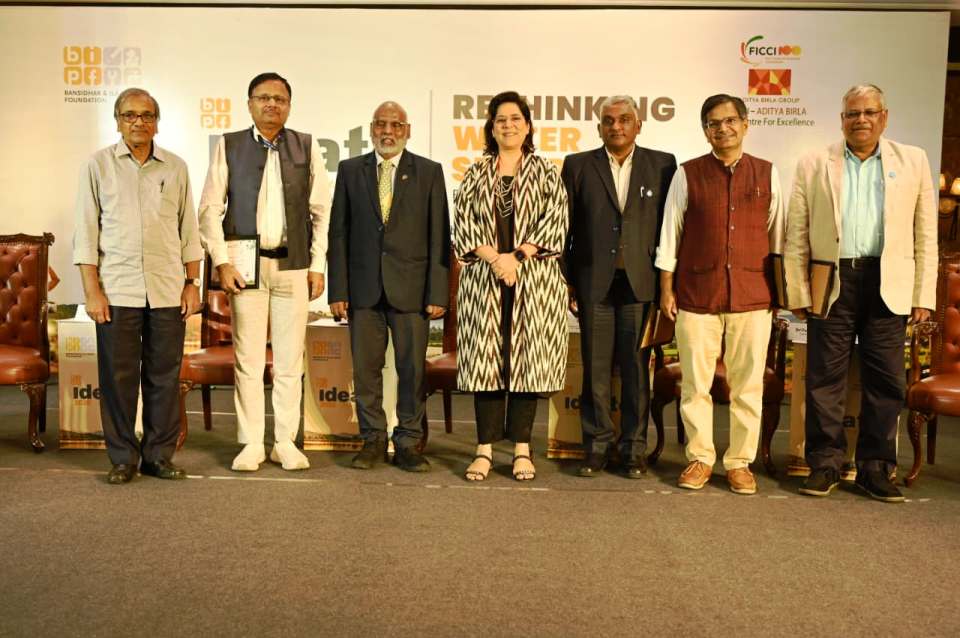
BIPF’s 15th annual conclave calls for
collective action, sustainable water management and stronger grassroots
leadership to tackle emerging water and climate challenges
THEBUSINESSBYTES BUREAU
BHUBANESWAR, NOVEMBER 17, 2026
Emphasising the need for collective responsibility and community
participation in securing water resources, the Bansidhar & Ila Panda
Foundation (BIPF) on Tuesday organised the 15th edition of IDEATE, its annual
thought-leadership and advocacy conclave, in partnership with the Federation of
Indian Chambers of Commerce and Industry (FICCI), bringing together
policymakers, industry leaders, development experts and community
representatives to chart a sustainable roadmap for rural water security.
Held under the theme “Rethinking Water Security for Rural
Transformation”, IDEATE 2026 focused on the urgent need to move beyond ensuring
access to water and adopt a comprehensive approach centred on sustainable water
management, groundwater governance, community stewardship and climate
resilience.
The conclave highlighted the critical interdependence of water resources,
agriculture and rural livelihoods, stressing that long-term water security
requires coordinated interventions, sustainable sources and active
participation of local communities.
Addressing the inaugural session as the chief guest, Odisha Cabinet
Minister for Rural Development, Panchayati Raj and Drinking Water Rabi Narayan
Naik underscored the importance of collective efforts to conserve the state's
water resources.
“Water security is a
responsibility we all share. Despite being blessed with abundant water
resources, we face growing scarcity due to deforestation, drying waterfalls and
a lack of long-term conservation efforts. While the government is taking
significant steps, securing our water resources for future generations calls
for collective responsibility and foresight,” he said.
A major highlight of the conclave was a panel discussion titled
“Water-Climate-Livelihood Nexus: A Cross-Sectoral Dialogue”, which examined the
growing challenges posed by climate variability, mounting pressure on water
resources and competing demands across sectors.
 The discussion featured UNICEF Chief of Field Office Prasanta Kumar Dash,
Hindustan Unilever Foundation CEO Dr Shraman Jha, Mobius Foundation CEO Dr Ram
Boojh and National Program Director, Sustainable Food, M S Swaminathan Research
Foundation, Dr Venu Margam. The session was moderated by Director of
ICAR-Indian Institute of Water Management Dr Arjamadutta Sarangi.
The panelists stressed the importance of integrating water conservation
with agricultural productivity, ecosystem sustainability and resilient rural
livelihoods. They also called for stronger partnerships among government
agencies, industries, civil society organisations and technical institutions,
alongside greater use of technology and local institutions to translate
policies into tangible grassroots outcomes.
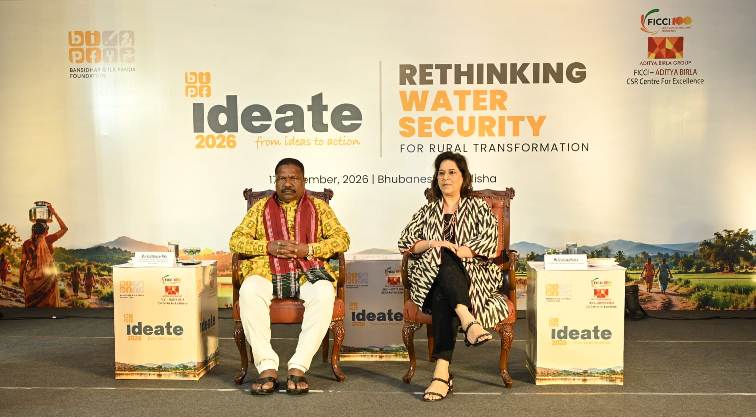
Reinforcing the importance of community ownership, the conclave also
featured a fireside conversation titled “Every Drop Counts – Community
Leadership & Local Solutions”. The session brought together TEREE Policy
Centre Founder Director Vinitaa H. Apte and Kholan Sarpanch of Bolangir Naresh
Kumar Agrawal in conversation with BIPF Founder and CEO Shaifalika Panda.
The discussion underlined the importance of empowering rural communities
to take ownership of local water resources rather than limiting interventions
to the delivery of infrastructure and water supply solutions.
“In rural India, water is deeply connected
to agriculture, livelihoods, health and the daily well-being of families. We
need to move from delivering water solutions to enabling communities to manage
their water resources. It requires a fundamental shift in how we value and
collectively steward conservation of this for future generations,” Shaifalika
Panda said.
Highlighting the need for coordinated efforts and measurable outcomes,
Hindustan Unilever Foundation CEO Dr Shraman Jha said, “Water security cannot
be achieved by any single department, institution or government. It requires
collective action, measurable outcomes and efficient resource management,
particularly in agriculture, where water consumption is highest. True success
is when water security is no longer a concern, but a sustainable reality for
everyone.”
A key takeaway from IDEATE 2026 was the need to shift the focus from
water access to comprehensive water security, recognising that reliable
infrastructure alone cannot address the growing challenges unless supported by
sustainable water sources, responsible groundwater management,
climate-responsive planning and empowered community institutions.
The deliberations further emphasised that convergence among government, industry, civil society, technical institutions and local communities is essential to developing inclusive, locally relevant and scalable solutions. Participants stressed that community-led conservation and responsible resource management must remain central to building climate-resilient rural economies.
Through its annual IDEATE platform, BIPF continues to foster meaningful dialogue and cross-sector collaboration on pressing development challenges, bringing together diverse stakeholders to exchange ideas and identify actionable solutions capable of creating lasting change at the community level.