THEBUSINESSBYTES
BUREAU
BHUBANESWAR,
APRIL 30, 2026
In
a major step towards building a robust, interoperable and future-ready data
ecosystem, the Ministry of Statistics and Programme Implementation (MoSPI)
concluded its one-and-a-half-day National Deliberative Summit on
"Harmonizing Administrative Data for Governance" in Bhubaneswar on Friday,
bringing together policymakers, researchers, and technology experts from across
the country.
The
summit, held on April 29 and 30, witnessed participation from nearly 300
stakeholders representing over 31 States and Union Territories, Central
Ministries, academic institutions, international organisations, and private
sector entities. The deliberations focused on developing a unified framework
for harmonising administrative data, enabling seamless interoperability and
strengthening evidence-based policymaking.
The
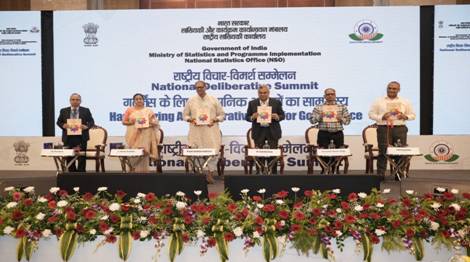
summit was inaugurated by Odisha Deputy Chief Minister Kanak Vardhan Singh Deo
in the presence of S. Radha Chauhan, Chairperson of the Capacity Building
Commission, MoSPI Secretary Dr. Saurabh Garg, and Odisha Development
Commissioner-cum-Additional Chief Secretary Deoranjan Kumar Singh.
Addressing
the gathering, Dr. Garg underscored the Prime Minister's vision of promoting
openness in data governance. He called for dismantling data silos and fostering
standardised, interoperable systems across sectors to improve governance and
socio-economic outcomes. He also highlighted the recognition of data as an
economic asset under the System of National Accounts 2025.
In
his inaugural address, Singh Deo stressed the transformative role of data in
achieving the twin aspirations of Viksit Bharat @2047 and Odisha Vision 2036.
He
emphasised that data-driven policymaking would be critical, particularly in
sectors such as agriculture and energy, while cautioning that openness must be
balanced with confidentiality and responsible use.
Radha
Chauhan highlighted the growing importance of making data AI-ready, asserting
that realising the full potential of Artificial Intelligence would require
strengthening both technological capabilities and organisational adoption.
Odisha
Development Commissioner Deoranjan Kumar Singh underlined the importance of
timely and actionable data, noting that limited accessibility at the grassroots
level often hampers effective decision-making.
During
the inaugural session, MoSPI showcased a thematic video titled "Data
Dividend" and released its latest publication, Women and Men in India
2025: Selected Indicators and Data, providing an extensive overview of India's
gender landscape across key socio-economic indicators.
The
first day featured intensive discussions and presentations by States on their
innovative approaches to administrative data harmonisation. Kerala presented
its integrated multi-department digital ecosystem, Maharashtra highlighted its
unified State Business Register, Assam showcased its Data Policy 2026, Bihar
demonstrated its AI-powered Data Lab Portal, while Delhi shared its data unlock
model based on NMDS 2.0-compliant machine-readable formats.
Experts
deliberated on strategies to address data silos, improve interoperability,
enhance data quality, and promote API-based data sharing. A high-level panel
discussion emphasised the need for strong governance frameworks, scalable
platforms, institutional capacity building, and continuous quality assurance.
The
summit also explored the potential of data reuse for governance, featuring case
studies such as Tamil Nadu's data linkage initiatives, alongside discussions on
the Digital Personal Data Protection Act, 2023, and emerging technology
solutions.
 On
the second day, sessions focused on strengthening metadata standards, data
modelling, knowledge graphs, data cataloguing, and AI-enabled access to
microdata. Experts agreed that harmonising administrative data is a long-term,
iterative process requiring sustained political will, institutional ownership,
and coordinated implementation.
On
the second day, sessions focused on strengthening metadata standards, data
modelling, knowledge graphs, data cataloguing, and AI-enabled access to
microdata. Experts agreed that harmonising administrative data is a long-term,
iterative process requiring sustained political will, institutional ownership,
and coordinated implementation.
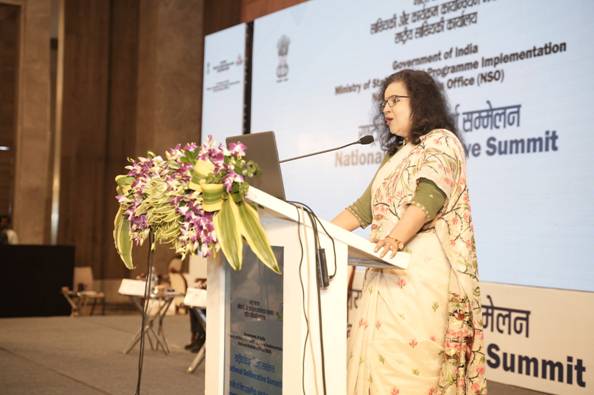
The concluding session was graced by Odisha Chief Secretary Anu Garg, who outlined the state's proactive measures to strengthen its statistical ecosystem. These include the recruitment of over 600 statistical personnel, implementation of Data Policy 2.0 aligned with the Digital Personal Data Protection Act, formulation of a data dissemination policy, and the launch of a dynamic statistical web portal.
She reaffirmed Odisha's commitment to enhancing data quality, accessibility, and harmonisation, while emphasising that a phased, standards-driven and interoperable approach — supported by federated architectures, user-centric platforms, and emerging technologies such as AI — would be crucial in unlocking the full value of data for governance and citizen-centric service delivery.