
THEBUSINESSBYTES
BUREAU
BHUBANESWAR,
JANUARY 13, 2026
As fashion tastes
shift towards elegance, comfort and sustainability, handloom fabrics are
witnessing a remarkable resurgence, and the Sisir Saras fair in Bhubaneswar has
emerged as a vibrant reflection of this changing preference. Organized by ORMAS
and Subhadra Shakti, the fair has become a major attraction for shoppers
seeking lightweight, stylish and handcrafted attire that blends tradition with
modern appeal.
Responding to
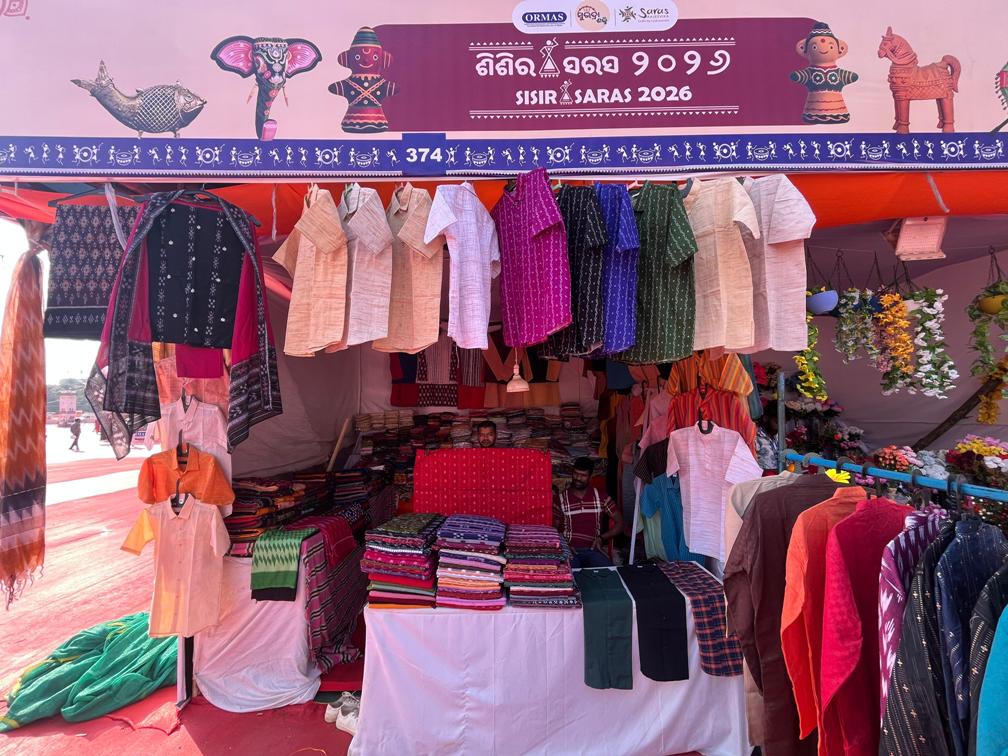
the growing demand for handmade garments, a large number of handloom stalls
have been set up this year, featuring artisans from Odisha and more than 20
other states. Visitors are being treated to an impressive display of cotton,
silk, tussar, khadi and wool fabrics, making the fair a one-stop destination
for handloom enthusiasts and collectors of unique regional weaves. From sarees
and salwar suits to shawls, dhotis, kurtas and handkerchiefs, a wide range of
products is available at affordable prices, drawing buyers from all age groups.
 Stalls
showcasing Odisha’s iconic handlooms are witnessing heavy footfall. GI-tagged
products such as Bargarh Ikat, Gopalpur Tussar sarees from Jajpur, Bomkai
weaves from Balangir, and Sambalpuri sarees from Sonepur and Sambalpur are
attracting strong customer interest. Tribal handloom varieties like Habaspuri
from Kalahandi and Kotpad sarees from Koraput are also in high demand, along
with kurtas, dresses, dupattas, suit pieces and fabric lengths.
Stalls
showcasing Odisha’s iconic handlooms are witnessing heavy footfall. GI-tagged
products such as Bargarh Ikat, Gopalpur Tussar sarees from Jajpur, Bomkai
weaves from Balangir, and Sambalpuri sarees from Sonepur and Sambalpur are
attracting strong customer interest. Tribal handloom varieties like Habaspuri
from Kalahandi and Kotpad sarees from Koraput are also in high demand, along
with kurtas, dresses, dupattas, suit pieces and fabric lengths.
Handloom
products from other states have added to the fair’s colourful diversity.
Punjab’s vibrant Phulkari, Telangana’s striking Banjara embroidery, Rajasthan’s
block and batik prints, Andhra Pradesh’s Kalamkari work, and a wide range of
home furnishings such as bedsheets, cushion covers, sofa covers and quilts are
being actively purchased by visitors, often after lively bargaining. Silk and
Tassar collections from Banaras, Madhya Pradesh, Mysore, Bihar and Assam are
earning praise for their quality and competitive pricing, while Goa’s crochet
work, Kashmir’s Ari embroidery and Assam’s elegant Mekhla Chadar have emerged as
major highlights.
Beyond
textiles, shoppers are showing keen interest in handloom-made handbags, purses,
jewellery, hand-painted dupattas and sarees, along with a variety of home décor
items. The overwhelming response translated into strong sales, with massive
crowds recorded on Sunday and similar enthusiasm continuing on the third day.
By the end of the third day, the total business turnover at the fair had
crossed an impressive ₹3.5 crore.
Adding to the
festive atmosphere, cultural programmes have become a major crowd-puller.
Performances such as Dhruvatara Odissi dance, Ghoda Nach, Bharatanatyam from
Tamil Nadu and a lively Sambalpuri Night music show by Archana Padhi captivated
audiences and received enthusiastic applause.
The excitement
is set to continue as ORMAS prepares to organize a Kite Festival at the Sisir
Saras fair on January 14 and 15 to mark Makar Sankranti. With the blend of
shopping, culture and festive celebrations, the fair is expected to draw even
larger crowds in the coming days, reinforcing its status as one of the region’s
most popular cultural and commercial events.