
THEBUSINESSBYTES
BUREAU
BHUBANESWAR,
JULY 20, 2026
Odisha Governor Dr.
Hari Babu Kambhampati on Monday stressed the need for the inclusive and
dignified development of the State's Particularly Vulnerable Tribal Groups
(PVTGs), saying the vision of Viksit Odisha and Viksit Bharat can be realised
only when every citizen, particularly those on the margins, progresses with
confidence, dignity and equal opportunity.
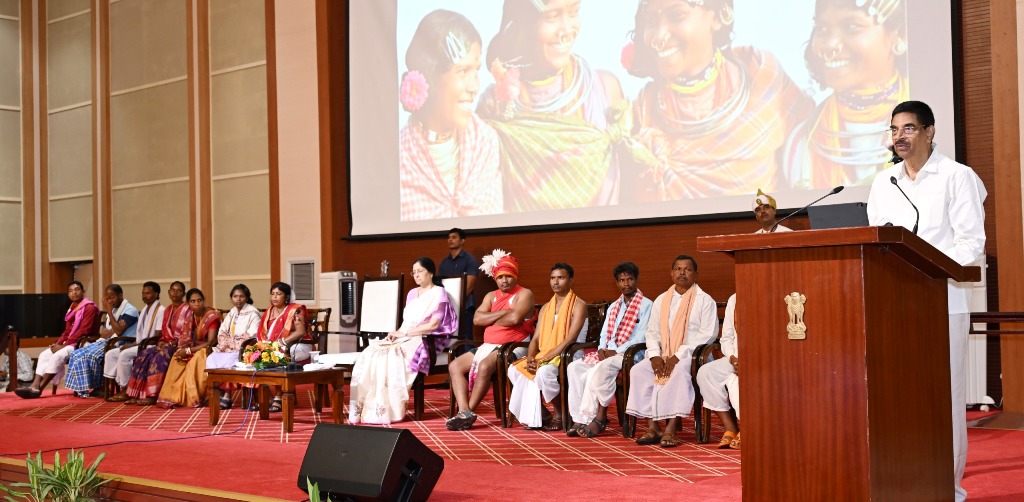
Addressing the
conclave on "Particularly Vulnerable Tribal Groups (PVTGs) of Odisha – Way
Ahead" at New Abhisek Hall in Lok Bhavan, the Governor said the holistic development
of PVTGs is not merely a social responsibility but a national imperative. Their
empowerment, he said, would strengthen Odisha's contribution to India's journey
towards inclusive and sustainable development.
The conclave, jointly
organised by the Tribal Cell of Lok Bhavan and SCSTRTI, brought together
policymakers, academicians, researchers, representatives of voluntary
organisations, officials and beneficiaries from PVTG communities to deliberate
on strategies for their socio-economic development and cultural preservation.
First Lady Jayashree Kambhampati also attended the programme.
Highlighting Odisha's
unique tribal heritage, Dr. Kambhampati noted that the State is home to 13
PVTGs—the highest among all States in the country. These communities, he said,
possess rich traditions, indigenous knowledge, vibrant art forms, distinct
languages and a harmonious relationship with nature. While ensuring better
access to education, healthcare, sustainable livelihoods and basic
infrastructure, equal emphasis must be placed on preserving their cultural
identity and traditional way of life.
The Governor cited
the achievement of Champa Raspeda of the Didayi community from Malkangiri, who
became the first girl from her community to qualify NEET and secure admission
to Fakir Mohan Medical College and Hospital, Balasore. Calling her success a
symbol of hope, he said it demonstrated how talent could flourish when
supported by quality education and opportunity. He expressed confidence that
many more youth from PVTG communities would excel in fields such as science,
medicine, administration, entrepreneurship, sports and the arts.
Commending the
efforts of the Central and State governments, Dr. Kambhampati said sustained
initiatives have considerably improved access to education, healthcare,
livelihoods, connectivity and social security for PVTGs while safeguarding
their traditional rights and heritage.
The Governor also
lauded the Tribal Cell of Lok Bhavan for publishing the Tribal Photo Essay Book
Series and released the "Socio-Cultural, Demographic, Nutrition and Health
Status of the Particularly Vulnerable Tribal Groups (PVTGs) of Odisha: A
Technical Report”."
During his
interaction with participants, Dr. Kambhampati enquired about the
implementation of various welfare schemes, including PM-JANMAN and the Jal
Jeevan Mission, besides discussing the availability of health and education
facilities for PVTGs. He also stressed the need to create greater awareness
among tribal communities about Central and State welfare schemes so that
eligible beneficiaries can fully avail themselves of government support.
Expressing confidence
that the recommendations emerging from the conclave would help shape future
policies and programmes, the Governor urged all stakeholders to work
collectively to ensure that development and cultural preservation progress hand
in hand.
The conclave comprised two technical sessions, during which participants watched audio-visual presentations on Odisha's PVTGs, held group discussions on issues concerning each of the State's 13 PVTGs and presented their recommendations. Around 40 PVTG beneficiaries, representatives from universities, NGOs, SCSTRTI officials and senior officials of Lok Bhavan took part in the deliberations.
Commissioner-cum-Secretary to the Governor Dr. Roopa Roshan Sahoo coordinated the conclave.