THEBUSINESSBTES BUREAU
NEW DELHI, FEBRUARY 26, 2026
The first round of negotiations for the India–Israel Free Trade Agreement
(FTA), held from February 23 to 26 in New Delhi, concluded on a positive note,
signalling fresh momentum in efforts to unlock the untapped trade potential
between the two strategic partners. The discussions followed the signing of the
Terms of Reference in November 2025, which laid down a structured framework for
engagement across key sectors aimed at deepening economic cooperation.
The talks gained added political impetus as Prime Minister Narendra Modi,
currently on a two-day State Visit to Israel, used his address to a Special
Plenary of the Knesset in Jerusalem on February 25 to call for the early
finalisation of an ambitious trade pact that could significantly expand
bilateral commerce and investment flows.
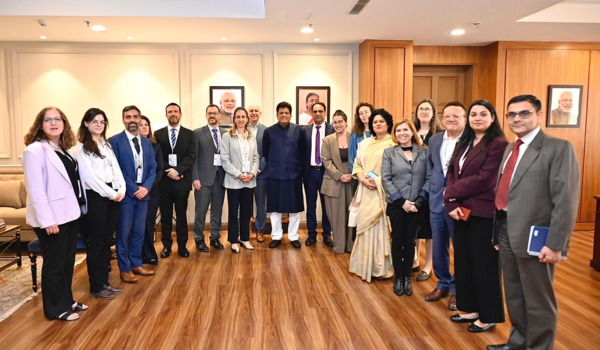
 On February 24, Union Minister of Commerce and Industry Piyush Goyal met
the visiting Israeli delegation and underscored the need for both sides to work
closely to unlock new opportunities in trade, innovation and growth. He urged
negotiators to aim for a modern, comprehensive and future-ready agreement that
reflects the evolving nature of global value chains and emerging technologies.
On February 24, Union Minister of Commerce and Industry Piyush Goyal met
the visiting Israeli delegation and underscored the need for both sides to work
closely to unlock new opportunities in trade, innovation and growth. He urged
negotiators to aim for a modern, comprehensive and future-ready agreement that
reflects the evolving nature of global value chains and emerging technologies.
Over the four-day negotiations, officials from both countries engaged in
wide-ranging and forward-looking discussions covering trade in goods and
services, rules of origin, sanitary and phytosanitary measures, technical
barriers to trade, customs procedures, intellectual property rights and digital
trade, among other critical areas. The dialogue was described as constructive,
with both sides reaffirming their shared objective of securing a comprehensive,
balanced and mutually beneficial agreement. They also agreed to maintain inter-sessional
engagement through virtual meetings, with the next in-person round scheduled
for May 2026 in Israel.
Bilateral merchandise trade between India and Israel stood at approximately USD 3.62 billion in FY 2024–25, indicating significant headroom for expansion. Negotiators highlighted strong potential in sectors such as machinery, chemicals, textiles, agriculture, medical devices and advanced technologies, where complementarities between the two economies could drive higher value-added trade.
The successful conclusion of the first round reflects a clear commitment from both governments to deepen their economic partnership and create a stable, predictable framework for businesses.