THEBUSINESSBYTES
BUREAU
BHUBANESWAR,
OCTOBER 21, 2026
India and New Zealand
have signed a Memorandum of Cooperation (MoC) to enable electronic exchange of
origin data for trade in goods, a move aimed at strengthening customs
cooperation, streamlining cross-border transactions and ensuring more effective
utilisation of benefits under their free trade agreement (FTA).
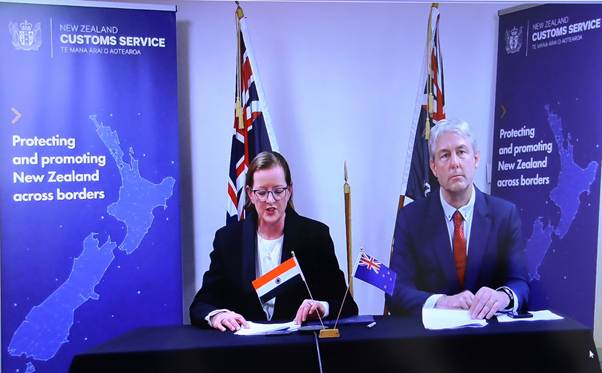
The MoC was signed on
October 19 by Central Board of Indirect Taxes and Customs (CBIC) Chairman Vivek
Chaturvedi and New Zealand Customs Service Comptroller and Chief Executive
Christine Stevenson.
The agreement comes
as the India-New Zealand FTA entered into force on October 20, 2026, marking a
significant step towards deepening bilateral trade ties through digitalisation
and enhanced customs coordination.
Under the
arrangement, the two countries will facilitate the advance electronic exchange
of origin data relating to trade in goods. The mechanism is expected to improve
operational efficiency, reduce information gaps and provide greater certainty
to businesses engaged in bilateral trade.
The initiative
reflects the shared commitment of both countries to leverage digital
technologies and secure information exchange to make cross-border trade more
efficient, predictable and transparent.
The electronic
exchange mechanism is also expected to support the effective implementation of
trade facilitation measures by strengthening customs cooperation and aligning
bilateral processes with evolving international practices in digitalisation and
information sharing.
A key objective of
the arrangement is to facilitate the effective utilisation of preferential
trade benefits available under the India-New Zealand FTA. It is expected to
help eligible businesses in both countries access negotiated tariff preferences
more efficiently and with greater certainty.
The development
assumes significance as both countries seek to strengthen trade and economic engagement
under the newly implemented FTA. By facilitating the secure and timely exchange
of origin-related information, the agreement is expected to help customs
administrations improve coordination while making compliance and trade
procedures more predictable for businesses.
The MoC underscores
the growing role of digital customs cooperation in supporting modern trade
agreements, with India and New Zealand seeking to ensure that the benefits of
their bilateral trade pact translate into smoother transactions and improved
opportunities for eligible traders.