THEBUSINESSBYTES BUREAU
NEW DELHI, FEBRUARY 9, 2026
In a significant step towards deepening international partnerships in the
textile sector, an Indian delegation led by the Central Silk Board (CSB) under
the Ministry of Textiles, along with leading silk entrepreneurs, concluded a
five-day official visit to Vietnam aimed at unlocking new opportunities in
sericulture, silk, handloom and technical textiles. Supported by the Embassy of
India in Hanoi, the visit aligned closely with the Government of India’s
strategic push to strengthen global value chains, expand exports and promote
sustainable growth in textiles.
The visit saw high-level engagements with Vietnam’s textile industry
leaders and associations. Dr. Naresh Babu N., Joint Secretary (Technical),
Central Silk Board, felicitated the Chairman of Bitexco Nam Long Joint Stock
Company, one of Vietnam’s leading textile manufacturers and exporters, with the
Five-in-One Silk Stole, symbolising India’s rich silk heritage. He also
extended formal invitations to Bitexco Nam Long and the Vietnam Textile and
Apparel Association (VITAS) to participate in Bharat Tex 2026, positioning the
event as a global platform for textile innovation and trade.
The Indian delegation also held detailed interactions with the Vietnam
Association of Craft Villages (VICRAFTS), focusing on collaboration in
handlooms and handicrafts, product development, village-level strategies,
export promotion and policy support. VICRAFTS expressed strong interest in
working closely with Indian institutions and enterprises, opening avenues for
joint initiatives in artisanal textiles and rural livelihoods.
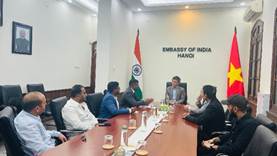
Strengthening diplomatic and institutional cooperation, the delegation
called on Tshering Wangchuk Sherpa, Ambassador of India to Vietnam, at the
Embassy of India in Hanoi. Discussions centred on enhancing bilateral
cooperation in silk and textiles, including trade facilitation, technology
exchange and industry partnerships.
A key highlight of the visit was the delegation’s tour of the historic
Van Phuc Silk Craft Village in Hanoi, where members interacted with local
weavers and artisans. The village’s integrated ecosystem — linking weaving,
embroidery, design, fashion and market access — offered valuable insights,
particularly for developing a sericulture-tourism model in India that blends
heritage preservation with economic growth.
 The delegation also explored modern sericulture and textile
infrastructure in Vietnam, including automatic reeling units and mulberry
farms, gaining first-hand exposure to advanced production practices.
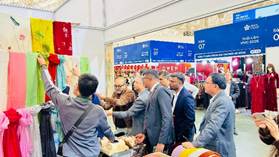
Participation in major international exhibitions such as the Vietnam International
Value Chain Exhibition 2026 (VIVC 2026) and the Vietnam Glorious Spring Fair
2026 (VGSF 2026) at the Vietnam Exhibition Center further amplified India’s
presence. The Central Silk Board’s stall, showcasing a diverse range of Indian
silk products, drew strong interest from global buyers and industry
stakeholders, underlining the growing international demand for Indian silk.
The delegation also explored modern sericulture and textile
infrastructure in Vietnam, including automatic reeling units and mulberry
farms, gaining first-hand exposure to advanced production practices.
Participation in major international exhibitions such as the Vietnam International
Value Chain Exhibition 2026 (VIVC 2026) and the Vietnam Glorious Spring Fair
2026 (VGSF 2026) at the Vietnam Exhibition Center further amplified India’s
presence. The Central Silk Board’s stall, showcasing a diverse range of Indian
silk products, drew strong interest from global buyers and industry
stakeholders, underlining the growing international demand for Indian silk.
In Ho Chi Minh City, the delegation visited traditional silk outlets to
study a wide spectrum of silk fabrics and heritage fashion products.
Interactions with local artisans and designers highlighted innovative stitching
techniques and contemporary design practices, pointing to significant
opportunities for product diversification and co-creation between Indian and
Vietnamese enterprises.
Overall, the visit marked an important milestone in India–Vietnam textile
relations, strengthening pathways for joint research and development,
technology transfer, business-to-business partnerships and enhanced global
market linkages.