
THEBUSINESSBYTES
BUREAU
NEW
DELHI, JULY 21, 2026
India's renewable
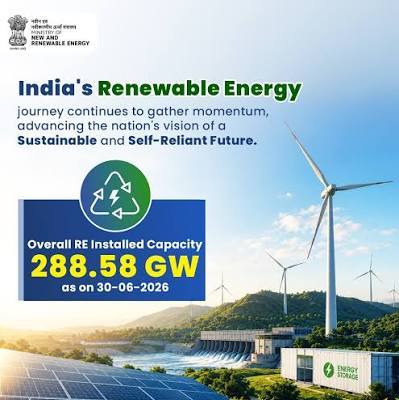
energy sector has achieved a remarkable milestone, with the country's installed
renewable energy capacity surging nearly fourfold from 76.38 GW in 2014 to
288.58 GW as of June 30, 2026, reflecting the nation's accelerated transition
towards clean and sustainable energy.
In a written reply to
a question in the Rajya Sabha on Tuesday, Union Minister of State for New and
Renewable Energy, Shripad Yesso Naik, informed that solar energy has emerged as
the dominant contributor to the renewable energy mix, accounting for 162.15 GW
of installed capacity. It is followed by wind power at 57.44 GW, hydropower at
57.24 GW, and bio power at 11.75 GW, taking the total renewable energy capacity
to 288.58 GW.
The country's overall non-fossil fuel-based electricity generation capacity has now reached 297.36 GW, which includes 288.58 GW from renewable energy sources and 8.78 GW from nuclear power, underscoring India's commitment to achieving its climate and energy security goals.
India's renewable energy growth has also attracted substantial investments over the past decade. Between FY 2014 and FY 2026, the sector received approximately USD 45.72 billion in Foreign Direct Investment (FDI). During the same period, major domestic financial institutions — including 12 public sector banks, IREDA, PFC, REC, IIFCL, NaBFID and SIDBI — collectively deployed ₹12.32 lakh crore to support renewable energy projects across the country, highlighting strong institutional confidence in the sector.