THEBUSINESSBYTES
BUREAU
BHUBANESWAR, AUGUST 7, 2026
Stressing that cities of the future must be inclusive,
resilient and driven by citizen-centric governance, eminent Leiden University
scholar Professor Pralaya Kanungo on Thursday underscored the need for
strengthening urban institutions through global knowledge exchange, policy
innovation and evidence-based decision-making during a special knowledge
exchange session organised by the Odisha government.
The Housing & Urban Development Department, Government of
Odisha, organised the knowledge exchange programme titled "Rethinking
Urban Governance: Some Reflections" at Kharavela Bhawan here with the
objective of strengthening urban governance and fostering evidence-based
policymaking in the backdrop of rapid urbanisation. The programme aimed at
promoting dialogue on making urban governance more efficient, accountable,
citizen-centric and future-ready.
Delivering the keynote address, Professor Pralaya Kanungo of
Leiden University, the Netherlands, drew upon contemporary global experiences
and urban governance models from different countries to highlight the
importance of citizen-centric governance in delivering accountable, responsive
and forward-looking urban services that ultimately improve the quality of life
of urban residents.
The deliberations focused on emerging policy approaches,
institutional reforms and measures for strengthening Urban Local Bodies (ULBs)
to make urban governance more effective and responsive. Participants stressed
the need for promoting inclusive and equitable urban development by
prioritising the requirements of vulnerable and disadvantaged communities.
The discussions also underscored the importance of developing
resilient urban infrastructure and enhancing disaster preparedness to
effectively tackle urban flooding and the increasing challenges posed by
climate change.
The session further highlighted the growing role of
data-driven decision-making and digital technologies in ensuring transparent,
efficient and responsive urban governance. Deliberations also covered
strengthening municipal financial management, improving revenue mobilisation,
enhancing service delivery, promoting continuous capacity building, institutional
strengthening and greater decentralisation to empower Urban Local Bodies.
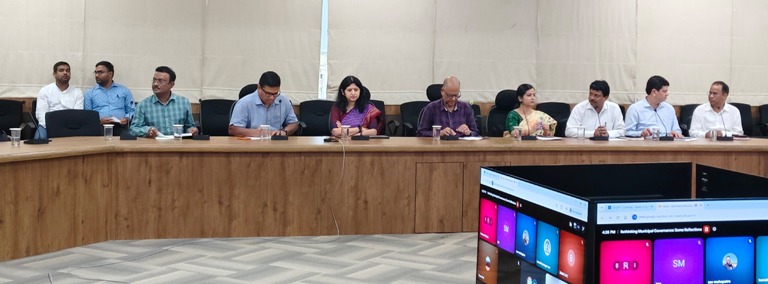
Additional Chief Secretary, Housing & Urban Development
Department, Usha Padhee, Director, Municipal Administration, Arindam Dakua,
Director, Odisha Urban Academy, Subhendu Sahu, senior officers of the
Department and domain experts attended the programme. Commissioners of all
Municipal Corporations as well as Executive Officers of Municipalities and NACs
across the State participated in the session through virtual mode.
Addressing the gathering, Padhee emphasised that continuous
learning and exposure to global best practices are essential for building
efficient, accountable and future-ready urban institutions.
She observed, "As Odisha's cities continue to grow at a
rapid pace, municipal administrations must evolve beyond their traditional role
as service providers and emerge as strategic institutions driving sustainable,
inclusive and citizen-centric urban development. The convergence of
international best practices with local innovation would significantly
strengthen Odisha's urban transformation journey."
Prof. Pralaya Kanungo appreciated the initiative of the Government of Odisha and observed, "Sustained engagement among academia, policymakers and practitioners is vital for shaping resilient, inclusive and future-oriented cities. Such knowledge-sharing platforms create valuable opportunities for exchanging ideas, strengthening institutional capacity and promoting innovative approaches to urban governance."
The knowledge exchange session reaffirmed the Government of Odisha's commitment to strengthening urban governance through continuous learning, global collaboration and policy innovation. Officials said such initiatives are expected to further accelerate the development of well-governed, inclusive, resilient and sustainable cities across the State.