THEBUSINESSBYTES
BUREAU
BHUBANESWAR,
AUGUST 29, 2026
Odisha needs to
change its approach to agriculture and employment by treating farming as a
business and encouraging young people to become entrepreneurs rather than
merely seeking jobs, said noted chartered accountant and development thinker
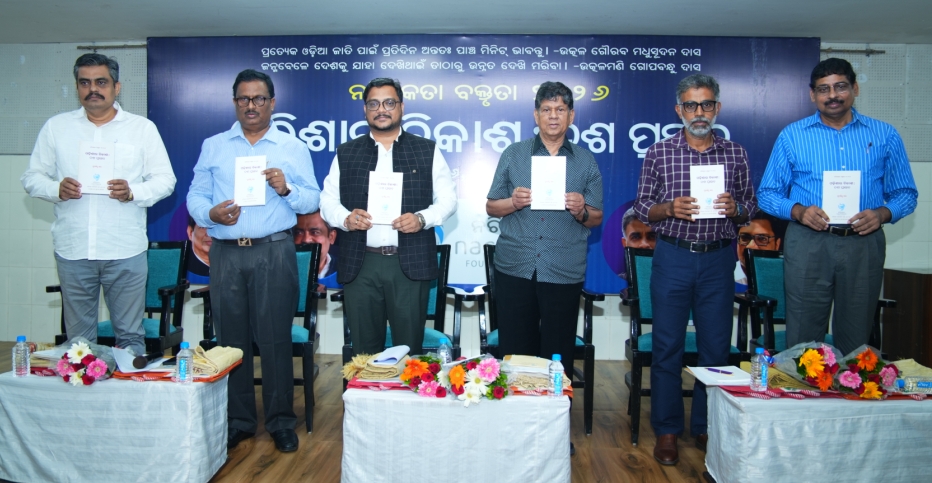
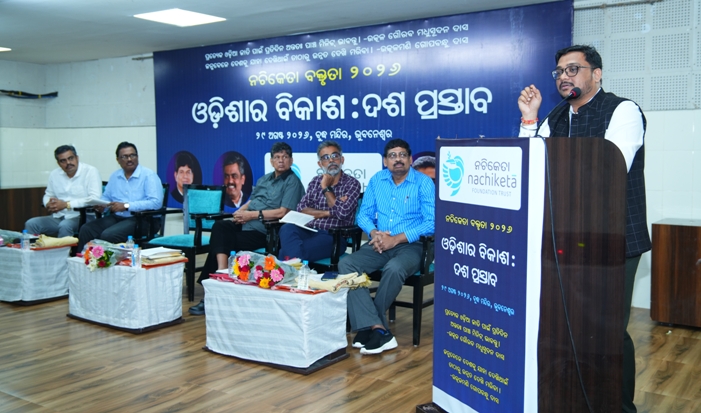
Purnendu Kar at the Annual Lecture of the Nachiketa Foundation Trust here on Saturday.
Delivering a lecture
on “Ten Proposals for Odisha’s Development”, Kar said agriculture and
entrepreneurship should be placed at the centre of the state’s economic
transformation. He argued that Odisha has adequate natural resources, human
potential and economic opportunities, but needs a stronger ecosystem to convert
these advantages into employment, enterprise and wealth creation.
Kar’s first and most
important suggestion was to make agriculture a business, not merely a
profession. He said farmers should be encouraged to look at cultivation from a
commercial perspective, with greater emphasis on productivity, irrigation,
mechanisation, storage, processing and market linkages.
Referring to the
growing gap between agricultural wages and farm returns, Kar said the economics
of farming was becoming increasingly difficult for cultivators. He cited paddy
as an example and said that unless agriculture became financially attractive, the
younger generation would continue to move away from farming and migrate to
other states in search of employment.
He called for
improved irrigation facilities, cold storage infrastructure and greater
deployment of agricultural scientists at the block level. More research, farm
mechanisation, government investment, cattle-feed industries and contract
farming, he said, could help transform agriculture into a commercially viable
activity.
Kar also emphasised
the need to develop agro-food processing industries so that Odisha could earn
greater value from its agricultural produce. Citing examples of food-processing
clusters in other states, he said Odisha had considerable potential in products
such as potato, tomato, turmeric, chilli, ginger, tamarind and cashew.
Instead of sending
agricultural commodities outside the state in raw form, Odisha should process,
package and market them under strong brands, he said.
 His third suggestion
was to encourage industries producing goods that Odisha currently imports from
other states. Footwear, umbrellas, salt, sugar, garments, bicycles, paper,
perfumes and other consumer products could provide opportunities for local
entrepreneurs, Kar said.
His third suggestion
was to encourage industries producing goods that Odisha currently imports from
other states. Footwear, umbrellas, salt, sugar, garments, bicycles, paper,
perfumes and other consumer products could provide opportunities for local
entrepreneurs, Kar said.
He also called for
greater utilisation of the state’s long coastline. Fishing, seafood processing,
salt production, tourism, port-based industries, shipbuilding and ship repair
could generate substantial employment if an integrated coastal economic
ecosystem was developed, he said.
Kar further suggested
that Odisha should move beyond merely securing Geographical Indication (GI)
tags for traditional products and focus on converting them into nationally and
internationally recognised brands. Products such as Koraput Kalajira rice,
Kendrapara Rasabali and other distinctive Odisha products, he said, required
better branding, investment and marketing.
He stressed the
importance of creating industrial ecosystems rather than isolated factories.
Referring to industrial clusters outside Odisha, Kar said infrastructure,
power, skilled manpower, transportation and supporting industries needed to
develop simultaneously to make investment commercially viable.
Tourism was another
major area highlighted in his proposals. Kar said Odisha needed better
accommodation and supporting infrastructure around its tourist destinations. He
referred to Bhitarkanika and said that despite its natural attractions, the
absence of adequate accommodation and tourism facilities restricted its
potential to attract international visitors.
He suggested
preparing a district-wise inventory of tourism resources, assessing their
employment potential and identifying the investment required to develop them.
Kar’s eighth proposal
focused on expanding the state’s technology and technical education base. He
said educational institutions should look beyond conventional software
education and promote areas such as aerospace engineering, artificial
intelligence, marine robotics, shipbuilding and ship repair. With three ports,
Odisha, he said, had considerable scope for developing specialised maritime
skills and industries.
His ninth proposal
was to market Odisha globally by presenting its history, culture and heritage
in a modern and internationally appealing manner. Konark, the Jagannath culture,
Odisha’s maritime heritage, Buddhist history, ancient literature, painting and
tribal culture, he said, could become powerful instruments of global promotion.
Citing the
transformation of Spain’s Bilbao through the Guggenheim Museum and the
development of a major museum complex at Bhuj in Gujarat, Kar suggested that
Odisha could establish a world-class tribal museum and research centre. Such an
institution, he said, could showcase Odisha’s tribal heritage alongside
indigenous cultures from different parts of the world and emerge as an international
cultural destination.
Kar’s tenth and final
proposal returned to the question of youth and employment. He said young people
should attach as much importance to entrepreneurship as they do to government
jobs or employment abroad.
“Entrepreneurship” must receive both
government support and social recognition, he said. Referring to the examples
of Dr. Verghese Kurien, M.S. Swaminathan and Nandan Nilekani, Kar said major
transformations were brought about by people who were willing to take risks and
create new institutions rather than simply seek secure employment.
Government incentives
alone, however, would not be sufficient. Society must also respect and
encourage entrepreneurs, he said, adding that a stronger entrepreneurial
culture could change Odisha’s economic trajectory within a relatively short
period.
Kar concluded by
saying that development could not be left entirely to the government. Citizens,
entrepreneurs and institutions would also have to contribute to the state’s
transformation.
Chief Guest of the
programme and Eastern Media Pvt. Ltd. Chairman & Managing Director Soumya
Ranjan Patnaik underlined the central role of education in the development of
Odisha, saying that progress in agriculture, industry, tourism, technology and
other sectors ultimately depends on the quality of education. He also stressed
the need for the nationalisation of primary and secondary education.
Guest of Honour and
Resident Editor of The New Indian Express,
Shiba Kumar Mohanty, called for a favourable mindset towards entrepreneurship,
greater investment, stronger MSMEs and the promotion of agro-based industries.
He stressed that development and environmental protection must go hand in hand,
and said industries, educational institutions and healthcare facilities should
be expanded beyond Bhubaneswar and a few coastal cities.
Guest of Honour and
Executive Editor of Odia daily The
Pragativadi, Birupakshya Tripathy, emphasised the need to focus on
education, government healthcare, employment generation, the proper utilisation
of natural resources, agriculture and irrigation, flood management and the
cooperative sector. He urged young people to become job creators rather than
job seekers and called for greater attention to cultural development and
stronger accountability across all spheres.
Eminent writer,
jouralist and Nachiketa Foundation Trust Managing Trustee, Gourahari Das, said
Odisha should not remain preoccupied with its past or merely blame it for its
present shortcomings. Instead, he said, people should learn from the past, dream
of a better future and work towards turning those dreams into reality. He added
that the programme had been organised with the youth of Odisha particularly in
mind.
Rajkishore Dash introduced the guests, while Nachiketa Foundation's Trustee and Editor of THEBUSINESSBYTES.COM, Priyabrat Biswal proposed the vote of thanks. Writers, educationists and intellectuals attended the programme, along with Nachiketa Foundation Trustees Sanjukta Nayak, Dr. Goutami Das Nayak and Dr. Tapas Mohapatra.