State
sets sights on higher-value metals economy
THEBUSINESSBYTES
BUREAU
BHUBANESWAR,
SEPTEMBER 25, 2026
Odisha needs to move
beyond mining and make greater value from its mineral wealth within the state,
Industries Minister Sampad Chandra Swain said on Friday, setting the tone for a
new phase of industrial growth focused on downstream manufacturing, recycling,
cleaner operations and technology-led value addition.
“Make more in Odisha from what we mine in
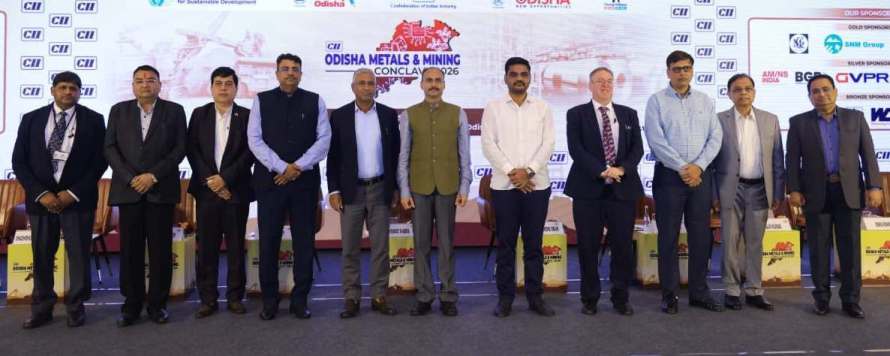
Odisha,” Swain said while addressing the inaugural session of the CII Odisha
Metals & Mining Conclave 2026, which is being held in Bhubaneswar on
September 25-26 under the theme “Metals & Mining: Building Blocks for
Viksit Odisha.”
Swain said 27
projects worth ₹2.47
lakh crore have been approved across 15 districts, with the potential to
generate more than 50,000 jobs. These include around ₹14,000 crore of investments in steel
and downstream projects in Sundargarh, besides major investments in the
aluminium sector.
The minister stressed
the need to accelerate value addition, recycling, cleaner production,
digitalisation and industry-academia collaboration to deepen Odisha’s
industrial ecosystem and create greater economic value from its mineral
resources.
The two-day conclave,
organised by the Confederation of Indian Industry (CII), brings together
policymakers, industry leaders, technology experts and other stakeholders to
deliberate on the future of Odisha’s metals and mining sector.
Hemant Sharma, Additional
Chief Secretary, Department of Home, I&PR and Industries, Government of
Odisha, said the state has evolved from being a major mining hub into a leading
metals centre.
“We have moved not only from being the mining
industry capital, but also being able to claim that we are the metals capital
of India and South Asia,” Sharma said.
He said around 20 new
mines have opened over the past two to three years, while another 30 are at
various stages of development. The expansion is expected to generate
opportunities across ancillary industries, logistics and technology services.
Odisha’s installed
steel capacity is expected to reach 150-180 million tonnes over the next five
years, Sharma said, highlighting the scale of the state's planned industrial
expansion.
The conclave also
brought critical minerals and international cooperation into focus.
Dr Andrew Fleming,
British Deputy High Commissioner in Kolkata, said the UK is ready to contribute
expertise, technology, innovation and investment to India’s critical minerals
value chain, including lithium, graphite, cobalt, nickel and copper.
He called for
long-term partnerships aimed at supporting decarbonisation and building
resilient supply chains.
Anil Kumar Singh,
Chairman, CII Odisha State Council and President, JSW Steel, said the next
phase of Odisha’s metals growth should go beyond extraction and place greater
emphasis on beneficiation, downstream value addition, advanced manufacturing,
recycling and circularity.
He also highlighted
the importance of sustainable and technology-driven operations.
A major highlight of
the inaugural session was the unveiling of SAARTH — Sustainable Action Alliance
for Resilient Tomorrow — Odisha Initiative, introduced by the CII-ITC Centre of
Excellence for Sustainable Development.
The initiative was
presented by Shikhar Jain, Executive Director, CII-ITC Centre of Excellence for
Sustainable Development, with sustainability and resilience emerging as key
pillars of the conclave's agenda.
The two-day event
will feature sessions covering future metals and value addition, sustainable
and green mining, smart mining, AI and digital transformation, ESG, circular
economy and decarbonisation, logistics and supply-chain integration, and
innovation, startups and Industry 4.0 solutions.
The discussions will
also focus on investment, technology, downstream value addition, critical
minerals, logistics and skill development, with the broader objective of
strengthening Odisha’s metals and mining ecosystem and contributing to the
state’s Viksit Odisha@2036 vision.