THEBUSINESSBYTES BUREAU
MANILA, NOVEMBER 17, 2026
Prime Minister Narendra Modi has proposed a series of ambitious
initiatives to further strengthen India's Comprehensive Strategic Partnership
with the Association of Southeast Asian Nations (ASEAN), including free
electronic visas for tourists from ASEAN member countries, a long-term maritime
cooperation plan, nuclear energy technical exchanges and collaboration in
critical minerals.
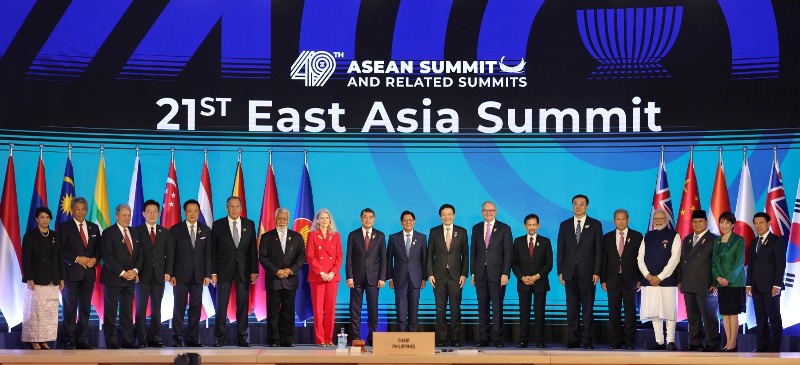
The proposals were outlined in a Ministry of External Affairs (MEA)
statement following the 23rd ASEAN-India Summit held in Manila on Tuesday,
reflecting India's push to deepen regional cooperation across security,
technology, energy, education, tourism and people-to-people exchanges.
Among the major initiatives is a long-term ASEAN-India Maritime
Cooperation Plan encompassing connectivity, scientific research, disaster
management, Coast Guard cooperation, maritime domain awareness and the security
of seafarers. The proposed framework is aimed at strengthening maritime
collaboration and addressing emerging challenges in the Indo-Pacific region.
Modi also proposed a joint cyber forensics training programme to enhance
regional capacity, along with technical exchanges between India and ASEAN
countries in the field of nuclear energy.
Other key proposals include an ASEAN-India Space Hackathon and enhanced
cooperation in mining and critical minerals, areas that are increasingly
important for technological advancement, economic resilience and sustainable
development.
Emphasising youth engagement and closer people-to-people ties, the prime
minister suggested launching an ASEAN-India Youth Connect initiative featuring
a youth summit, exchanges among young parliamentarians and start-up hackathons.
The proposed start-up hackathons would bring together entrepreneurs,
developers and innovators to work in teams over a limited period to develop and
present innovative solutions, business ideas and prototypes addressing specific
challenges.
Modi also proposed expanding scholarship opportunities for students from
ASEAN countries at Nalanda University, further strengthening educational and
academic exchanges between India and Southeast Asia.
In a move to promote cultural and creative collaboration, he suggested
establishing an ASEAN-India Creative Partnership Pavilion at the World Audio
Visual and Entertainment Summit (WAVES) 2027.
Another significant proposal was to provide free electronic visas to
tourists from ASEAN countries, a move expected to facilitate travel and
strengthen tourism and cultural links between India and the Southeast Asian
region.
“PM reaffirmed India’s steadfast
support for ASEAN unity and centrality and highlighted the shared vision of a
peaceful, open and inclusive Indo-Pacific,” the MEA said in a post on X.
“PM and ASEAN Leaders reviewed the
progress of the ASEAN-India Comprehensive Strategic Partnership and discussed
ways to further strengthen cooperation across multiple domains.”
ASEAN is a regional intergovernmental organisation established in 1967 to
promote economic growth, political stability, security and cultural cooperation
among Southeast Asian nations. The grouping has 11 members -- Brunei, Cambodia,
Indonesia, Laos, Malaysia, Myanmar, the Philippines, Singapore, Thailand,
Timor-Leste and Vietnam.
India's engagement with ASEAN remains central to its Act East Policy,
which seeks to strengthen economic, strategic and cultural relations with
countries in the Indo-Pacific region.
The ASEAN-India dialogue partnership began with the establishment of a sectoral partnership in 1992. It was elevated to a full dialogue partnership in December 1995 and a summit-level partnership in 2002. The relationship was upgraded to a strategic partnership in 2012 and subsequently to a Comprehensive Strategic Partnership in 2022.
The Philippines is hosting the annual ASEAN summit and related meetings in Manila in its capacity as the current chair of the regional grouping.