
THEBUSINESSBYTES
BUREAU
BHUBANESWAR, AUGUST 6, 2026
Strengthening Universal Drug Susceptibility Testing (UDST),
expanding access to molecular diagnostics, genotypic testing and targeted
next-generation sequencing (tNGS), and leveraging artificial intelligence (AI)
for early detection and monitoring are crucial to achieving India's goal of eliminating
tuberculosis (TB), experts said on Thursday.
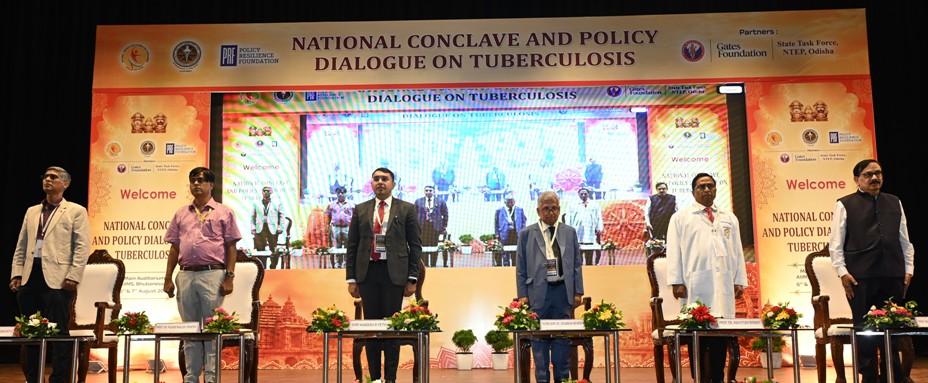
The observations were made at the inaugural session of the
two-day National Conclave and Policy Dialogue on Tuberculosis organised by
AIIMS Bhubaneswar in collaboration with the Policy Resilience Foundation (PRF),
which has brought together policymakers, clinicians, scientists, researchers,
programme officers and public health experts to deliberate on strategies for
strengthening TB prevention, diagnosis, treatment and programme implementation.
Inaugurating the conclave, Dr Digambar Behera, President of
the National Academy of Medical Sciences (NAMS), said India continues to bear
the world's highest tuberculosis burden and that early detection of
drug-resistant TB remains a major challenge.
"Existing technologies are often inadequate for precise
diagnosis. The successful adoption of advanced diagnostic technologies before
treatment initiation will enable clinicians to prescribe appropriate drugs,
improve treatment outcomes and significantly strengthen TB control
efforts," Behera said.
Executive Director and CEO of AIIMS Bhubaneswar Dr Ashutosh
Biswas said the institute remains committed to supporting the country's TB
elimination efforts through research, innovation, capacity building and policy
support.
"This dialogue will help identify ground-level
challenges and explore practical solutions to strengthen diagnosis, treatment
delivery and patient outcomes," Biswas said.
The deliberations are focusing on challenges affecting TB
elimination in remote, tribal and other vulnerable communities in Odisha,
including delays in patient identification, sample collection, laboratory
testing, reporting, treatment initiation, follow-up and outcome monitoring.
Founder of the Policy Resilience Foundation Nandish R. Pethani
said the conclave aims to identify practical solutions to address diagnostic
delays, gaps in sample transportation and reporting, delays in treatment
initiation and challenges in patient follow-up to improve programme
implementation and health outcomes.
Experts at the conclave also emphasised the need to
strengthen Universal Drug Susceptibility Testing to facilitate early
identification of drug-resistant TB and ensure timely initiation of appropriate
treatment.
The event highlighted the growing role of advanced
technologies, including molecular diagnostics, genotypic testing, targeted
next-generation sequencing, digital health systems, artificial intelligence and
real-time monitoring, in accelerating TB elimination efforts.
India's AI-enabled TB programme, which uses AI-based cough
screening, AI-assisted interpretation of chest X-rays and predictive analytics
to identify high-risk individuals, was showcased as a major technological
advancement. According to data presented at the inaugural session, the
initiative has helped diagnose more than 28 lakh TB patients.
The data also showed that annual TB cases in India declined
by 21 per cent between 2015 and 2024, while TB-related mortality fell by 28 per
cent during the same period.
Officials said that under the TB-Mukt Bharat Abhiyaan, more than 20 crore vulnerable individuals have been screened for tuberculosis since December 7, 2024.
Among those present at the inaugural session were AIIMS Bhubaneswar Medical Superintendent Dr Prabhas Ranjan Tripathy, Organising Chairman and Head of the Department of Pulmonary Medicine and Critical Care Dr Prasanta Raghab Mohapatra, and Organising Secretary Dr Sourin Bhuniya.