THEBUSINESSBYTES
BUREAU
BHUBANESWAR,
OCTOBER 25, 2026
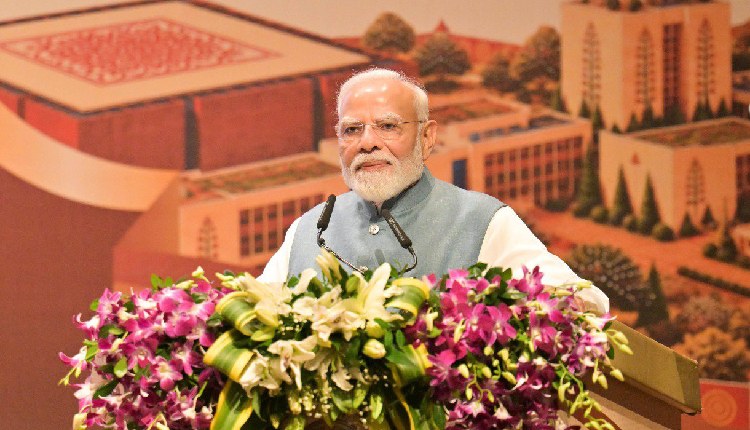
Prime Minister
Narendra Modi on Sunday said the next decade would focus on making India's
banking system more efficient, secure and trustworthy, as he inaugurated the
Reserve Bank of India's (RBI) Data Centre and Cybersecurity Training Institute
in Khordha near Bhubaneswar, underscoring the government's commitment to
inclusive development and equitable access to financial services.
Emphasising the need
to ensure that the benefits of development reach every citizen, Modi said his
government was committed to expanding the reach of development and ensuring
that no one was left behind.
“With the blessings of Mahaprabhu (Lord
Jagannath), Bhubaneswar is giving a new institution to a new India today,” he
said, describing the inauguration as a significant occasion for Odisha and the
country.
The Prime Minister
said that while India had made considerable progress in building major cities,
institutions, hospitals and airports since Independence, a substantial section
of the population continued to lack access to basic amenities. Ensuring that
the benefits of development reached every region and every citizen equally
remained a key challenge, he added.
Modi said the
government was pursuing a model of pro-people, proactive and good governance to
build confidence among citizens that everyone would have an opportunity to
participate in the country's development journey.
Highlighting the
expansion of financial inclusion, he said that despite the nationalisation of
banks in the 1960s and 1970s in the name of the poor, more than half of India's
population remained outside the banking system until 2014.
Access to bank credit
was also difficult for middle-class families, small farmers, landless people
and women, he said, adding that digital banking had since transformed access to
financial services by connecting people to round-the-clock banking facilities.
The Prime Minister
also criticised the banking practices under the previous Congress-led United
Progressive Alliance (UPA) government, alleging that the so-called phone
banking system favoured wealthy individuals and those with links to Congress
leaders, while ordinary citizens struggled to access basic banking services.
“Poor and middle-class families needed a
guarantor just to open a bank account, yet under the Congress's phone banking
system, thousands of crores of rupees were readily available to the rich,” Modi
alleged.
He claimed that such
mismanagement had contributed to the accumulation of non-performing assets
(NPAs), pushing India's banking system towards a crisis.
Modi also highlighted
various initiatives undertaken by the Union government to make banking services
more accessible, convenient and hassle-free for poor and underprivileged
sections of society.
Turning to the
importance of banking infrastructure, the Prime Minister said the country's
priorities were now shifting from expanding access to strengthening the
efficiency, reliability and security of financial services.
“Friends, the past decade was about taking
banking services to those who had been deprived of them. The coming decade is
about making banking more efficient and trustworthy,” he said, adding that the
new data centre in Odisha would play a significant role in this transition.
Stressing the need to
protect the banking system's digital infrastructure, Modi said robust data
centres and advanced computing systems were essential to ensuring the security
and resilience of financial services.
With cyber threats evolving rapidly, he said, the country needed modern infrastructure, updated training systems, advanced tools and skilled professionals to address emerging challenges.
In this context, the new Cybersecurity Training Institute assumes particular importance, as strengthening technical capabilities and developing specialised human resources will be crucial to safeguarding the country's digital financial ecosystem, he added.