THEBUSINESSBYTES
BUREAU
NEW
DELHI, OCTOBER 25, 2026
Prime Minister
Narendra Modi on Sunday highlighted that nearly 50 crore tele-consultations have
been conducted through the e-Sanjeevani platform, describing it as a testament
to the power of technology, dedication of doctors and people's trust in the
healthcare system, while urging citizens to prioritise locally made products
during the festive season to accelerate the vision of an Atmanirbhar Bharat.
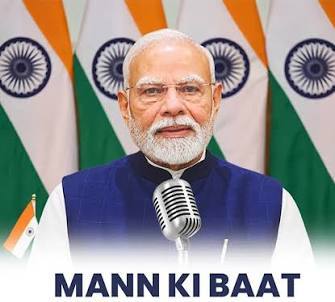
Addressing the 139th
episode of his monthly radio programme ‘Mann Ki Baat’, Modi also showcased
grassroots initiatives in sustainable agriculture, water conservation,
traditional crafts, millet cultivation and scientific research, underlining how
community participation and innovation were transforming lives across the
country.
The Prime Minister
said e-Sanjeevani had reached even the remotest corners of India, enabling
people in geographically isolated regions to access specialist medical advice
without the hardship of travelling long distances.
He cited examples
from the Andaman and Nicobar Islands, Lakshadweep, Ladakh and Nagaland to
illustrate the impact of the telemedicine service. In Baratang Island, a child
from the Jarawa tribe suffering from pneumonia received timely expert medical
assistance through the platform. In Lakshadweep, a doctor in Kavaratti guided a
local medical team treating an elderly man, while in Zanskar, Ladakh, a
pregnant woman received specialist assistance. A 12-year-old boy in Nagaland
also benefited from prompt diagnosis and treatment for an ear infection and
fever.
Modi said nearly 1.9
lakh Ayushman Arogya Mandirs across the country were bringing healthcare
facilities closer to people and evolving into wellness centres for village
panchayats. He noted that regular health check-ups in rural areas were becoming
more common, with e-Sanjeevani playing a significant role.
Emphasising the
importance of domestic products, the Prime Minister said the ‘Vocal for Local’
movement was helping Indian goods find markets abroad. Makhana from Bihar's
Purnia was reaching Greece, while arhar dal from Karnataka's Kalaburagi was
being exported to the Maldives, opening new opportunities for farmers.
He also pointed to
the growing importance of packaging in making local products attractive to
consumers and competitive in international markets. Products such as honey,
mahua, chironji and bamboo-based items marketed through Maharashtra's ‘Shabari
Naturals’ initiative feature packaging inspired by tribal art, which has
received Japan's prestigious Good Design Award. A bamboo start-up in Karnataka,
meanwhile, is developing packaging material from bamboo and agricultural
residue.
Modi said sales of
Khadi Gram Udyog products exceeded Rs 28 crore on Gandhi Jayanti, an increase
of Rs 1.5 crore over the previous year. He urged people to give preference to
products made by local artisans while shopping for the festive season, saying
such purchases would boost their morale and strengthen the movement towards
self-reliance.
The Prime Minister
also highlighted efforts to revive traditional agricultural practices and
empower rural women. In Punjab's Malwa region, the Kheti Virasat Mission's
‘Nav-Trinjan’ initiative is promoting organic cotton cultivation without
chemicals, including cotton varieties with natural colours that do not require
additional chemical dyes.
A weaving school
established under the initiative has helped women acquire skills and improve
their livelihoods. Modi cited the examples of Ramandeep Kaur, who moved from
labour work to skilled weaving, and Rekha Rani, whose handwoven shawl was
presented to the President of India. Other women who previously worked as
domestic help or agricultural labourers are now producing textiles using
indigenous organic cotton.
On environmental
conservation, Modi spoke about the revival of the Heval river in Uttarakhand's
Tehri Garhwal region. After declining water levels and drying natural springs
raised concerns, villagers and the local administration joined hands to promote
rainwater harvesting, groundwater recharge and tree plantation. These measures
helped revive the river and restore dozens of natural water sources.
He urged people to
maintain cleanliness in their surroundings ahead of Diwali, Chhath and other
festivals, stressing that small individual efforts could bring significant
changes to communities.
The Prime Minister
also drew attention to India's advances in brain research. Recalling his visit
to Chennai earlier this month, he said the Sudha Gopalakrishnan Brain Centre at
IIT Madras had developed a brain-imaging technology platform to create
high-resolution digital three-dimensional images of human brains. The
initiative aims to map and study 100 human brains in detail using the Param
Shakti supercomputer, with the resulting data to be made available as an
open-source resource for researchers.
Modi said deeper
understanding of the human brain could create new avenues for research into
conditions such as Alzheimer's disease and dementia, for which definitive cures
remain unavailable. He also praised the family of Shivani from Madhya Pradesh's
Narmadapuram for deciding to donate her organs following a fatal road accident,
describing the decision as an example of humanity that could help save lives
and support scientific research.
Highlighting
youth-led innovation, he referred to start-ups working on technology to verify
gold quality, recover money lost to bank fraud, use artificial intelligence to
screen for cervical cancer, develop flying electric vehicles, create
fast-charging batteries and apply AI in defence technology.
He also paid tribute
to Narinder Singh Kapany, widely known as the Father of Fiber Optics, ahead of
his 100th birth anniversary on October 31, urging young people to learn about
Indian scientists whose work has shaped modern communication.
The address further
highlighted the revival of millet cultivation in the Northeast. In Meghalaya's
Khanduli village, two women developed millet-based cookies, cakes, muffins and
baby food, boosting demand for the traditional crop. In Sadolpara, farmer
Chekjing Sangma adopted modern cultivation methods, while Nagaland's Kezoma
village resumed millet farming in 2024 and organised its first millet festival
in 2025.
Modi also recalled
the contributions of Maharishi Valmiki and freedom fighter Bhai Parmanand,
urging the youth to draw inspiration from their lives and ideals. He called on
citizens to participate in the October 31 Run for Unity marking Sardar
Vallabhbhai Patel's birth anniversary.
Concluding his
address, the Prime Minister extended greetings for Diwali, Chhath and other
upcoming festivals, urging people to celebrate with their families, remain safe
and healthy, and share their happiness with others.