
THEBUSINESSBYTES
BUREAU
BHUBANESWAR,
AUGUST 29, 2026
Odisha Chief
Secretary Anu Garg on Saturday called for strengthening data analysis,
inter-departmental coordination and continuous monitoring to make social sector
services more effective and people-oriented.
Garg made the
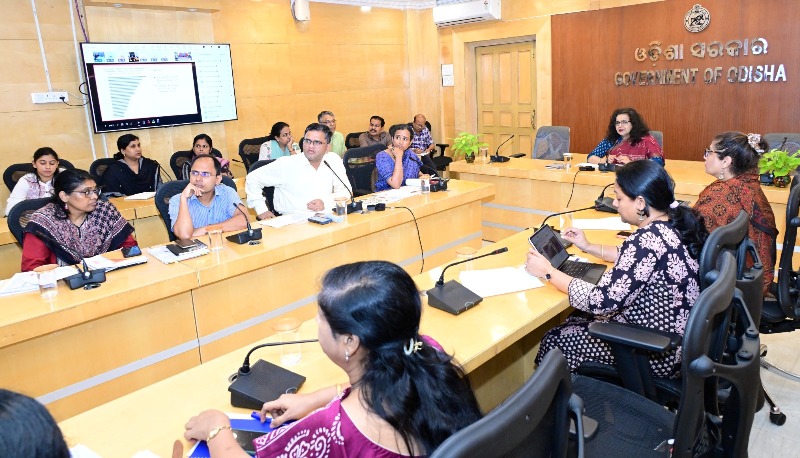
observations while reviewing key social sector indicators at a ‘PRAYAS’ meeting
held at Lok Seva Bhawan here.
The meeting reviewed
various indicators pertaining to the School and Mass Education, Health and
Family Welfare, and Women and Child Development departments, with emphasis on
using data analysis to identify deficiencies and resolve problems at the
district level.
Secretaries of the
Women and Child Development, School and Mass Education, Health and Family
Welfare, and ST, SC Development, Minorities and Backward Classes Welfare
departments, along with departmental directors and senior officers, attended
the meeting. Regional Revenue Commissioners (RDCs), district Collectors and
District Magistrates participated virtually.
During the review of
the Women and Child Development sector, the Chief Secretary stressed the need
to make child and maternal nutrition programmes more effective and ensure
nutritional security at the household level.
The meeting discussed
coordinated measures to promote access to fresh vegetables through nutrition
gardens and home vegetable cultivation, besides distribution of seedlings and
greater involvement of self-help groups (SHGs).
Regular monitoring of
the nutritional status of children at Anganwadis, timely growth measurements,
home visits and capacity building of Anganwadi workers were also emphasised.
In the education
sector, the review focused on improving Foundational Literacy and Numeracy
(FLN) skills among primary-level students. Officials were asked to ensure
regular monitoring of learning levels, effective use of teaching-learning
materials and systematic assessment of learning outcomes.
The Health and Family
Welfare Department's review focused on reducing maternal and neonatal
mortality, strengthening newborn care and preventing infections.
The department
informed the meeting that the neonatal mortality rate had declined during
January-July 2026.
Highlighting success
stories in newborn care, officials said a baby weighing just 500 grams at birth
at the Nabarangpur District Headquarters Hospital SNCU recovered after 78 days
of treatment and was discharged weighing 1.6 kg.
Similarly, a
premature baby weighing 900 grams at the Mayurbhanj DHH also recovered
following treatment, the officials said.
The meeting also
stressed infection prevention and control measures, including hand hygiene,
hospital sanitation, biomedical waste management and regular retraining of
healthcare workers.
As part of the
100-day campaign under the ‘TB Mukt Bharat Abhiyan’, a massive X-ray screening
drive will be launched across the state from September 1.
District Collectors
have been tasked with ensuring maximum utilisation of available X-ray machines,
organising screening camps in remote and inaccessible areas and undertaking
daily monitoring of the campaign.
Best practices from
districts were also discussed. Angul's initiatives resulting in a reduction in
maternal deaths and Rayagada's campaign to combat anaemia among school students
through screening and distribution of iron and folic acid (IFA) tablets were
highlighted as examples for wider adoption.
The Chief Secretary
stressed that deficiencies identified through data-based reviews must be
addressed within a fixed timeline, with clear accountability and regular
follow-up.
The PRAYAS review,
officials said, is aimed at ensuring that social sector interventions translate
into better outcomes on the ground through data-driven monitoring, closer
coordination among departments and time-bound resolution of gaps.