
THEBUSINESSBYTES BUREAU
BHUBANESWAR, FEBRUARY 13, 2026
“Odisha is the only state that has
developed a Standard Operating Procedure to manufacture women-friendly farm
machinery,” said Deputy Chief Minister Kanak Vardhan Singh Deo while
underscoring the State’s commitment to inclusive and evidence-led agricultural
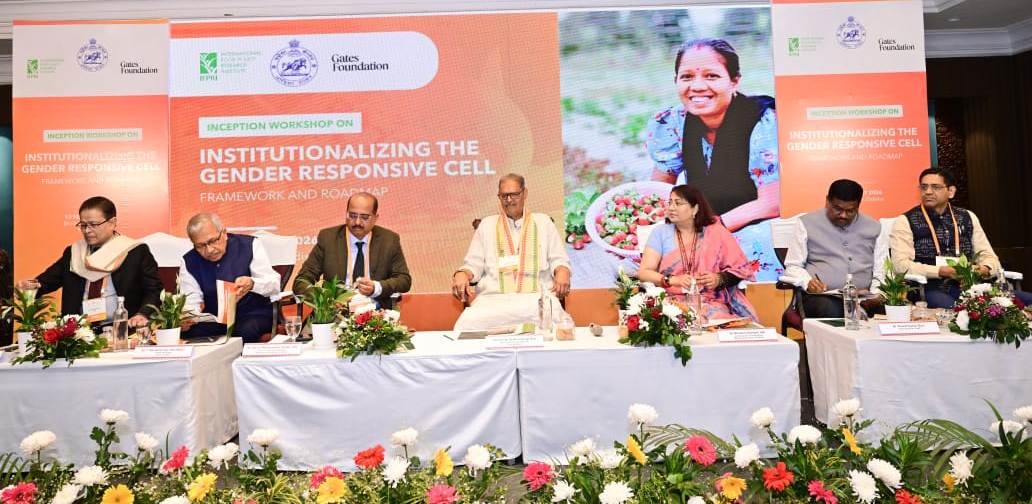
reform at the inception workshop on institutionalising the Gender Responsive
Cell (GRC) in Bhubaneswar on Friday.
The workshop, organised by the Department of Agriculture and Farmers’
Empowerment in collaboration with the International Food Policy Research
Institute with support from the Gates Foundation, marked a significant step
towards embedding gender equity within agricultural governance. Singh Deo said
the launch of the Cell last year had signalled Odisha’s intent to move beyond
policy rhetoric and translate research insights into tangible improvements in
schemes, services and institutional processes that benefit women farmers.
 The Gender Responsive Cell, jointly inaugurated on 29 November 2025 by
Deputy Chief Ministers Kanak Vardhan Singh Deo and Pravati Parida at Krushi
Bhavan, has been envisioned as a structural mechanism to analyse gender gaps
and ensure that gender considerations become a core operational principle of
the department rather than an add-on. The initiative seeks to strengthen data
systems, programme design and implementation frameworks so that women’s
participation and leadership in agriculture are systematically enhanced.
The Gender Responsive Cell, jointly inaugurated on 29 November 2025 by
Deputy Chief Ministers Kanak Vardhan Singh Deo and Pravati Parida at Krushi
Bhavan, has been envisioned as a structural mechanism to analyse gender gaps
and ensure that gender considerations become a core operational principle of
the department rather than an add-on. The initiative seeks to strengthen data
systems, programme design and implementation frameworks so that women’s
participation and leadership in agriculture are systematically enhanced.
Dr. Mrinalini Darswal, Commissioner-cum-Secretary of the Women and Child
Development Department, highlighted the importance of convergence across
departments, noting that women’s empowerment in agriculture requires
coordinated action spanning agriculture, nutrition, social protection and data
governance. She said the Cell provides an institutional space where such
convergence can translate into measurable outcomes.
Sachin Ramchandra Jadhav, Commissioner-cum-Secretary of the Agriculture
and Farmers’ Empowerment Department, described the GRC as a governance reform
aimed at making agricultural policy more accountable and evidence-driven. He
said the inception workshop would help convert the vision of the Cell into a
practical roadmap with clear institutional responsibilities and monitoring
mechanisms.
Emphasising the role of research institutions, Prof. Pravat Kumar Roul,
Vice-Chancellor of the Odisha University of Agriculture and Technology, said
gender-responsive agricultural transformation must be anchored in rigorous
evidence and continuous learning, with the GRC acting as a bridge between
research, policy and field practice. Dr. Shahidur Rashid, Director for South
Asia at the International Food Policy Research Institute, said the
collaboration would support the State through measurement frameworks, capacity
building and data-driven insights that could inform similar initiatives across
India and the wider South Asian region.
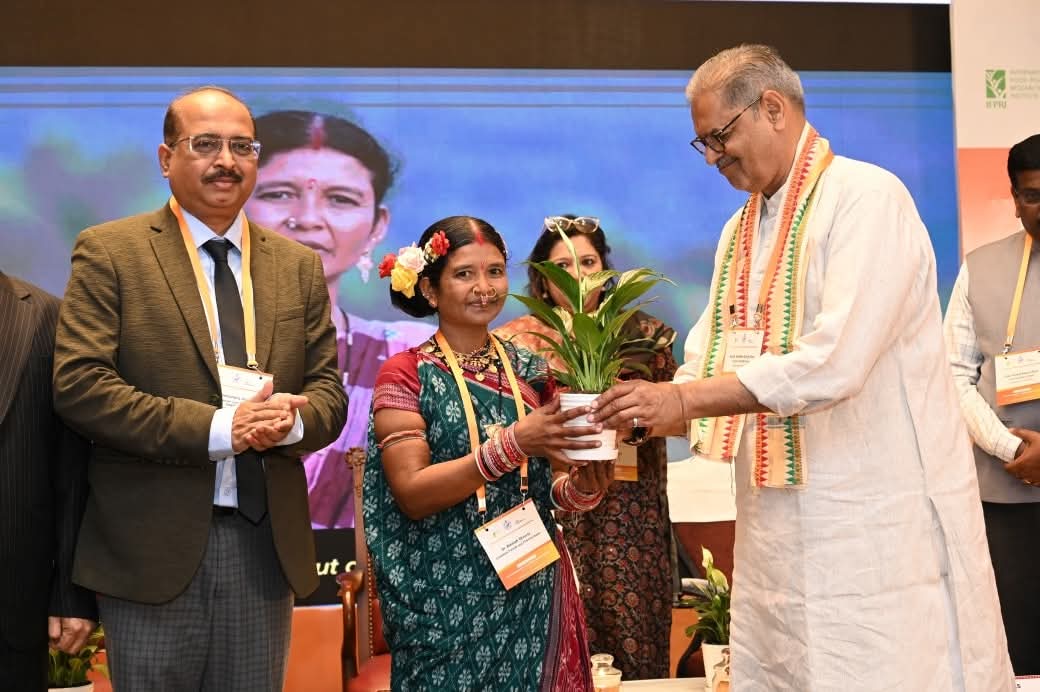
The workshop also recognised grassroots leadership, with two farm women
felicitated for their contributions. Dr. Raimati Ghiuria, widely known as the
“Millet Rani” for her work in preserving traditional millet landraces and
empowering women farmers, and Smt. Rina Behera, noted for her expertise in
operating, maintaining and training others in farm machinery, were honoured for
their role in advancing women-led agricultural innovation.
Technical sessions during the programme focused on gender-responsive agricultural transformation, climate resilience, women-centric mechanisation, custom hiring models and leadership pathways for women in Farmer Producer Organisations and Self Help Groups. Evidence from IFPRI-led initiatives such as the Gender, Climate Change and Nutrition Integration programme was presented to inform policy design, alongside discussions on robust monitoring and evaluation systems.
The event was attended by Dr. Arabinda Kumar Padhee, Additional Chief Secretary of Revenue and Disaster Management, T. Nanda Kumar, former Secretary to the Government of India, senior officials, scientists, research scholars, representatives of civil society organisations and students.