THEBUSINESSBYTES BUREAU
NEW DELHI, AUGUST 11, 2026
Odisha has made significant strides in greening its
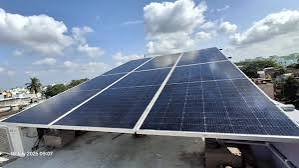
government infrastructure, with as many as 3,163 government buildings across
the state equipped with rooftop solar systems having a cumulative installed
capacity of 38.12 MW, Union Minister of State for New and Renewable Energy and
Power Shripad Yesso Naik informed the Rajya Sabha on Tuesday.
In a written reply to a question by Rajya Sabha MP Dilip Ray,
Naik said the Centre has asked all states and Union Territories, including
Odisha, to issue necessary directions to government departments and
institutions to make use of vacant rooftops of government buildings for
installing solar panels.
The rooftop solarisation of government buildings is one of
the key components of the Centre's PM Surya Ghar: Muft Bijli Yojana (PMSG:
MBY), under which detailed guidelines have been issued laying down various
implementation models for rooftop solar projects.
The guidelines also envisage the involvement of Central
Public Sector Enterprises (CPSEs) with experience in renewable energy
deployment to assist Central ministries, states and Union Territories in
installing rooftop solar systems on government buildings.
However, the Centre has clarified that no Central Financial
Assistance (CFA) is available for rooftop solar installations on government
buildings, as such projects are considered financially viable even without
subsidy support.
According to data provided by the Odisha Renewable Energy
Development Agency (OREDA), the state's implementing agency, rooftop solar
systems have already been installed on 3,163 government buildings across
Odisha, marking a substantial expansion of renewable energy use within public
infrastructure.
The state is now gearing up for the next phase of rooftop
solarisation, with additional government buildings identified for
implementation under the Renewable Energy Service Company (RESCO) model.
During the first phase, more than 1,960 government buildings
were identified for rooftop solar projects under the RESCO model. Subsequent
surveys assessed the feasibility of solar installations at 925 of these
buildings.
The estimated cumulative solarisation requirement of the 925 feasible government buildings is 79.56 MW, highlighting the considerable potential for expanding renewable energy generation across Odisha's public infrastructure.
The expansion of rooftop solar projects is expected to accelerate the adoption of clean energy in government buildings, reduce dependence on conventional electricity and help promote wider use of renewable energy in the state.