THEBUSINESSBYTES
BUREAU
NEW
DELHI, OCTOBER 23, 2026
Odisha is leveraging
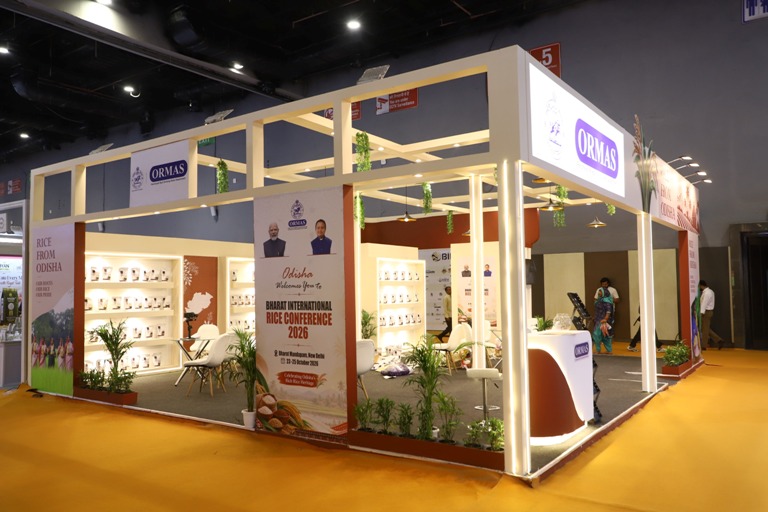
the Bharat International Rice Conference (BIRC) 2026 to take its rich
traditional rice heritage to global markets, showcasing 15 indigenous rice
varieties and products from eight districts while seeking to strengthen market
linkages for rural producer groups and boost community-led enterprises.
Facilitated by the
Odisha Rural Development and Marketing Society (ORMAS) under the Panchayati Raj
and Drinking Water Department, the initiative brings together 85 community-based
organisations (CBOs) with 3,695 members, underscoring the state's efforts to
transform agricultural diversity and traditional farming knowledge into
sustainable rural livelihoods.
The three-day
conference, being held at Bharat Mandapam in New Delhi from October 23 to 25,
provides a platform for Odisha's distinctive rice varieties to reach potential
buyers, distributors, processors, retailers and institutional purchasers.
The showcase reflects
the diversity of the state's rice-growing regions, with Puri presenting Sarala,
Sona Masoori, Pooja and Samrat; Kendrapada featuring Leelavati Aromatic Rice;
and Koraput highlighting its Geographical Indication (GI)-tagged Kaala Jeera
rice.
Mayurbhanj is
showcasing Mugei, Salafula and Kalachampa, while Bargarh is represented by
Jasmine Black Rice. Ganjam is presenting Khanipaka and Labanya Black Rice,
Sundargarh is featuring Kanderajhal and Machkanta, and Jagatsinghpur is
bringing low-glycaemic-index rice to the national and international platform.
Chief Minister Mohan
Charan Majhi said the conference would help bring Odisha's unique rice
varieties to global attention, while creating opportunities to expand markets
and improve rural incomes.
" Our
traditional rice varieties embody generations of farmers' knowledge, regional
identity and rich biodiversity. Our vision is to translate this rich heritage
into wider market opportunities, stronger rural livelihoods and inclusive
growth," Majhi said.
Beyond product
promotion, ORMAS is seeking to build commercial partnerships between
community-based producer groups and buyers, wholesalers, retailers, food
processors, hotels, restaurants and institutional customers. The strategy
includes branded, retail-ready packaging, product sampling and opportunities
for distribution agreements, institutional supplies and private-label
partnerships.
Rural Development,
Panchayati Raj and Drinking Water Minister Rabi Narayan Naik said the
government was working to bridge the gap between rural producers and markets by
strengthening community institutions and improving the commercial readiness of
their products.
"Through ORMAS,
we are working to bridge the gap between rural producers and markets. Our focus
is on strengthening community-based organisations, improving product
presentation and market readiness, and building partnerships that enable
farmers to benefit from the growing demand for distinctive, quality
agricultural products," Naik said.
The initiative places
collective producer institutions at the centre of Odisha's rural market
development strategy. Improved aggregation, quality assurance, packaging,
branding and value addition are expected to help community enterprises reach a
wider customer base and capture greater value from their produce.
With growing emphasis on distinctive agricultural products and regional food identities, the state's participation at BIRC 2026 seeks to position traditional rice not merely as a heritage crop but also as a commercial opportunity for rural communities.
The initiative underscores Odisha's broader effort to connect agricultural biodiversity with enterprise development, turning its traditional rice legacy into greater market visibility, stronger buyer linkages and more resilient rural livelihoods.