THEBUSINESSBYTES
BUREAU
ROURKELA,
OCTOBER 23, 2026
The Rourkela Steel Plant (RSP), a unit of
Steel Authority of India Limited (SAIL), has joined hands with the National
Small Industries Corporation Ltd (NSIC) and the National Scheduled Tribes
Finance and Development Corporation (NSTFDC) to boost skill development,
entrepreneurship and sustainable livelihood opportunities for underprivileged
tribal youth in Odisha's Sundargarh district and adjoining areas.
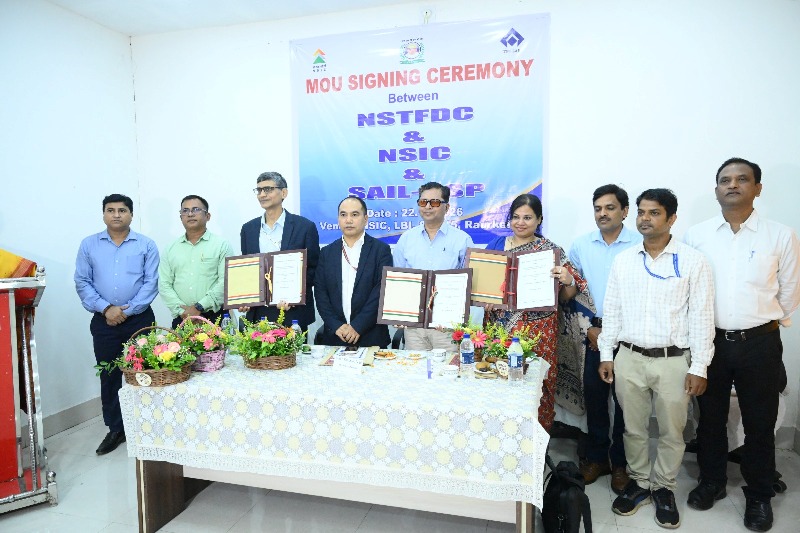
A tripartite
Memorandum of Understanding (MoU) to this effect was signed on October 22 at
LBI, Rourkela, with a focus on equipping Scheduled Tribe (ST) youth with
market-oriented vocational skills to improve their employability, encourage
self-employment and promote economic self-reliance.
The MoU was signed by
O P Singh, Senior General Manager (TTDV) and SBU Head of NSIC; Bismita Das,
Assistant General Manager of NSTFDC; and Tapankumar G Kanekar, Chief General
Manager (TS and CSR) of RSP.
The signing ceremony
was attended by T Roumuan Paite, Chairman and Managing Director of NSTFDC and
Joint Secretary in the Union Ministry of Tribal Affairs, along with senior
officials of the participating organisations.
Under the initiative,
vocational training will be imparted in six trades — self-employment tailoring,
assistant beautician, assistant computer operator, bread and bakery
manufacturing, mushroom farming, and electrician training.
The programmes are
designed to provide beneficiaries with practical, industry-relevant and
market-oriented skills, enabling them to explore employment opportunities,
establish small enterprises and generate sustainable sources of income.
A key feature of the
initiative is its emphasis on women's empowerment, with women expected to
constitute more than 60 per cent of the beneficiaries. The focus is aimed at
expanding women's access to vocational training, strengthening their financial
independence and enhancing their participation in income-generating activities.
The collaboration
brings together RSP's corporate social responsibility initiatives and the
institutional expertise of NSIC and NSTFDC to support inclusive development and
improve livelihood prospects for marginalised tribal communities.
The partnership is expected to create new avenues for skill enhancement, entrepreneurship and income generation among tribal youth, while contributing to the broader socio-economic development of Sundargarh district and surrounding areas.
Through the initiative, the three organisations have reaffirmed their commitment to tribal welfare, women's empowerment and sustainable livelihood generation, with the broader objective of enabling disadvantaged communities to move towards greater economic independence.