THEBUSINESSBYTES BUREAU
NEW DELHI, JULY 30, 2026
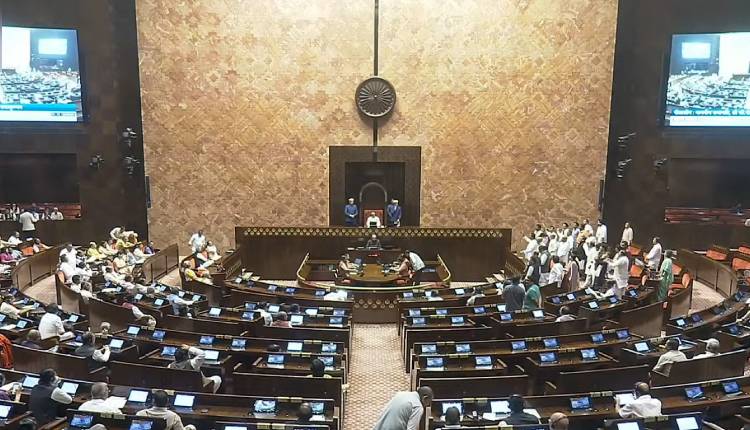
Parliament on Thursday passed the Public Examination
(Prevention of Unfair Means) Amendment Bill, 2026, ushering in a tougher legal
framework to combat paper leaks and examination fraud with stricter
punishments, fast-track trials and enhanced investigative powers. The
government described the legislation as a decisive step to safeguard the future
of millions of students, while the Opposition staged a walkout during the
minister’s reply, triggering a fresh political face-off.
The Rajya Sabha approved the Bill by voice vote after a
seven-hour debate today, a day after it was passed by the Lok Sabha. The
legislation prescribes rigorous imprisonment of not less than five years,
extendable up to ten years, along with a fine of up to ₹50 lakh for those involved in paper leaks and
other unfair examination practices. Organised examination fraud will attract a
minimum seven-year jail term and a penalty of at least ₹10
crore.
Defending the legislation, Union Minister of State for
Personnel, Public Grievances and Pensions Dr. Jitendra Singh asserted that the
government was committed to ensuring transparency and credibility in public
examinations. Stressing that protecting students was a national responsibility,
he said the Centre was “ready to walk an extra mile” and remained open to
constructive suggestions from all sections of society to strengthen the
examination system.
Dr. Singh criticised the Congress-led Opposition for walking
out before his reply, calling the move “irresponsible” and regretting that
members who had raised several concerns chose not to remain in the House to
hear the government’s response. Earlier, Leader of the House Jagat Prakash
Nadda also accused the Opposition of showing disrespect towards parliamentary
proceedings and democratic decorum.
Rejecting allegations that the Bill was limited in scope, the
minister said the law covered examinations conducted not only by the National
Testing Agency (NTA) but also by the UPSC, SSC, banking recruitment bodies and
other central agencies. He maintained that the amendment formed part of a
broader examination reform process and noted that nearly 76 per cent of the
recommendations of the Radhakrishnan Committee had already been implemented.
Responding to criticism from Leader of Opposition Mallikarjun
Kharge regarding multiple paper leak incidents, Dr. Singh argued that several
such cases had occurred in states governed by non-NDA parties and questioned
why those instances had not been highlighted. He also rejected demands for abolishing
the NTA, pointing out that many examination leaks in recent years had
originated from state-level recruitment agencies and public service
commissions.
The amendment empowers state governments and Union Territory
administrations to designate Sessions Courts as special fast-track courts for
offences under the law. These courts will conduct day-to-day hearings and are
expected to conclude trials within three months of the filing of the charge
sheet. The Bill also authorises the Centre to constitute a Special Task Force
to investigate serious examination-related offences.
The original anti-paper leak law was enacted in 2024 following nationwide controversies over question paper leaks and examination irregularities. The latest amendment significantly strengthens the legal framework by introducing harsher penalties and expediting the judicial process to deter organised examination fraud.
Earlier in the debate, Opposition members accused the government of failing to fix accountability for repeated examination leaks and criticised police action against protesting students. Treasury bench members, however, defended the government, asserting that the BJP-led administration remained committed to protecting students’ interests and restoring public confidence in the integrity of the country’s examination system.