THEBUSINESSBYTES
BUREAU
NEW
DELHI, JANUARY 18, 2026
India’s power
distribution sector has scripted a historic turnaround, with distribution
utilities collectively reporting a positive Profit After Tax of ₹2,701 crore in FY 2024–25, marking the first
such outcome after years of sustained losses. The milestone represents a
dramatic reversal from a loss of ₹25,553
crore in FY 2023–24 and an even steeper deficit of ₹67,962 crore in FY 2013–14,
underscoring the scale of the transformation achieved over the
past decade.
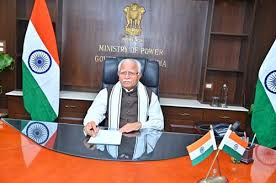
 Union Minister
of Power Manohar Lal described the development as the beginning of a new
chapter for the distribution sector, attributing the turnaround to a series of
focused reforms aimed at addressing long-standing structural and financial
weaknesses. He said the achievement reflects the leadership and vision of Prime
Minister Narendra Modi, recalling the Prime Minister’s emphasis that India is
not only driving its own growth but also contributing to global growth, with
the energy sector playing a pivotal role. The Minister reiterated the
government’s commitment to deepening reforms so that the power sector can
effectively support India’s expanding economy and advance the goal of Viksit
Bharat.
Union Minister
of Power Manohar Lal described the development as the beginning of a new
chapter for the distribution sector, attributing the turnaround to a series of
focused reforms aimed at addressing long-standing structural and financial
weaknesses. He said the achievement reflects the leadership and vision of Prime
Minister Narendra Modi, recalling the Prime Minister’s emphasis that India is
not only driving its own growth but also contributing to global growth, with
the energy sector playing a pivotal role. The Minister reiterated the
government’s commitment to deepening reforms so that the power sector can
effectively support India’s expanding economy and advance the goal of Viksit
Bharat.
The revival
has been driven by a comprehensive reform agenda in the distribution segment.
Measures such as the Revamped Distribution Sector Scheme have strengthened
financial viability through infrastructure modernisation and accelerated
deployment of smart meters. Additional prudential norms have linked access to
finance with performance benchmarks, promoting fiscal and operational
discipline. Amendments to the Electricity Rules have ensured timely cost
adjustments, prudent tariff structures and transparent subsidy accounting, while
the Electricity Distribution (Accounts and Additional Disclosure) Rules, 2025
have introduced uniform accounting standards and enhanced transparency across
utilities. The enforcement of Late Payment Surcharge Rules has strengthened
contractual discipline and facilitated investment in new renewable energy
projects, alongside incentives for states to implement critical reforms through
borrowing limits tied to performance under the Additional Borrowing Scheme.
The impact of
these initiatives is reflected across key performance indicators. Aggregate
Technical and Commercial losses have steadily declined from 22.62 per cent in
FY 2013–14 to 15.04 per cent in FY 2024–25, signalling a marked improvement in
operational efficiency. Cost recovery has also strengthened significantly, with
the Average Cost of Supply–Average Revenue Realised gap narrowing from ₹0.78 per kWh in FY 2013–14 to just ₹0.06 per kWh in FY
2024–25. Reforms such as the Electricity Late Payment Surcharge Rules have led
to a 96 per cent reduction
in outstanding dues to generating companies, which fell from ₹1,39,947 crore in 2022 to ₹4,927 crore by January 2026.
At the same time, payment cycles of distribution utilities have improved from
178 days in FY 2020–21 to 113 days in FY 2024–25.
The Ministry
of Power’s sustained engagement with states and Union Territories has played a
critical role in this turnaround. Over the past decade, policy interventions
have been reinforced through regular reviews and high-level discussions,
including Regional Conferences of Energy Ministers held in 2025 across Gangtok,
Mumbai, Bengaluru, Chandigarh and Patna. These interactions have helped align
state-level actions with national reform objectives, enabling distribution
utilities to achieve measurable gains.
Looking ahead,
the government expects the positive momentum to continue, supported by ongoing
deliberations of the Group of Ministers constituted by Manohar Lal and chaired
by Union Minister of State for Power and New & Renewable Energy Shripad
Naik. The group is examining further measures to strengthen the financial
viability of DISCOMs, with the aim of ensuring that the sector remains
resilient, efficient and capable of powering India’s long-term growth
trajectory.