THEBUSINESSBYTES
BUREAU
BHUBANESWAR,
JUNE 1, 2026
Ahead of the monsoon season, Reliance
Foundation has launched India’s first training programme based on global
standards for crop protection in emergencies, beginning in Bhubaneswar, Odisha.
The initiative aims to strengthen the preparedness and resilience of farming
communities vulnerable to natural disasters and climate-related risks.
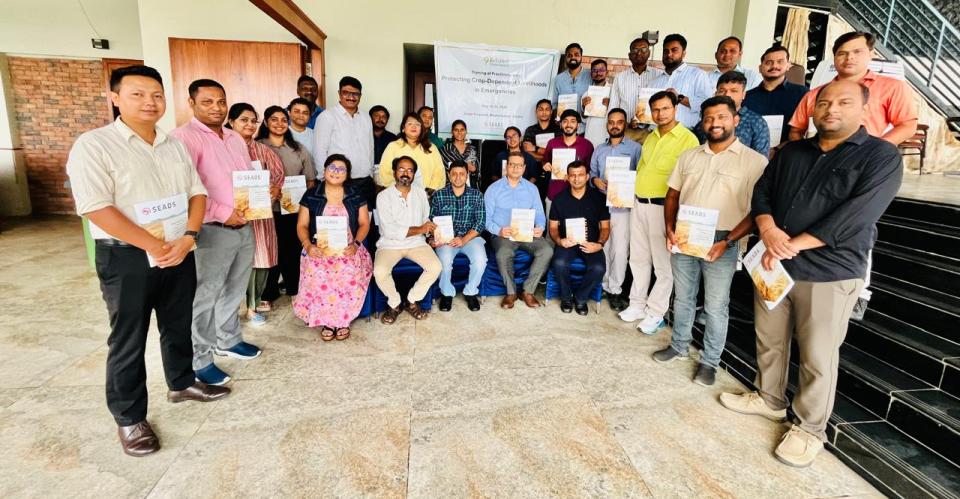
The five-day training programme
brought together 30 practitioners from eight states, including representatives
from Krishi Vigyan Kendras (KVKs) and partner organisations, to build expertise
in safeguarding crop-dependent livelihoods during emergencies. Through a
cascading model, the trained participants will conduct similar programmes
across 22 districts, ultimately reaching nearly 3,000 villages in eight states.
The training integrates the
internationally recognised Standards for Supporting Crop-Related Livelihoods in
Emergencies (SEADS) with India’s National Innovations in Climate Resilient
Agriculture (NICRA) framework and climate-smart agriculture approaches. The
objective is to equip field professionals with practical tools and strategies
for preparedness, crop protection, recovery and long-term resilience-building.
 India’s high vulnerability to natural
disasters underscores the importance of protecting agricultural livelihoods.
SEADS provides evidence-based minimum standards that guide humanitarian and
development practitioners in designing, implementing and evaluating quality
agricultural interventions during crises.
India’s high vulnerability to natural
disasters underscores the importance of protecting agricultural livelihoods.
SEADS provides evidence-based minimum standards that guide humanitarian and
development practitioners in designing, implementing and evaluating quality
agricultural interventions during crises.
“A strong network of trained practitioners
equipped with practical, field-ready approaches will safeguard crop-dependent
livelihoods in emergencies by touching the lives of approximately one lakh
agricultural farmers over the next five years through enhanced preparedness and
response capacities,” said Animesh Prakash, Head – Disaster Management,
Reliance Foundation.
He added, “The unique aspect of this
training is the integration of global frameworks such as SEADS with locally
relevant practices and collaborative learning. Over the next year, the programme
aims to strengthen preparedness and support long-term resilience in rural
communities.”
Welcoming the initiative, Prof.
Umasankar Nayak, Joint Director, Odisha University of Agriculture and
Technology (OUAT), Bhubaneswar, said, “These trainings by Reliance Foundation
will go a long way in developing a cadre of trained professionals with the
right knowledge and skills to enhance community resilience and response
capacities. We have seen the impact of scientific approaches in protecting
vulnerable communities.”
The programme enhanced participants’
understanding of emergency preparedness and response by combining SEADS
standards with climate-resilient and climate-smart agricultural practices. It
focused on developing practical, field-oriented approaches to support timely
and informed interventions before, during and after disasters, while
strengthening broader community resilience efforts.
Participants included experts from
Reliance Foundation, representatives from KVKs in Gujarat and Tamil Nadu, and
implementation partners from Gujarat, West Bengal, Assam, Bihar, Andhra
Pradesh, Tamil Nadu, Kerala and Odisha. The initiative also served as a
platform for cross-learning among professionals working in agriculture,
disaster risk reduction and livelihood development.
The training featured technical
sessions by agroecologist Anshuman Das, Prof. Umasankar Nayak, Hansen Thambi
Prem of Reliance Foundation, and climate expert Krishna Mohan, who is trained
in Asia-Pacific SEADS Standards. A virtual session was also delivered by Shawn
McGuire from the Food and Agriculture Organization of the United Nations (FAO).
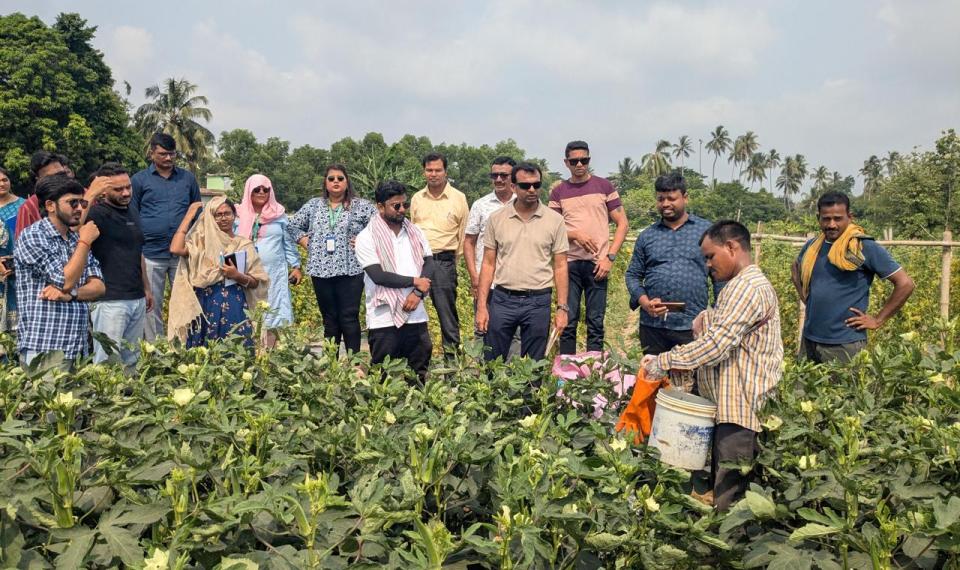
As part of the programme, participants
visited Naruda village in Puri district, adopted by Krishi Vigyan Kendra,
Sakhigopal, where they interacted with farmers and observed crop-livelihood
protection models being implemented at the community level.
Through such initiatives, Reliance
Foundation aims to continuously strengthen field-level capacities and promote
collaborative, locally relevant solutions that enhance agricultural resilience
and support sustainable rural livelihoods, even in the face of extreme
emergencies and disasters.