Sijimali
is unfolding at a time when India’s aspirations for industrial expansion,
energy transition and economic self-reliance are far more urgent and globally
consequential, writes Priyabrat
Biswal
More than a decade
after the emotionally charged Niyamgiri episode reshaped India’s mining
discourse, Odisha today stands at the threshold of a very different
conversation — one driven not merely by conflict, but by the urgent realities
of industrial growth, mineral security and economic transformation. At the
centre of this new debate lies Sijimali, one of eastern India’s richest bauxite
deposits, and a project that could significantly strengthen India’s aluminium
ambitions in the decades ahead.
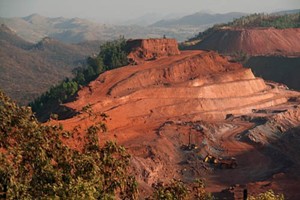
Spread across nearly
1,549 hectares in Rayagada and Kalahandi districts, Sijimali is estimated to
hold around 311 million tonnes of high-grade bauxite. In a rapidly
industrialising India where aluminium has become indispensable for
infrastructure, electric mobility, renewable energy, aviation, railways and
defence manufacturing, such reserves are no longer viewed as isolated mineral
blocks. They are increasingly seen as strategic national assets critical to
sustaining economic growth and reducing dependence on costly imports.
For Vedanta Limited,
the project represents far more than a mining proposal. The company’s Lanjigarh
alumina refinery — today a major industrial hub in Odisha — was originally
conceptualised to utilise Odisha’s vast bauxite reserves. Over the years, the
refinery has expanded into a six-million-tonne-per-annum operation, generating
large-scale employment, industrial activity and downstream economic
opportunities in one of the country’s historically underdeveloped regions. Yet
despite Odisha possessing some of the world’s finest bauxite reserves, India
still imports nearly 4.5 million tonnes of bauxite annually, creating a
substantial foreign exchange burden.
Against this
backdrop, projects such as Sijimali are essential if India genuinely intends to
emerge as a global aluminium manufacturing powerhouse. With aluminium demand
expected to rise sharply over the next two decades, policymakers increasingly
see Odisha’s mineral corridors — including Sijimali, Kutrumali, Panchpatmali
and Pottangi — as central to India’s industrial future.
Unlike the Niyamgiri
era, the national conversation around mining has also evolved considerably.
India’s economic priorities today are shaped by large-scale infrastructure
expansion, energy transition goals, manufacturing competitiveness and the push
for self-reliance in critical minerals. Aluminium, because of its lightweight,
recyclable and energy-efficient properties, has become a key material in this
transition. From solar panels and electric vehicles to metro rail systems and
defence applications, the demand curve is unmistakably rising.
Supporters of the
Sijimali project argue that Odisha, despite being mineral-rich, cannot
indefinitely remain economically constrained while sitting atop globally
significant reserves. They point out that industrialisation has already
transformed several regions of the state through improved connectivity,
employment generation, educational institutions, healthcare facilities and
ancillary businesses. The expansion of the aluminium ecosystem, they contend,
has the potential to create thousands of direct and indirect livelihood
opportunities while strengthening India’s strategic manufacturing capabilities.
At the same time,
Vedanta appears conscious of the sensitivities surrounding mining projects in
tribal regions. The memories of Niyamgiri continue to shape public perceptions,
making community engagement and trust-building central to the project’s future.
The company has consistently maintained that development and community welfare must
go hand in hand and has highlighted its investments in local infrastructure,
healthcare, education, women’s empowerment and rural development initiatives
across Odisha.
Critics continue to
express concerns over ecological impact, tribal rights and the transparency of
consent processes. Such concerns cannot simply be dismissed in a constitutional
democracy, particularly in Scheduled Areas protected under the Fifth Schedule,
the Panchayats (Extension to Scheduled Areas) Act and the Forest Rights Act. Allegations
surrounding Gram Sabha proceedings and local protests have already drawn legal
scrutiny, with matters reaching judicial and environmental forums.
However, many
observers also believe that India’s developmental trajectory cannot be held
hostage indefinitely by an outdated “industry versus indigenous communities”
binary. The challenge today is not whether development should happen, but how
it should happen responsibly, transparently and inclusively. In this context,
projects like Sijimali are increasingly being viewed as opportunities to create
a more balanced mining framework — one where industrial growth coexists with
stronger rehabilitation measures, community participation and long-term local
benefit-sharing.
If executed with
transparency and sensitivity, Sijimali could become a model for a new
generation of mining projects in India. Independent monitoring of Gram Sabha
proceedings, fair compensation frameworks, sustainable mining practices,
afforestation initiatives, local employment guarantees, revenue-sharing models
and community-owned development programmes could help bridge the trust deficit
that has historically plagued extractive industries.
Importantly, Odisha
itself stands to gain significantly. As India competes globally in
manufacturing, clean energy and infrastructure creation, states rich in
critical minerals are poised to become engines of national growth. Odisha
already contributes more than 70 per cent of India’s bauxite production, and
strategic utilisation of these reserves could accelerate industrial
investments, logistics infrastructure and regional economic development across
some of its most remote districts.
The larger question
before India, therefore, is no longer whether mining should occur, but whether
the country can develop a governance model capable of balancing economic
necessity with social responsibility. Sijimali may well become the defining
test of that balance.
Niyamgiri symbolised
resistance in an era when corporate mining was viewed largely through the prism
of environmental conflict. Sijimali, however, is unfolding at a time when
India’s aspirations for industrial expansion, energy transition and economic
self-reliance are far more urgent and globally consequential. The debate today
is more complex, the stakes are higher, and the expectations from both industry
and government are far greater.
Beneath Odisha’s
hills lie mineral reserves capable of powering factories, clean energy systems
and future industries. For many policymakers and industrial planners, unlocking
those resources responsibly is not merely a commercial objective — it is
increasingly seen as a national imperative.